Years later, we are finally publishing the most memorable (and final) story of our world tour: our volunteering for the conservation of black rhinoceros in Zimbabwe.
This world trip irrevocably changed us, particularly regarding animal welfare. So, we decided to spend some time volunteering to help protect endangered species at the end of our journey. Combining this with our wish to discover African wildlife seemed ideal.
We are so lucky to have found this program: Zimbabwe Victoria Falls Big Five Conservation. We couldn’t have dreamed of a better experience (and I tend to dream big!)
While the beginning of this article focuses on the technical details of the program we joined, you can also read our story of a rhinoceros transfer or discover why black rhinoceros are in danger.
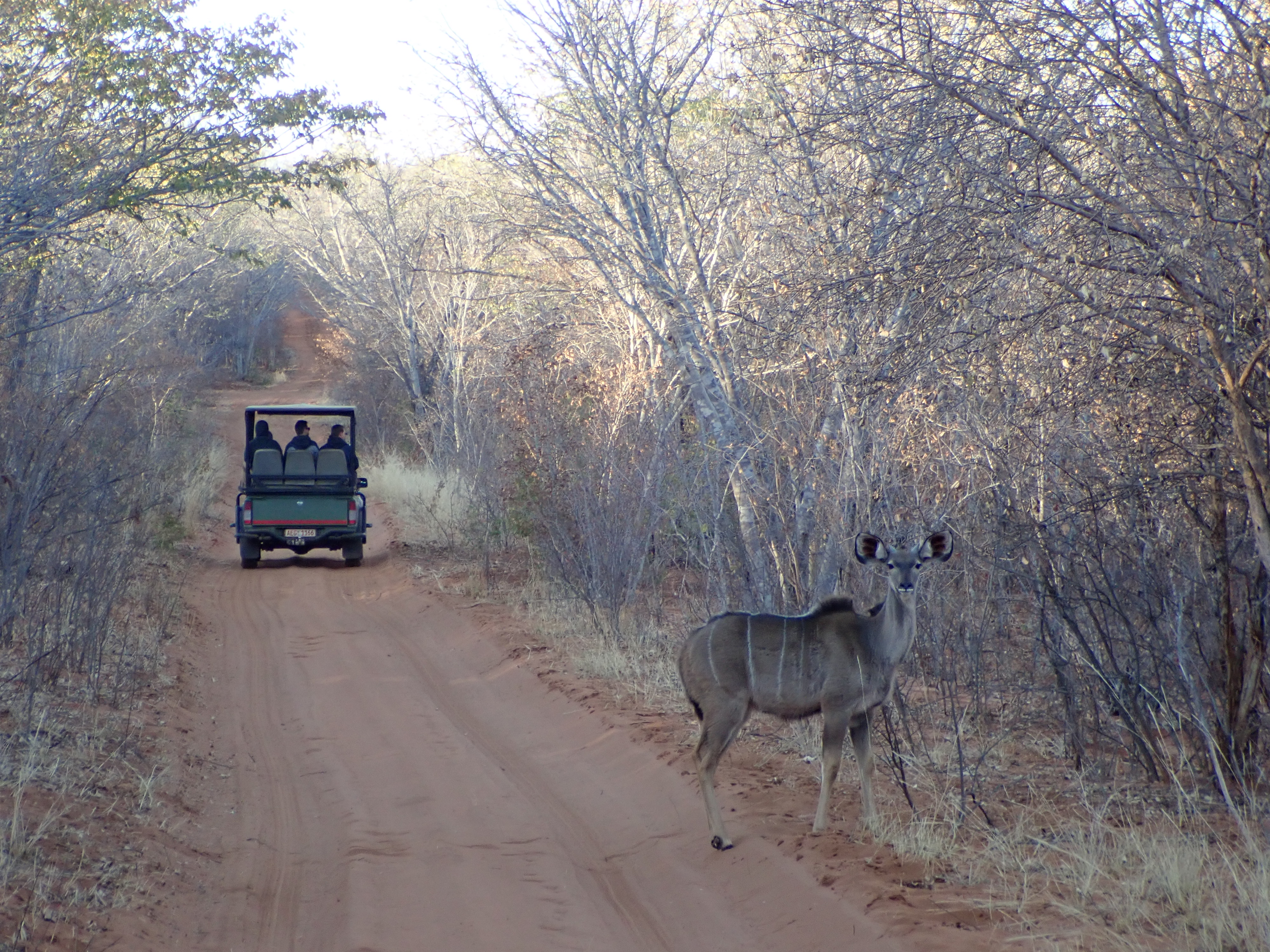
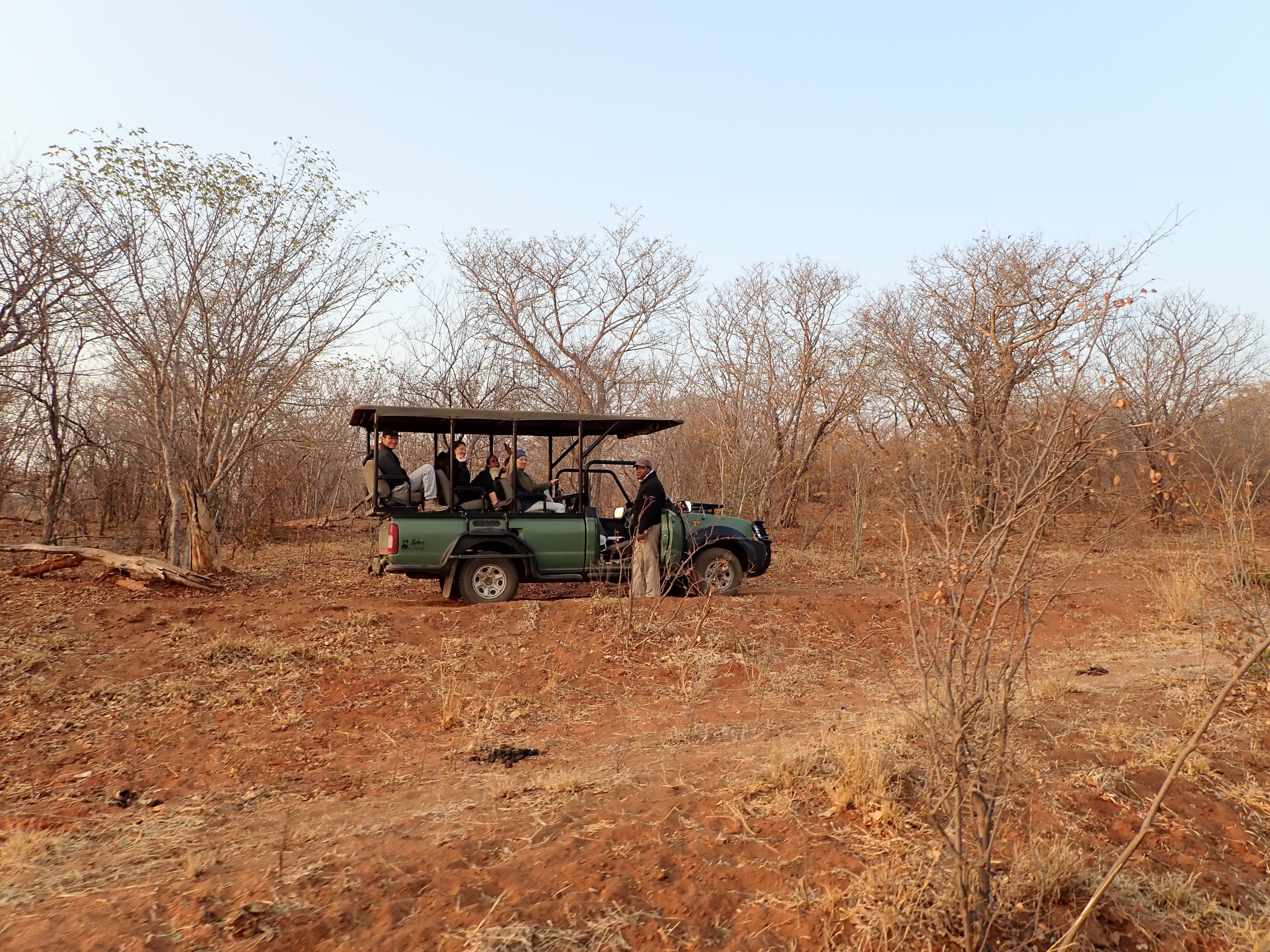
Nakavango Conservation Programme
The Nakavango Conservation Programme is a wildlife volunteer and conservation initiative located near the Victoria Falls in Zimbabwe. The reserve where the program takes place is part of the Kavango-Zambezi Transfrontier Conservation Area (KAZA). Spanning over five countries, it is one of the largest transboundary nature conservation regions in the world.
The program combines practical conservation work, wildlife research and education, as well as community development. It focuses particularly on black rhinoceros (there are about ten in the reserve).
Why are rhinoceros in danger?
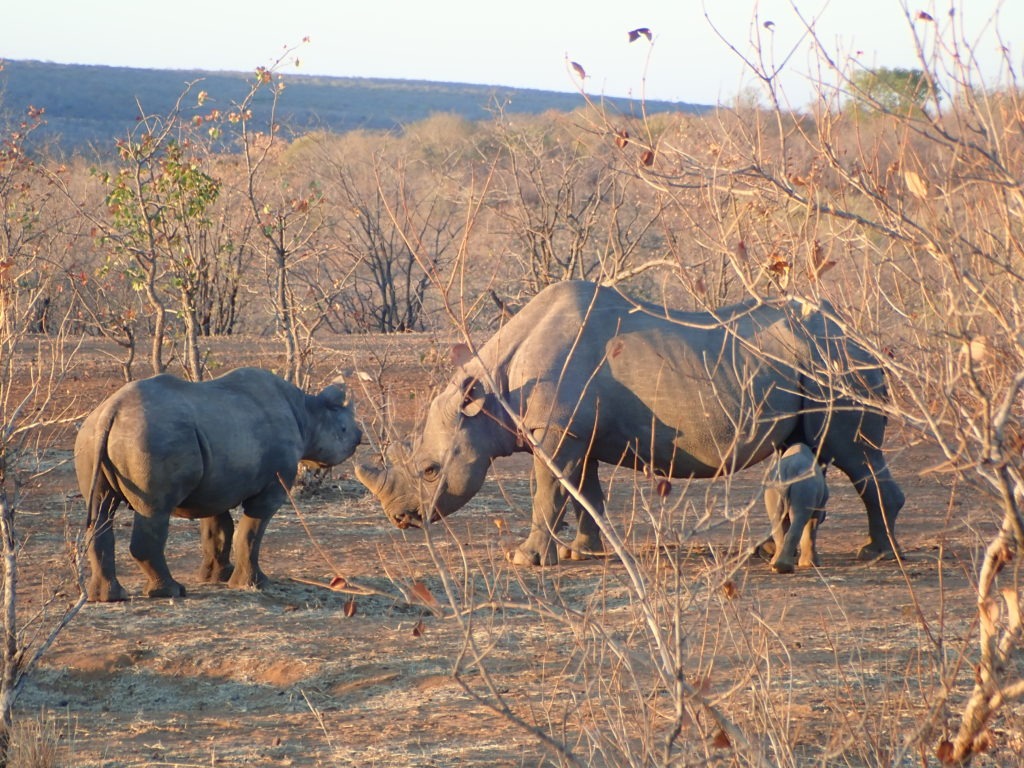
Black rhinos are smaller than white rhinos and are also distinguished by their hooked mouths.
They are critically endangered. A few years ago the main threat was hunting, but nowadays it is habitat loss and poaching for their horns. Rhino horns sell for exorbitant prices in Asia due to supposed medicinal and aphrodisiac properties. In truth, they are made of keratin and likely have no more properties than human fingernails.
To protect them, the reserve is surrounded by a fence, guards, and a highly complex (and secret) security system. Staff assured us that the fence does not prevent other species from moving freely.
Our experience with the Nakavango Conservation Program
Our two weeks in Zimbabwe were the most otherworldly of the trip. Each morning, we felt like we were waking up in The Lion King.
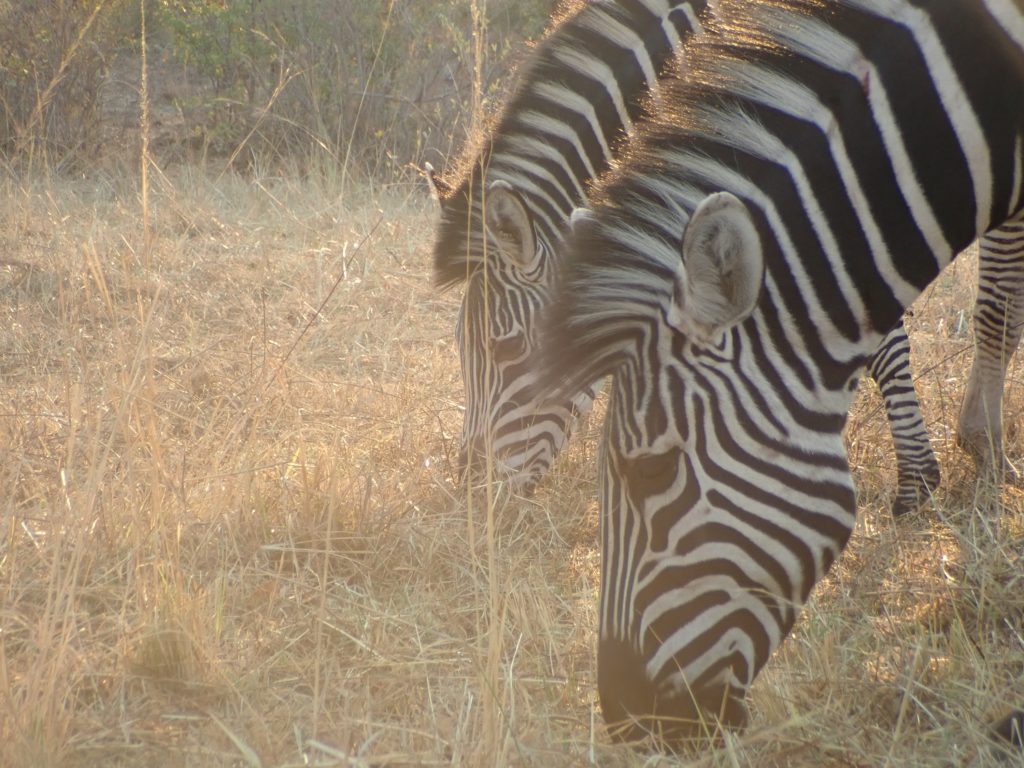
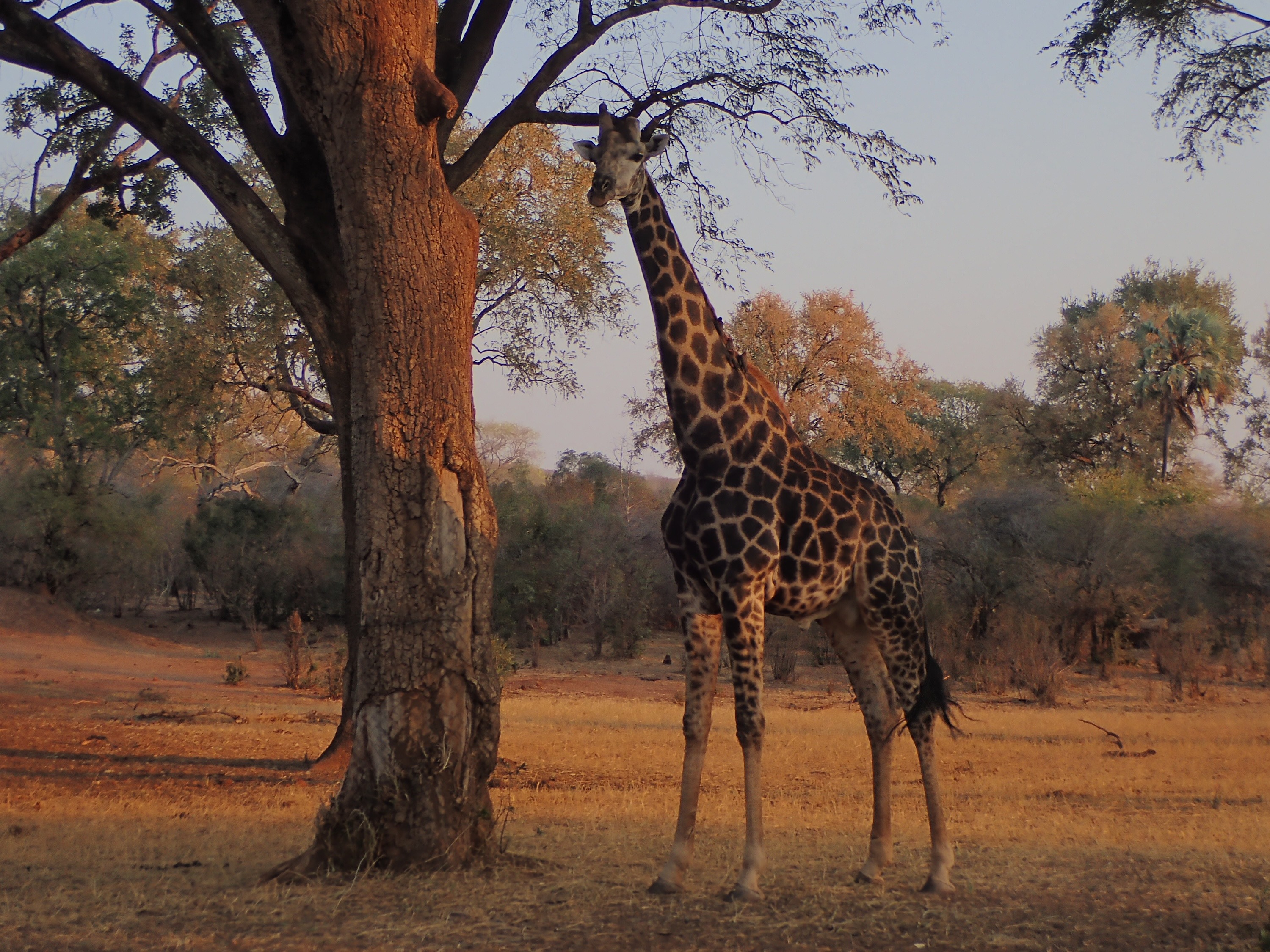
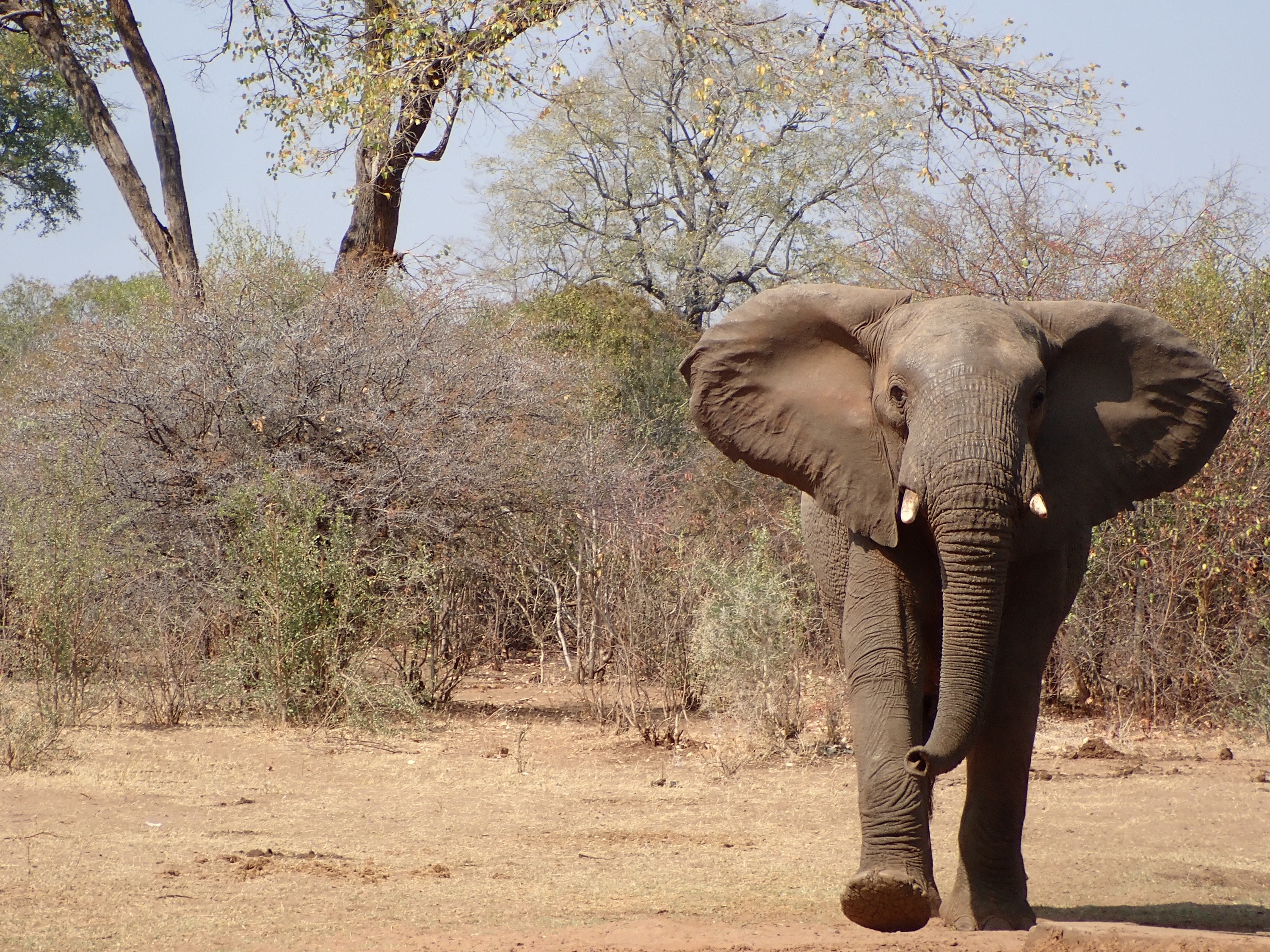
We discovered, for the first time, hundreds of animals: from elephants to birds and insects, as well as lions, zebras, giraffes, hyenas, and fascinating plants!
We stayed in an idyllic location in the middle of the reserve and shared our time with amazing people: the staff and the volunteer group. Thanks to Justine, Ian, and Dean, we were constantly learning and challenging our opinions.
With the other volunteers, we formed a tight-knit team and spent all our free time playing, chatting, and even dancing on weekends. They came from all over the world (all communication was in English) and although mostly young, all ages were represented.
This good mood was enhanced by the fact that we reunited with our friend Florence, who is very sociable and funny. We think she doesn’t regret joining us for this adventure!
Our work on site
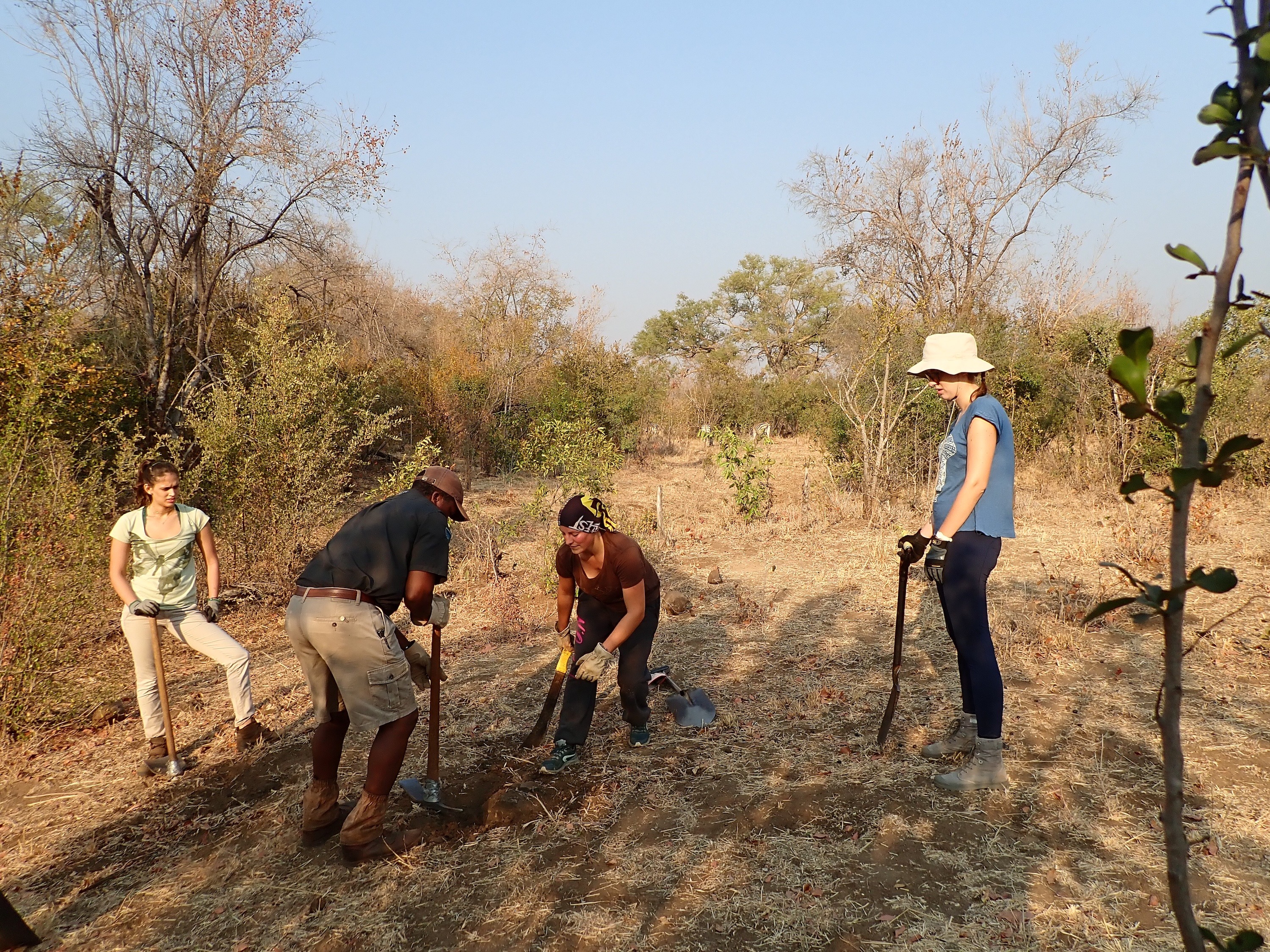
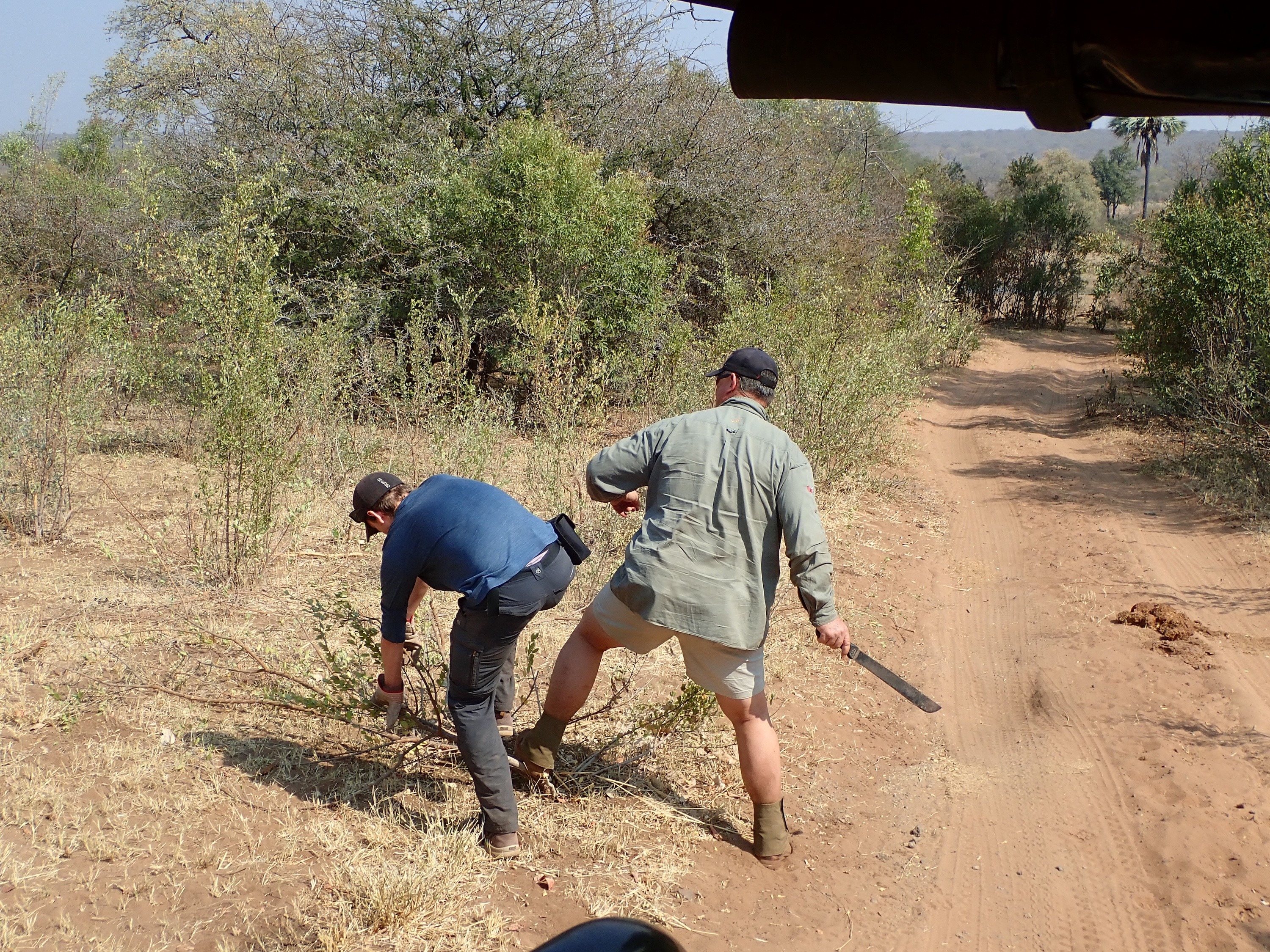
Our work was just… amazing! The best part was observing and recording information about the animals we encountered. But even maintaining roads, gardening, or turning compost was a real pleasure. There was no problem getting up early knowing we would see incredible living beings in their natural habitat. We could clear bush with zebras a few meters away, encounter giraffes on our path, and watch breathtaking sunsets.
We also explored nearby communities, learned about water management tools, compost production, and helped in a school.
To avoid the hottest hours, we worked early in the morning and late in the afternoon. Afternoons were freely dedicated to rest, educational exchanges about conservation, or lively card games.
The work was hard, but tasks were adapted to the physical conditions of each participant. We all gave our best because it was so motivating.
Wild camping in the reserve and daily safaris
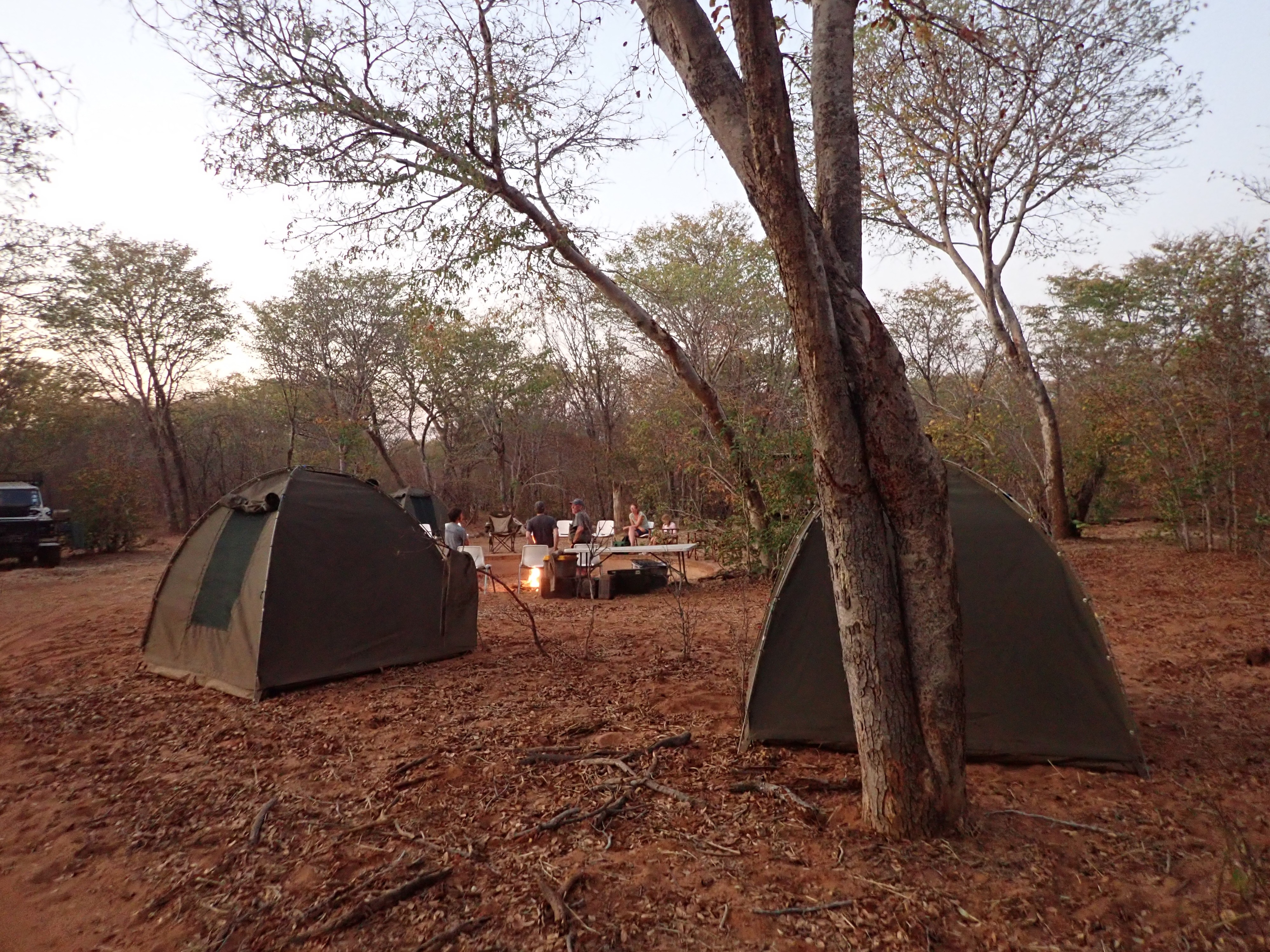
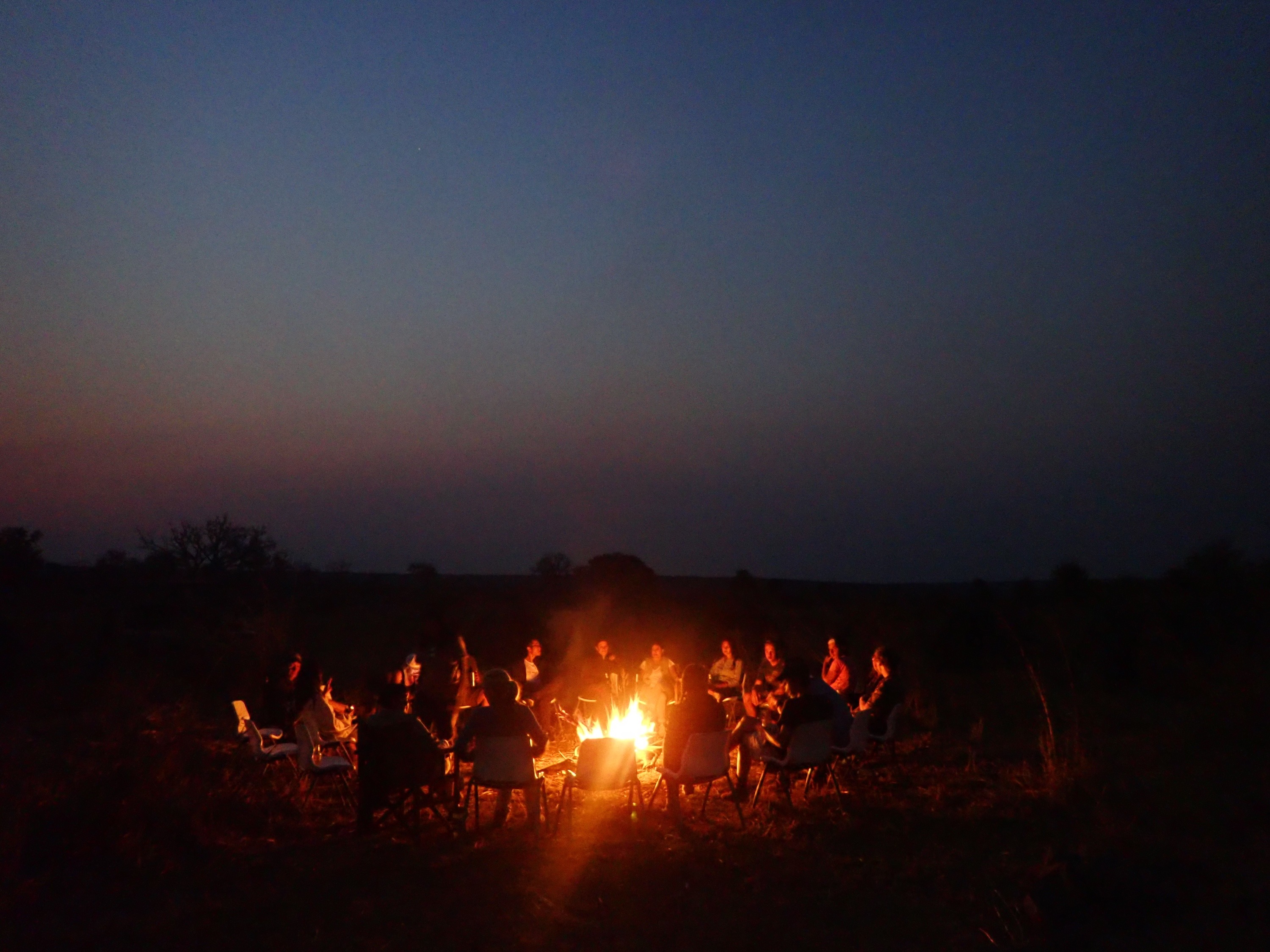
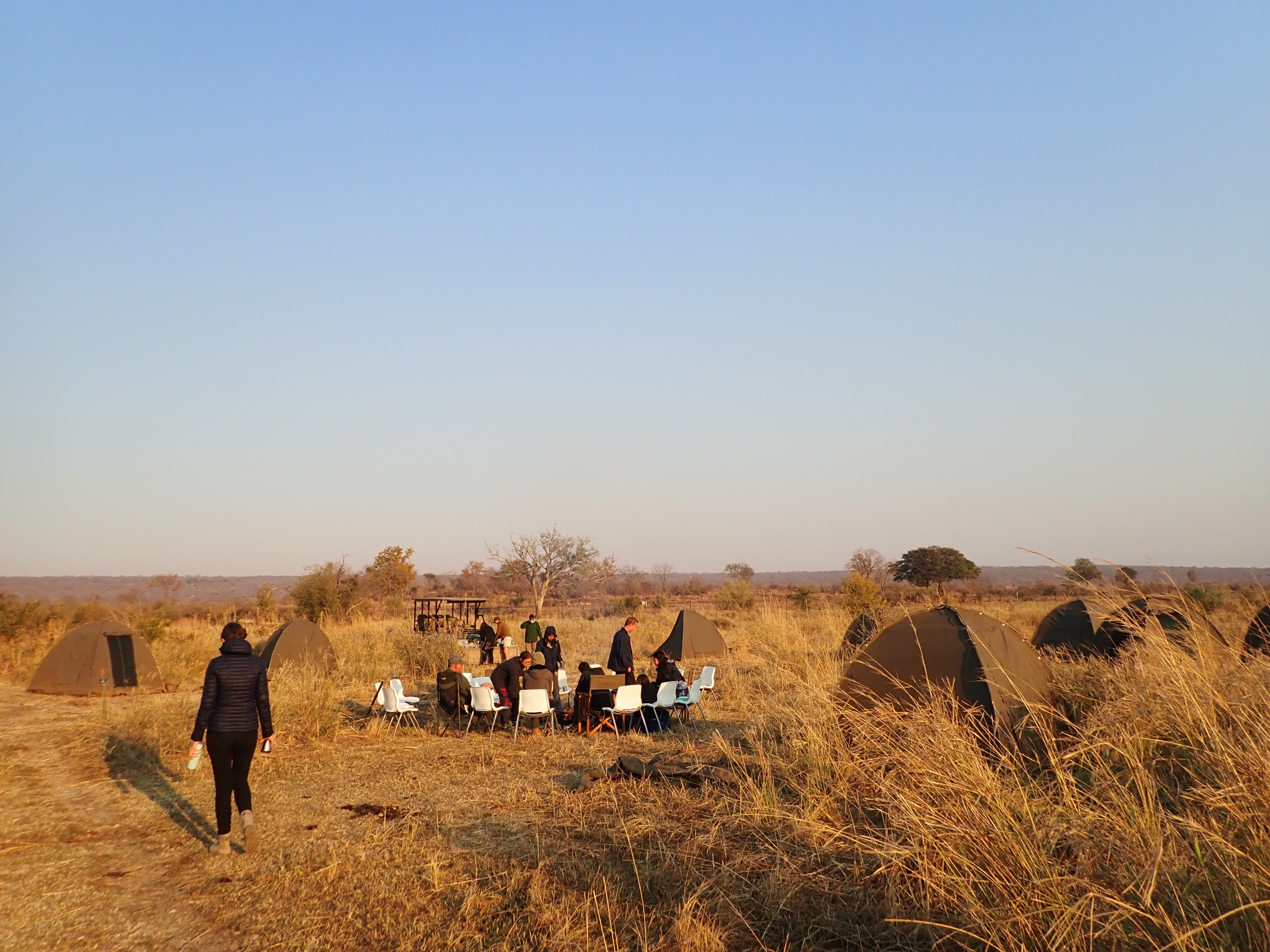
On Thursdays, we camped in the middle of the reserve. After a great evening around the campfire and a final look at the African Milky Way, we went to bed listening to animals dangerously close to our tents. Surreal nights, a unique experience!
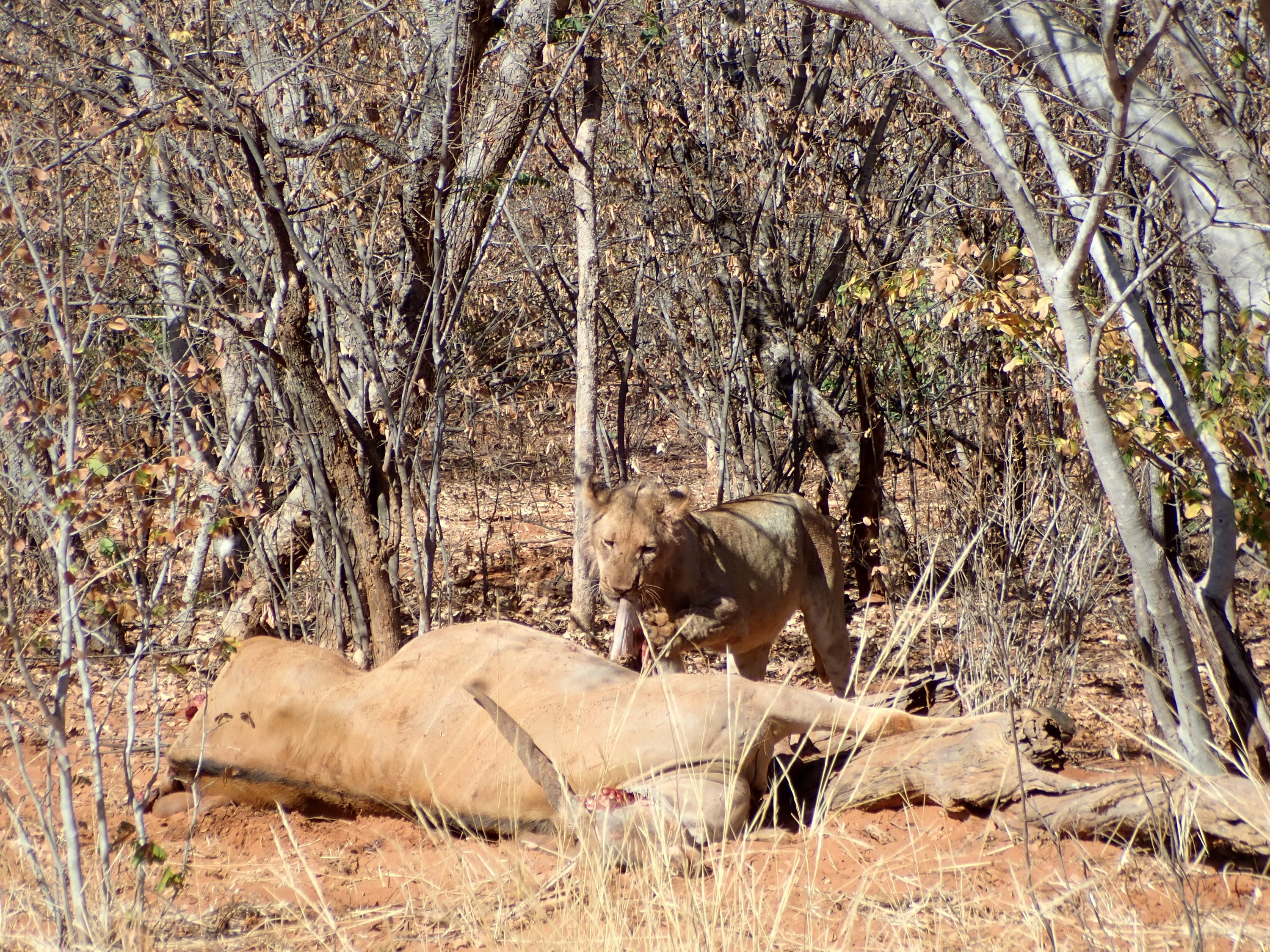
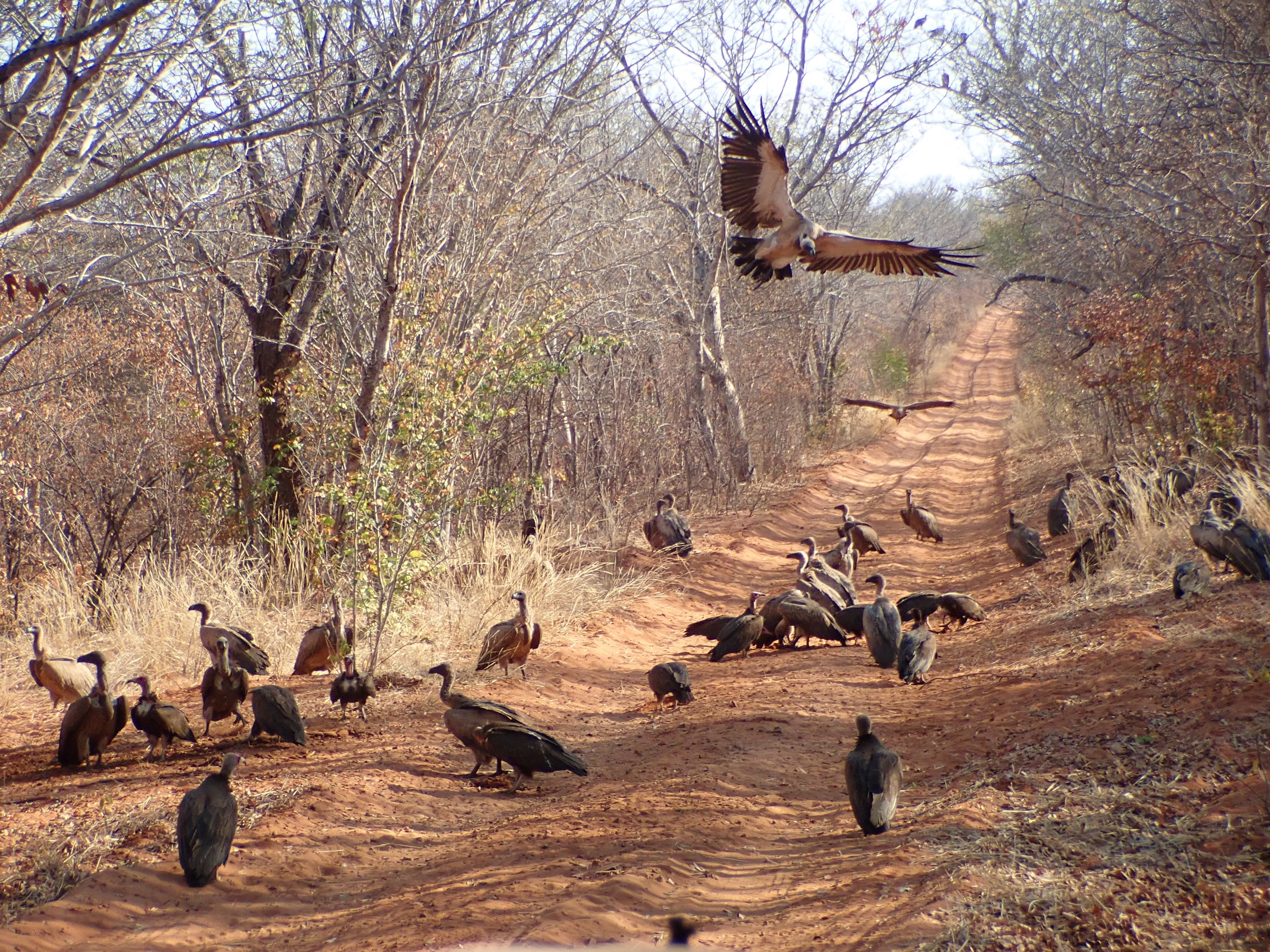
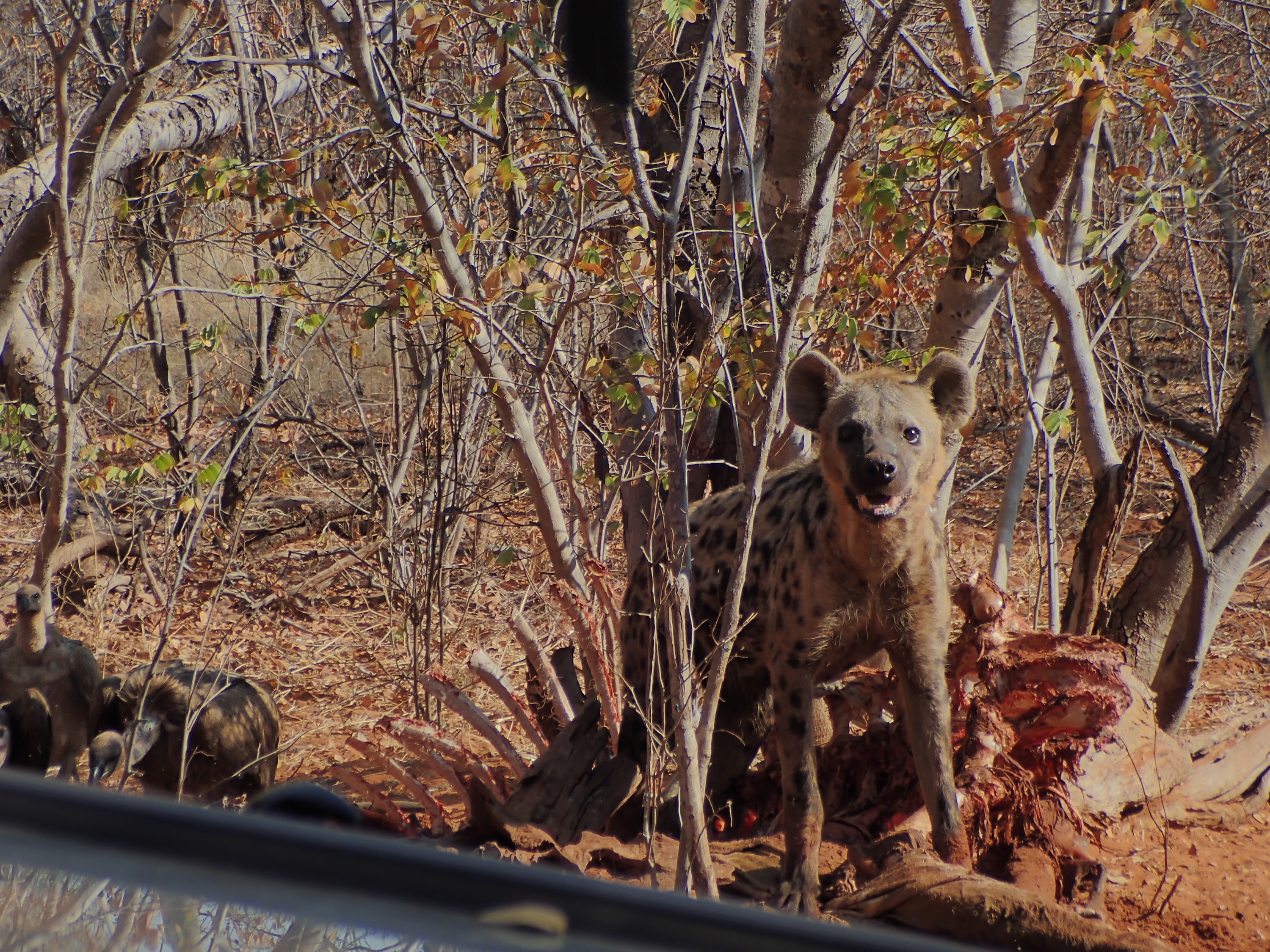
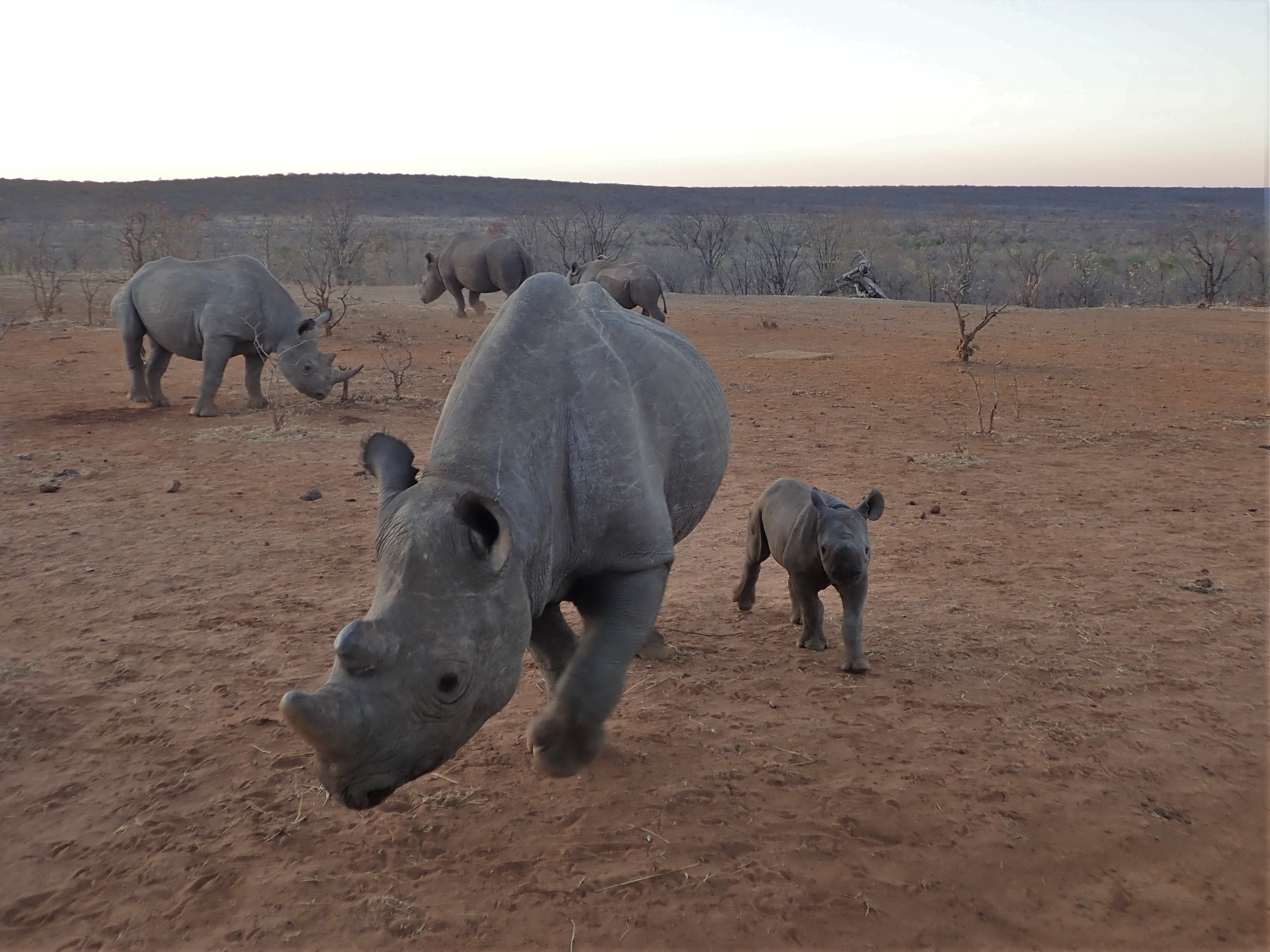
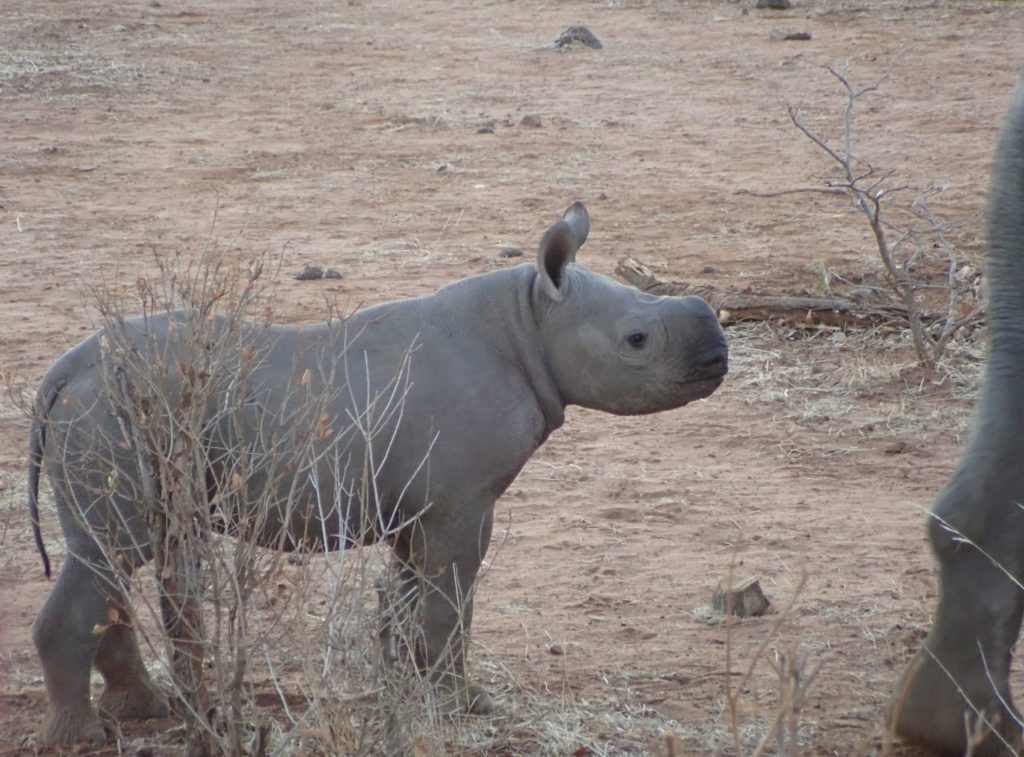
Once again, as often on this world trip, we were very lucky and were among the first to see a three-week-old baby rhino. We were also fortunate to see lions feasting on a freshly captured prey by the roadside and then watch hyenas fight over the carcass with vultures the next day.
We enjoyed being able to take our time, learn the reserve’s roads, and recognize its inhabitants. No commercial safari would stop for insects, show plants, or let you revisit animals already observed.
The adrenaline was high too, like when roles were reversed while tracking elephants on foot. Fortunately, thanks to our experienced guides, we always felt safe.
Accommodations and meals
From the terrace of our lodging, very close to the reserve, we could observe animals! It’s a really comfortable place with a kitchen, a common dining room, and even a pool.
The rooms were very clean, individual (with some doubles for couples on request), with shared bathrooms.
The meals were delicious, and especially enjoyed in a great atmosphere!
How to participate in this rhino conservation volunteer program in Zimbabwe
To apply for this volunteer program, we went through The Mighty Roar, which we found helpful and reliable. The program is also available through other intermediaries.
It is possible to volunteer between 2 and 12 weeks. The program costs about $1,000 for 2 weeks all-inclusive.
All visa information (which can be a bit tricky at the frontier) was provided in advance, along with a list of essentials to pack. For insurance, as for the whole world trip, we were covered by the French Chapka Assurance. They offer a specific contract for volunteering: Cap Volontariat.
After volunteering, we spent a final weekend in Victoria Falls (read our blog article on this), a few kilometers from the reserve. Then we continued our road trip to Kenya, passing through Zambia, Malawi, and Tanzania (Zanzibar and Serengeti). It was an opportunity to do more safaris, but none as magical as Nakavango.
Is this voluntourism?
Voluntourism is a form of travel combining tourism and volunteering, where travelers participate in short-term volunteer activities while exploring a country.
Yes, absolutely it is. Despite controversies around voluntourism, based on our experience, we consider this program very ethical. The project is locally managed with a long-term and sustainable commitment. The work we did seemed useful.
Financial transparency is respected. In our view, we paid very little compared to the facilities we worked in. Hosting and training us would have been a deficit for the organization if it were free. Moreover, the comfort we had allowed us to perform physical work effectively. So we were not a burden to the organization and could give our best.
Finally, what we gained from these two weeks is priceless. It was truly one of the most profoundly impactful experiences of our lives. What we discovered and learned cannot be quantified. It’s cliché, but true. Having later done “commercial” safaris, they were very disappointing compared to the quality of observations we had at Nakavango.
The experience of a lifetime: transferring a rhino
In my notes from Wednesday, September 11, 2019, I wrote: “I have never felt so much adrenaline in my life.”
Since then, I’ve experienced childbirth — and yet, this day remains one of the most intense experiences I’ve ever gone through. An extraordinary operation, involving a helicopter, a tractor, a truck, five jeeps, a veterinary team… and an immense amount of stress and uncertainty.
Rhino management in Zimbabwe
During our stay, we became familiar with the few rhinos in the reserve (which we came to study). We even had the privilege of being among the first to meet Lumuno, then only three weeks old.
But our luck didn’t stop there. We were considered trustworthy enough to witness an extremely rare event: the transfer of one of our rhinos to another reserve.
Why this transfer? To help this species on the brink of extinction, humans sometimes give a little help to nature by moving individuals with the highest chance of successful reproduction. The destination reserve, also in Zimbabwe, had only females. Here, Kushinga — a seven-year-old weaker male — could not compete with dominant males. There, he would have no competition for reproduction.
The big day of the transfer
After a meeting with the vets the day before, we got up before dawn, with the only instruction to be “ready to jump” into the vehicles. We were taken to a helicopter and a cage mounted on a tractor.
Everything really started with the helicopter takeoff — a first for us at such a close distance. Our car, which usually move slowly in the reserve, suddenly rushed at full speed. The apprehension was everywhere, almost palpable.
In front of us, we saw the 72-year-old vet, Chris Foggin, a world-renowned rhino specialist, shoot an anesthetic dart straight into Kushinga’s rear. We arrived exactly four minutes after impact — the time it took for him to collapse.
Caregivers jumped from moving vehicles and ran to the rhino. The helicopter landed a few meters away. Blinded by dust, we jumped from the jeep as well. Within seconds, Kushinga was already hooked up everywhere, including respiratory support.
The vet, who had removed the syringe, had his hands full of blood. We could only imagine the distress and pain the rhino must have felt as the anesthesia took effect.
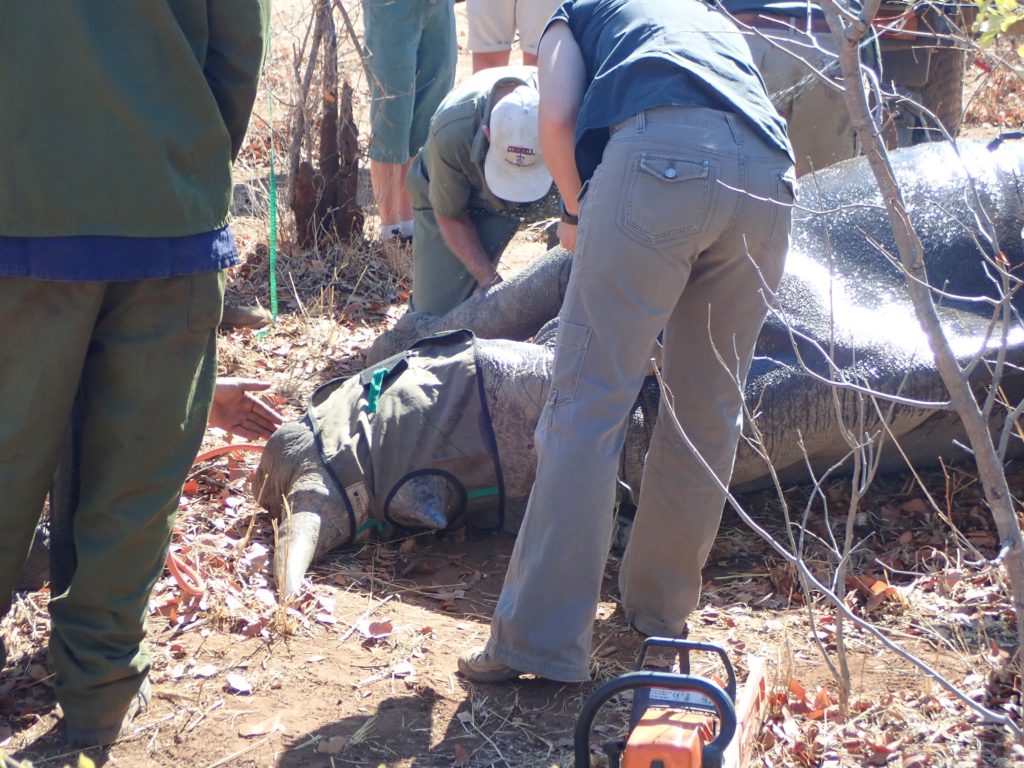
Dehorning the rhino
The medical team took advantage of the anesthesia to record vital signs: heart rate, blood pressure, blood samples, and removal of large ticks. We were all extremely tense, very worried about the rhino’s health, but ready to run the 100 meters to our vehicle in case the other rhinos came to defend him.
Nearby, a chainsaw roared on the ground. The noise was chilling. Was it to keep others away? Or to “warm it up”? Men cleared trees to allow the cage to approach. Others sprayed water continuously on Kushinga to prevent overheating under the burning sun.
Then came the dreaded moment of removing his horn. It was a government requirement. Volunteers were crying even before it started. Then it happened very quickly: someone held the horn while another cut it with the chainsaw.

Why cut the horn?
The risk of poaching during transport is immense. Without a horn, Kushinga loses his “value.”
It was an unbearable scene, even knowing it was for his own good. A hornless rhino is much less likely to be killed.
This shocking image raises a terrible question: under what conditions do poachers act? They certainly don’t invest in anesthesia or have veterinarians on site. They kill animals already on the brink of extinction, even though the horn grows back.
“Does it hurt? Can he feel anything?”
The team reassured us:
— “No. The horn is cut before the blood vessels. It’s like cutting nails.”
The horn weighed 900 grams. On the black market, that represented about $85,000. It was placed in a black bag and handed over to the Zimbabwean government to be stored in a secure warehouse.
Kushinga waking up
Kushinga was about to wake up! A man tested the taser on the car’s metal to make it worked (it wasn’t used). The cage was brought in front of the rhino, ropes were attached to his neck and legs, and about ten people positioned themselves around it. All medical devices were quickly removed under the vet’s orders. We held our breath as he confirmed the oxygen removal.
— “Wake up in less than thirty seconds.”
Through the mask, which plunged Kushinga into darkness, we could see faint movements. The vet gently lifted him and slapped the top of his head.
— “Come on, boy! Come on, boy!”
Apart from the vet’s pleas, there was complete silence. No response. The tension was palpable after three long minutes.
Water was poured into his ear. Kushinga woke abruptly, tried to stand, crumpled to the ground… and then fainted again. The scene broke our hearts.
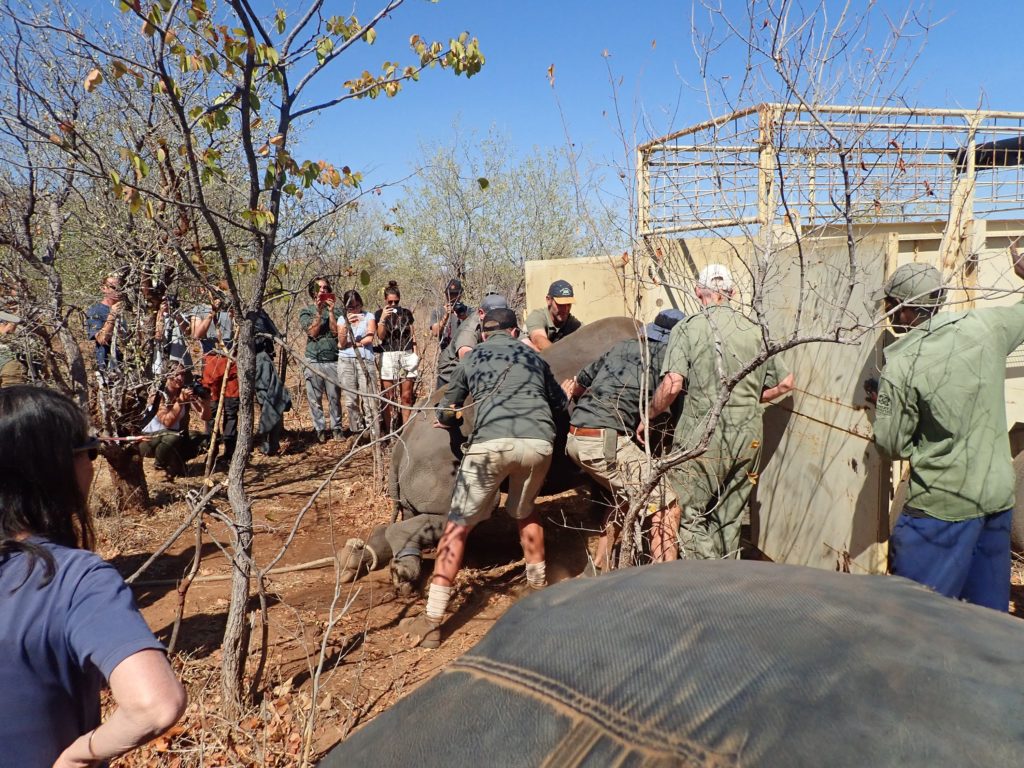
More water was poured into his ear. He jumped, struck violently against the cage door, then finally ended up inside, hitting the back wall.
The departure
The tractor slowly started, caregivers perched on the cage, watching Kushinga. We followed him to the spot where the helicopter took off and watched the cage being moved with a truck pulley.
With heavy hearts, we saw him leave, escorted by an armed convoy. We hoped he would be happy in his new reserve and able to have free and safe offspring.
Here is a video of Kushinga’s relocation, made by the talented volunteer from our team Genevieve Detering :

No Comments