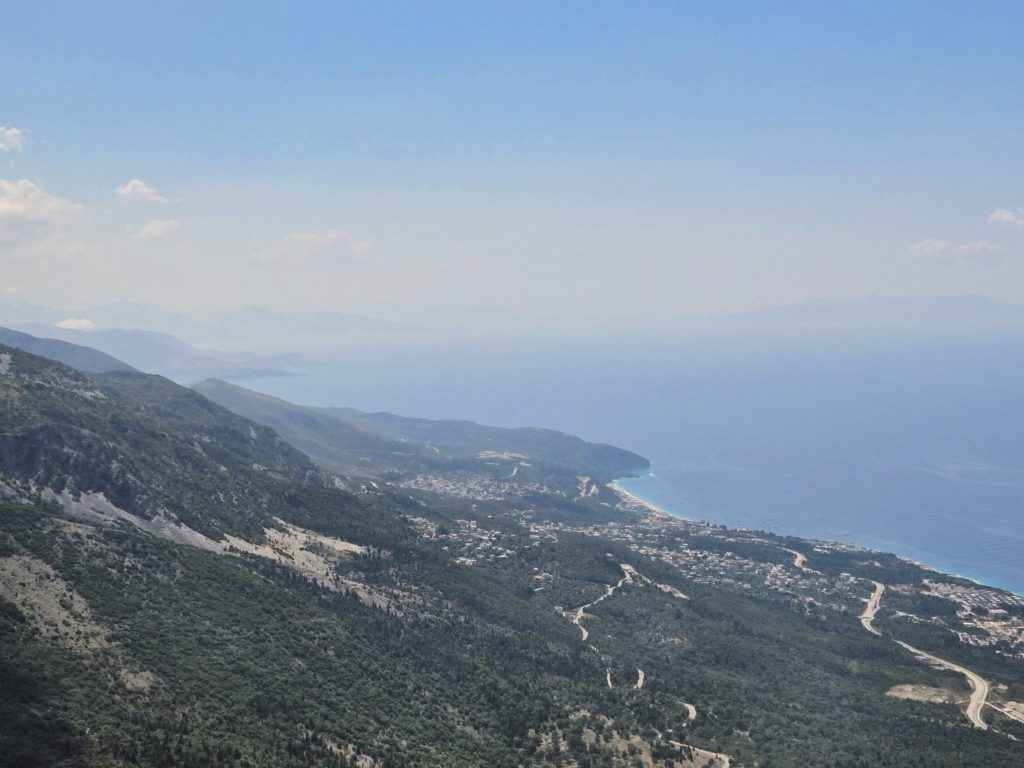
Discover our 10-day family road trip through Albania: the Albanian Riviera, Llogara National Park, Narta Lagoon, the seaside resort of Golem, Lake Shkodra, and the mountain village of Razëm in the Albanian Alps. Since we ourselves knew very little about this Balkan country, whose history is so different from its neighbours, we’ve also included a section to help you better understand Albania. We took this trip in late June and early July 2026.
We entered Albania by road from Greece, travelling from south to north before crossing into Montenegro as part of our three-month European road trip.
The border crossing was smooth at the Mavromati border crossing. We were greeted by farm animals roaming freely along the road, a striking contrast with Greece that we weren’t expecting. Also, from that moment on, driving became much more challenging.
Understanding Albania: A few historical and cultural points
Before this trip, we knew very little about the history of this small country of around 2.5 million inhabitants (roughly the population of Paris). The Albanian language is unique and unlike those of its neighbours, as it does not descend from Greek, Latin, or the Slavic languages. Today, around 7 to 8 million people speak Albanian worldwide. It’s also worth noting that a significant proportion of Albanians live in Kosovo, which declared independence in 2008 but whose status is still controversial, explaining why its border appears differently on some maps, including Google Maps.
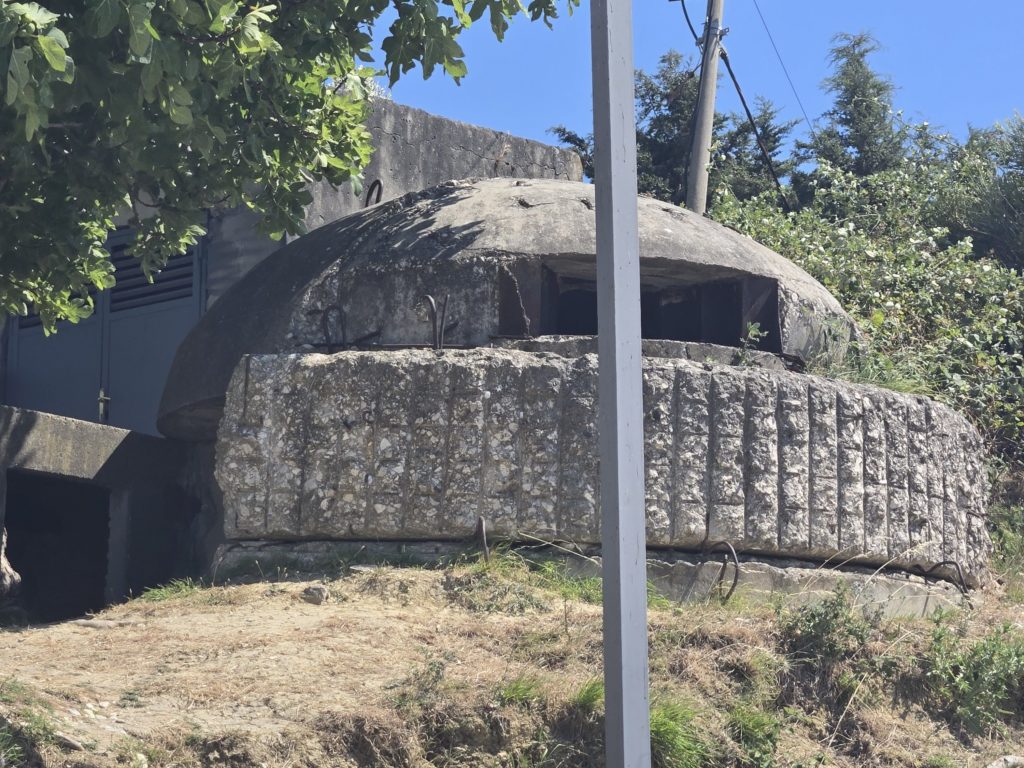
If you travel to Albania, you’ll quickly learn about the communist dictator Enver Hoxha. For almost half a century, Albanians lived under one of the world’s most isolated communist regimes. Leaving the country, practising religion, owning land, private property, or even livestock was forbidden. A lasting reminder of Hoxha’s deep paranoia can still be seen across Albania in the form of the hundreds of thousands of concrete bunkers he ordered to be built.
The country’s transition in the early 1990s, when Albania was one of Europe’s poorest nations, was far from easy. Indeed, the transition was marked by corruption and fraud, as well as investment scams that affected a large part of the population and led to armed conflicts in 1997.
Today, Albania is experiencing a tourism boom. While this growth is important for the country’s economy, it has also sparked growing concerns about preserving Albania’s natural and cultural heritage. The country’s spectacular landscapes are increasingly threatened by large-scale development, leading to numerous protests during the summer of 2026 (although we did not witness them ourselves). As a result, a citizen movement, symbolised by the pink flamingo, has emerged to advocate for better protection of Albania’s environment.
The Albanian Riviera, Dhërmi and Drymades Beach
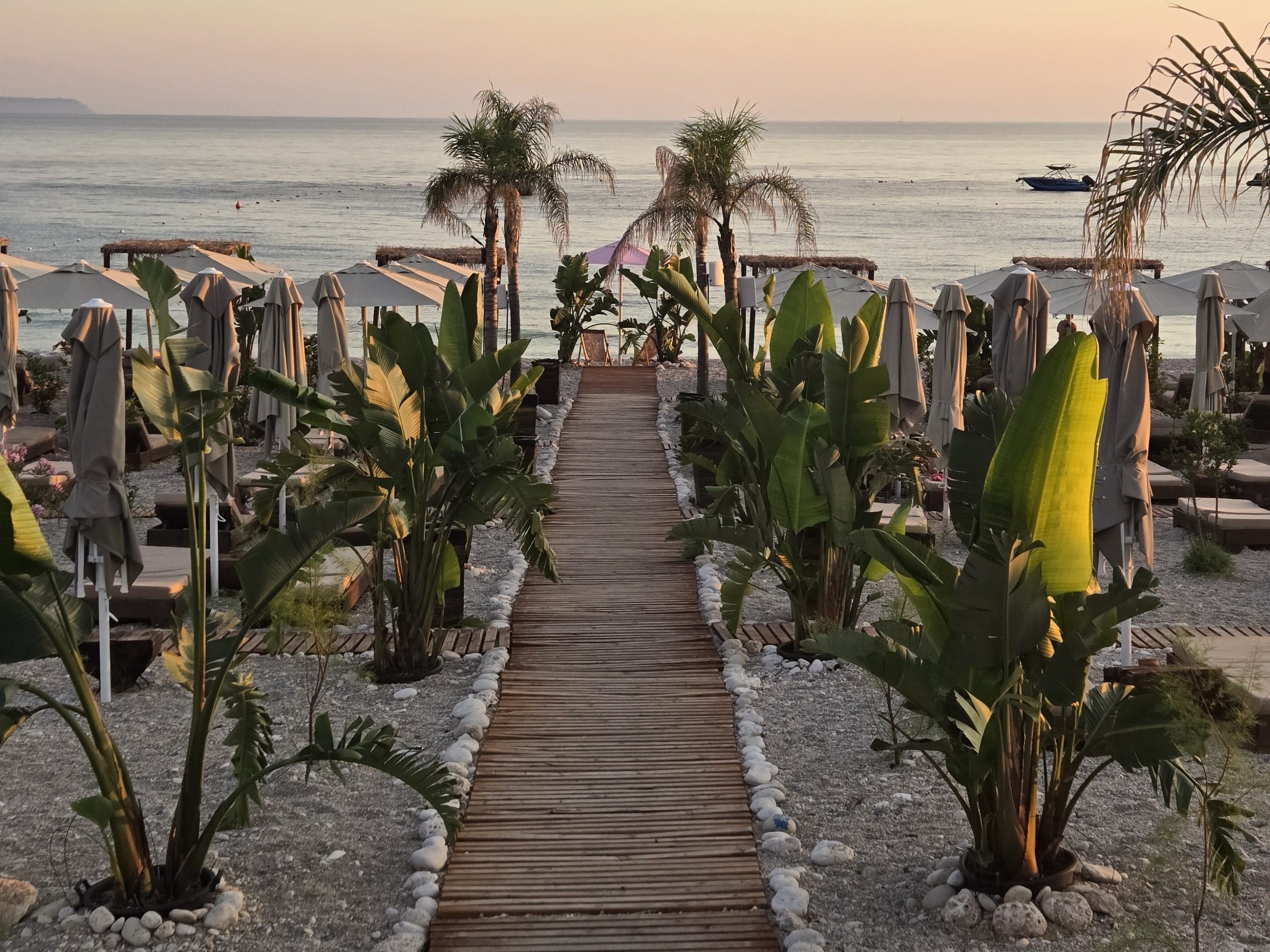
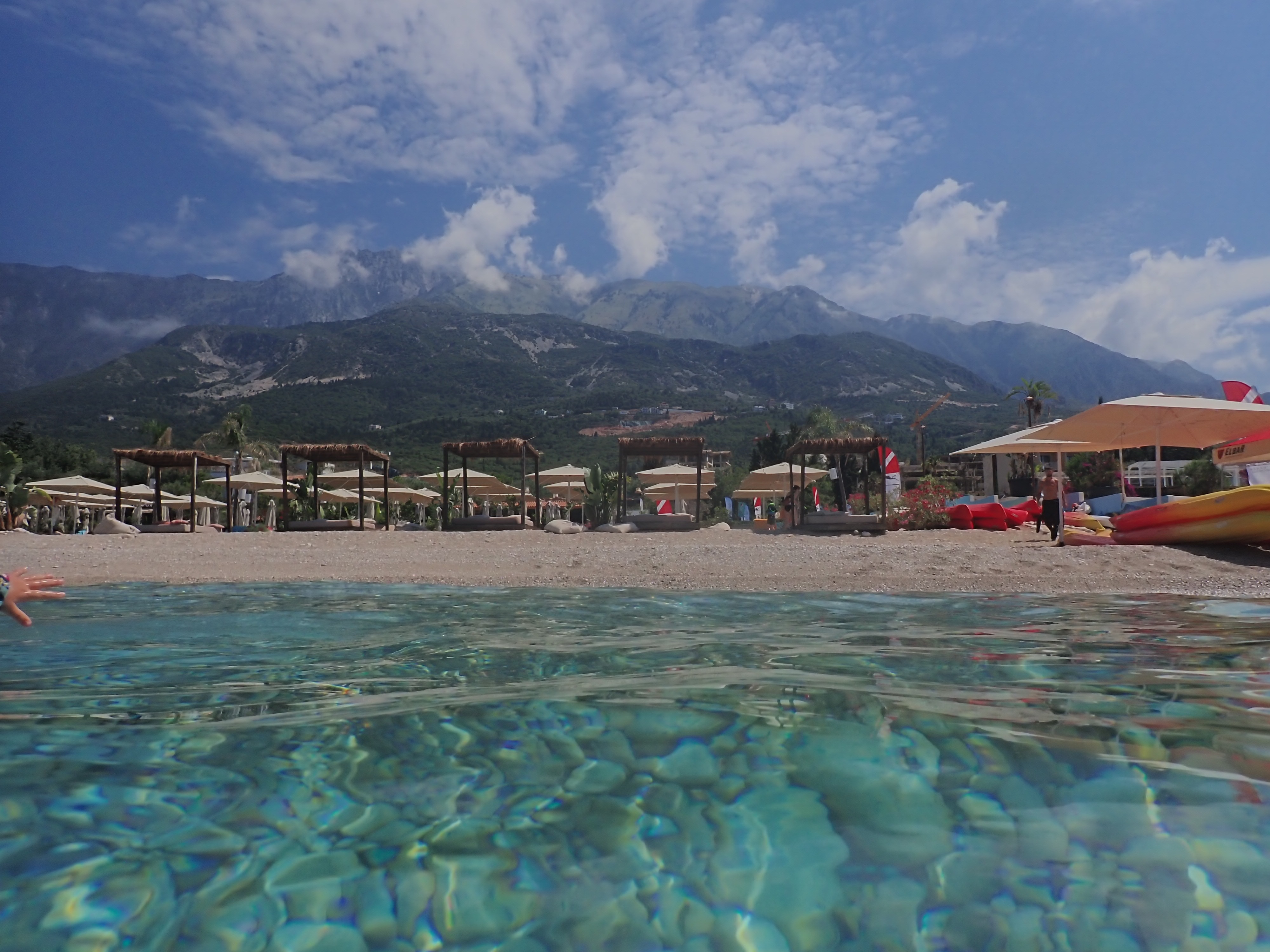
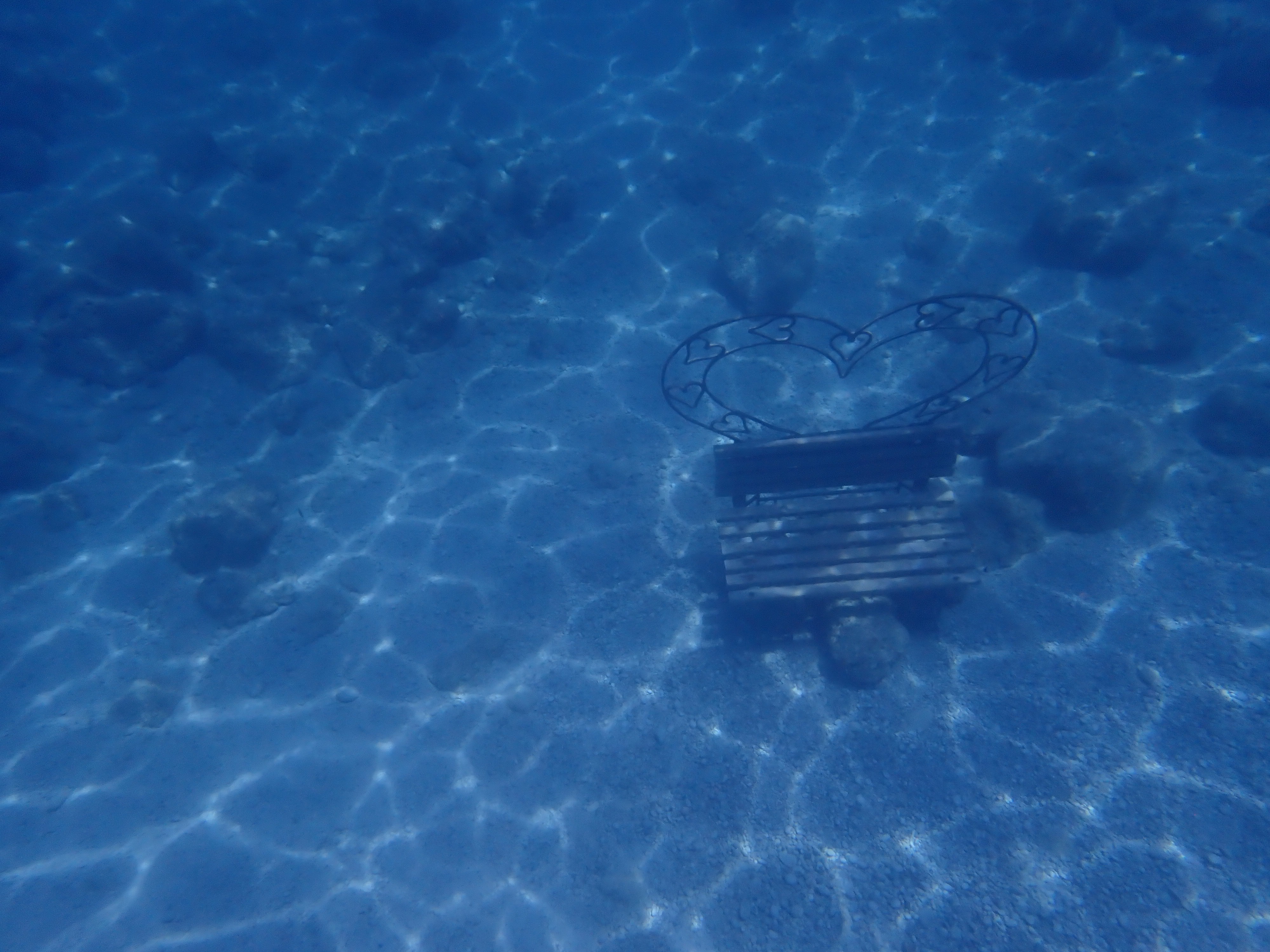
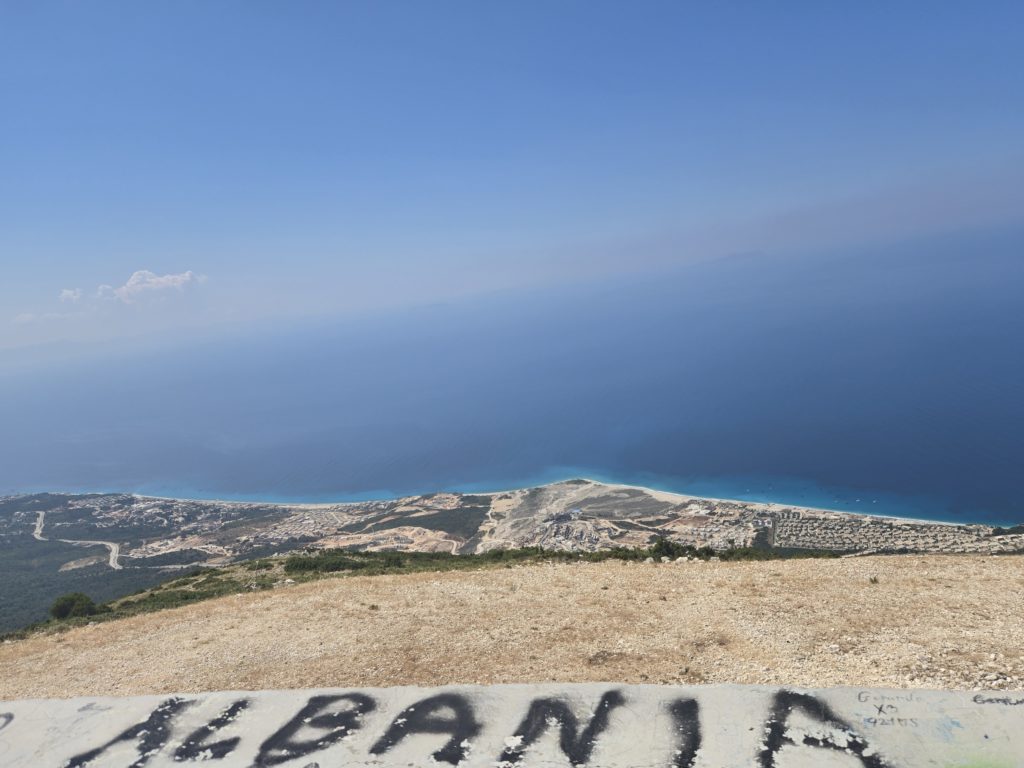
Arriving from Greece, we began our Albanian road trip in the south, in the stunning Albanian Riviera. In this breathtaking region, the mountains meet the Ionian Sea on the country’s south-western coast. The result is a spectacular landscape of sandy beaches, turquoise waters filled with fish, and dramatic mountain backdrops. Tourism is booming here, for better and, perhaps, for worse. Unfortunately, the many construction sites and the presence of litter detract from what could otherwise feel like paradise.
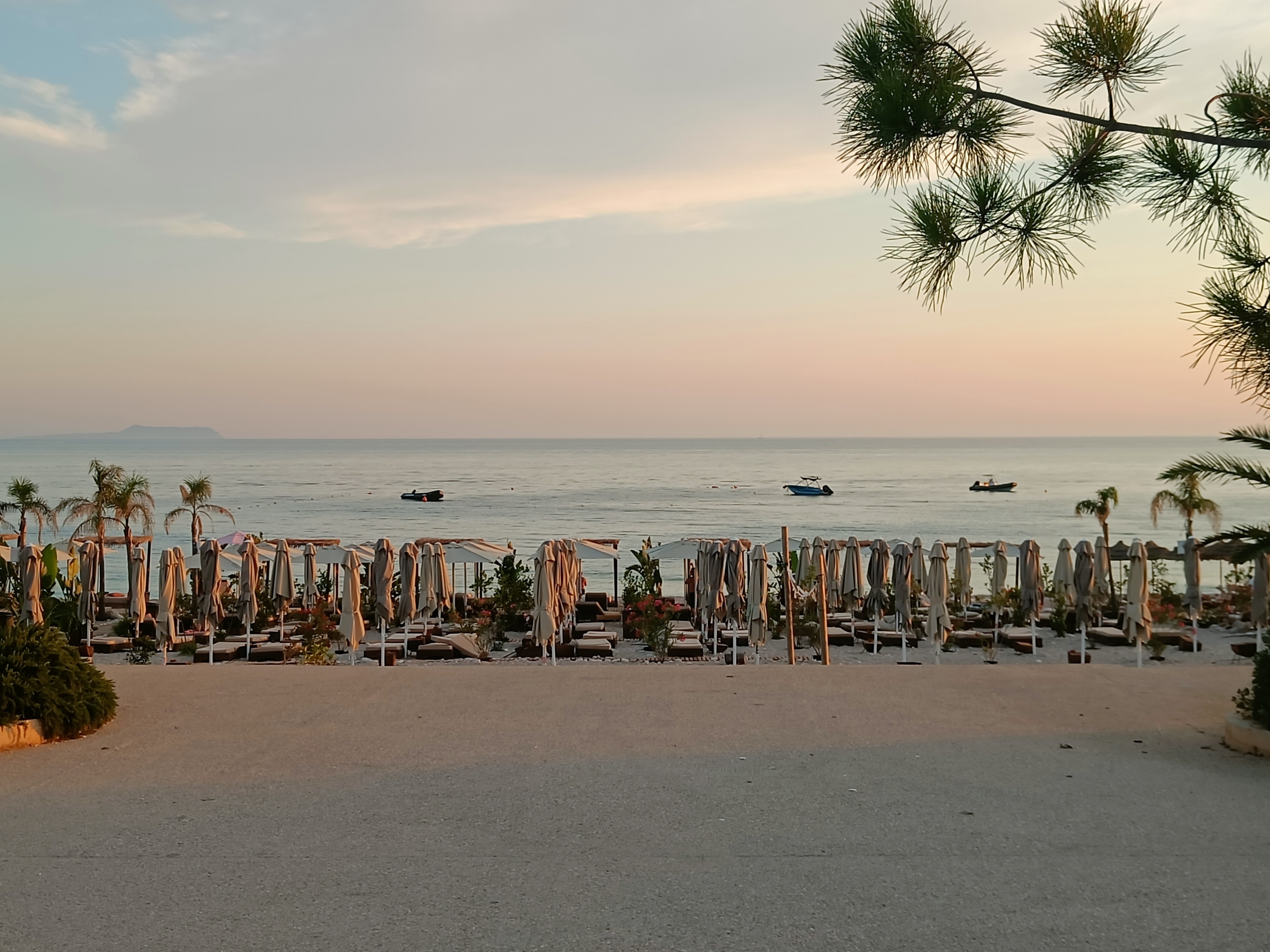
On Drymades beach, it is possible to rent sun loungers at the 360 Beach Bar. Directly opposite our accommodation on the beach, a dive centre offers a wide range of activities (which we didn’t try with the children), including kayak and paddleboard hire, wreck diving, and boat excursions and inland trips.
Where to Stay at Drymades Beach
We stayed at the charming Drymades Bungalows, a lovely hotel that blends beautifully into its surroundings. The accommodation is comfortable, just a few metres from the beach. Moreover, the staff were incredibly friendly, and it’s conveniently located next to a fantastic restaurant and a cocktail bar with a stunning rooftop for sunset drinks.
A special mention goes to the beautiful decoration. The rooms and restaurant tables are scattered throughout a garden of olive trees and flowers. Every decorative detail seems to have been carefully sourced, creating a wonderfully colourful vintage atmosphere.
Where to Eat on the Albanian Riviera
We had all our breakfasts, lunches and dinners at the EOS Mezze Bar. Everything was delicious, especially the seafood!
Where to Watch the Sunset with a Cocktail at Drymades Beach
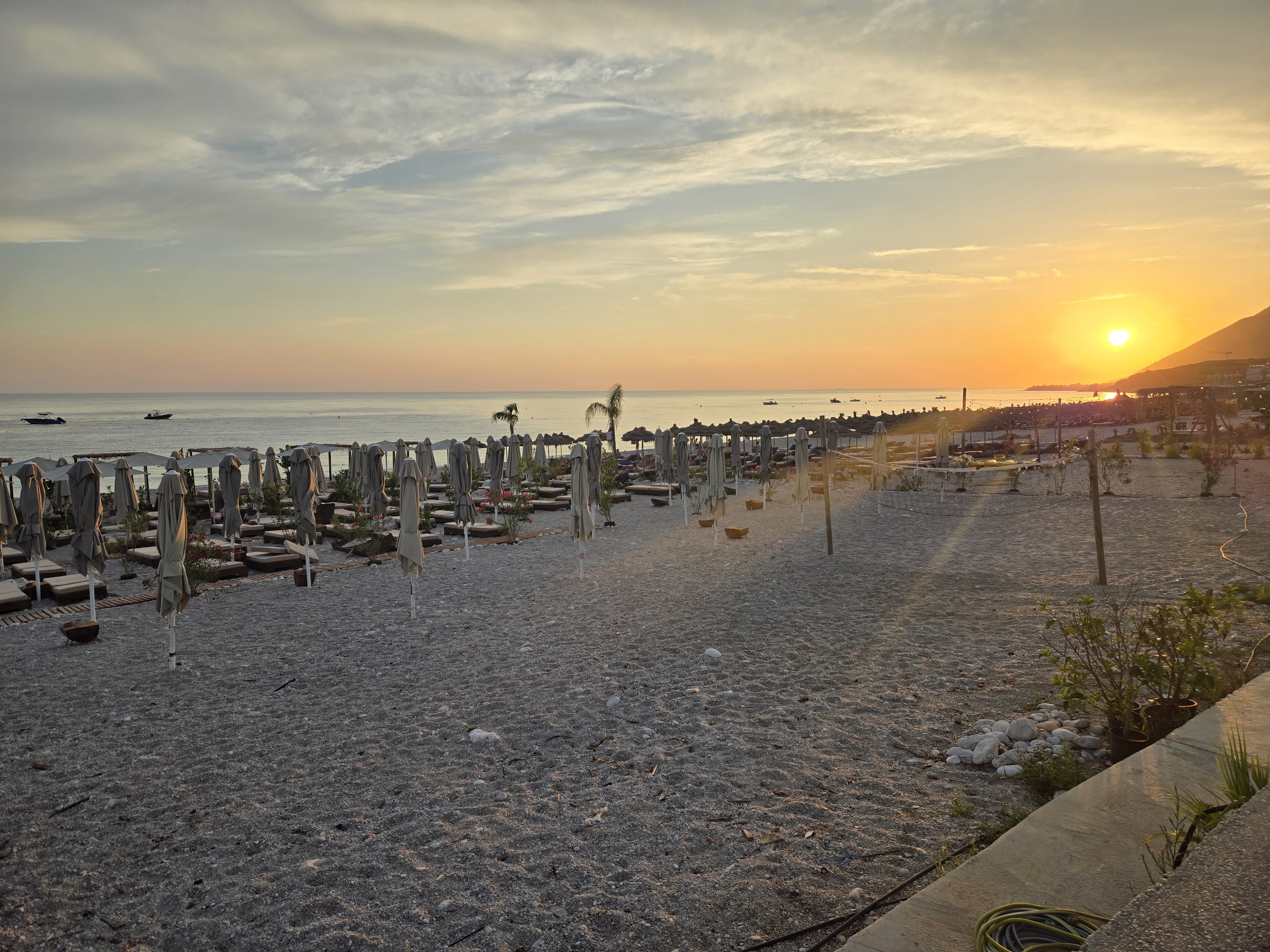
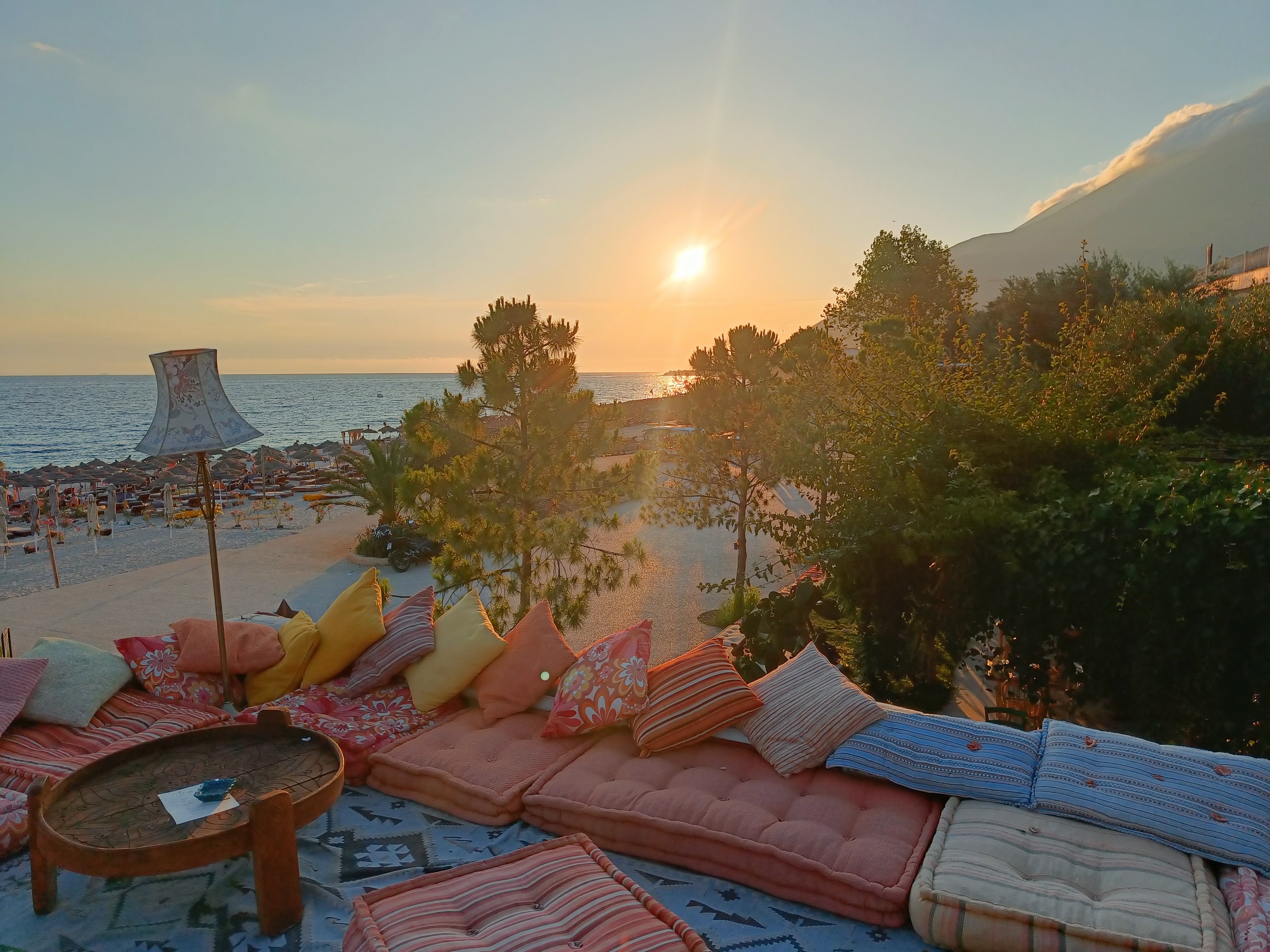
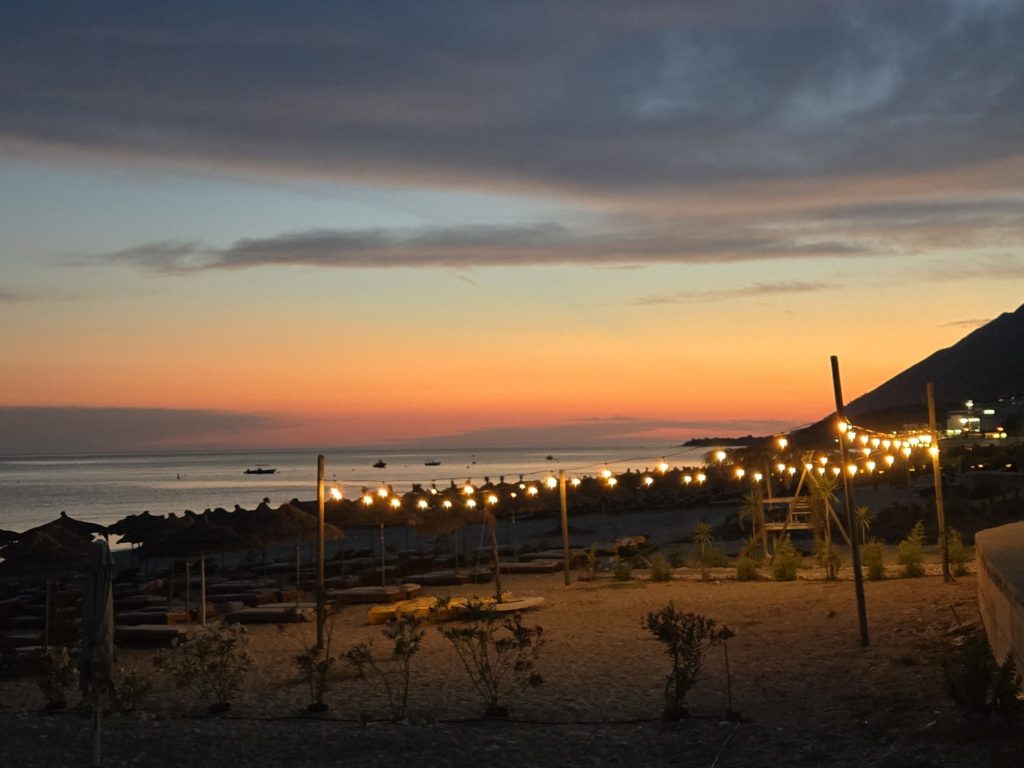
The terrace at 360 Bar, decorated with the same attention to detail as the neighbouring hotel and restaurant, is the perfect place to enjoy the sunset. The cocktails are outstanding and beautifully crafted, we especially loved the pistachio cocktail.
Visiting the Town of Dhërmi
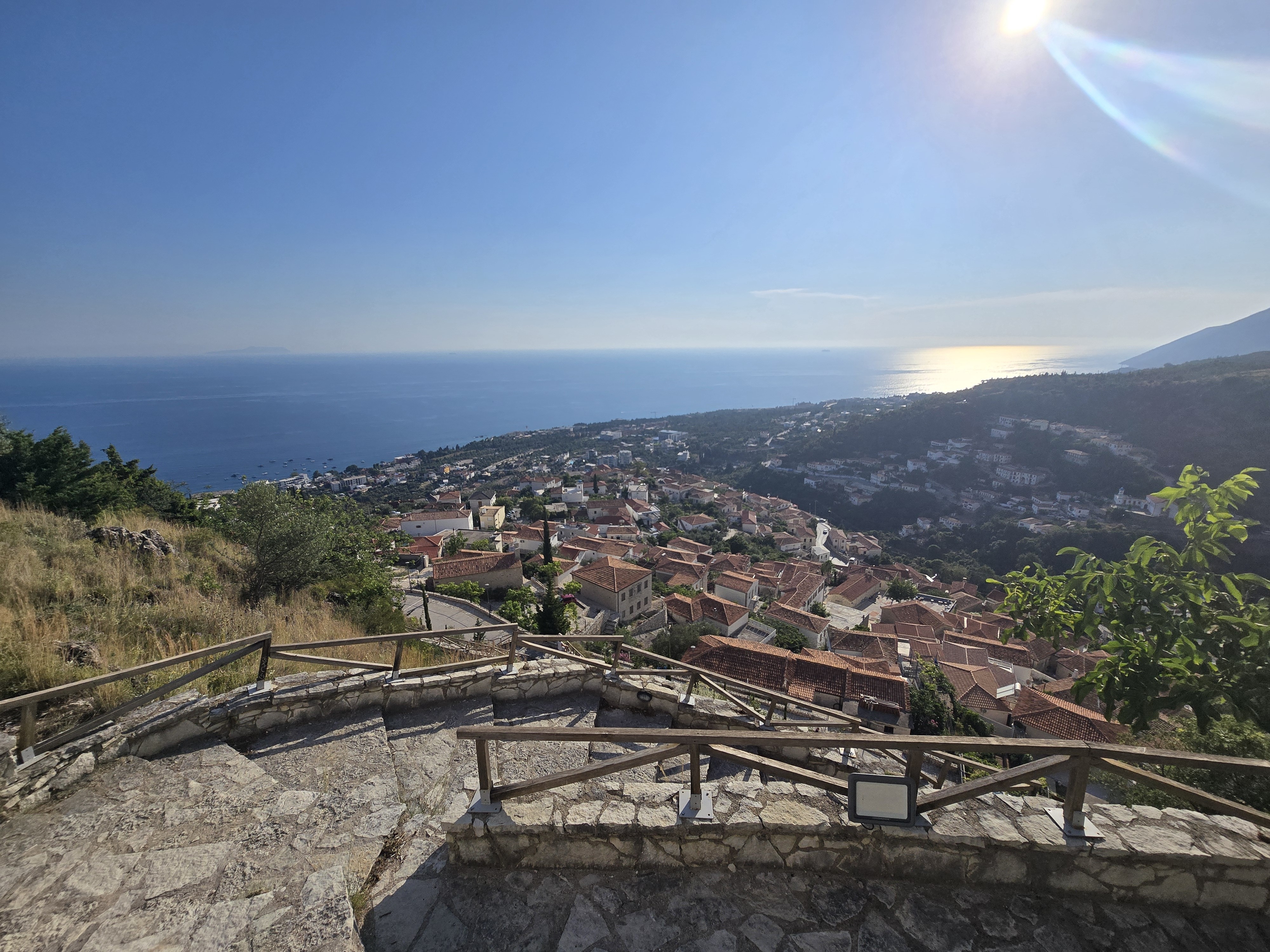
For our visit to Dhërmi, our goal was to walk up to the Monastery of Saint Mary. We didn’t know it at the time, but it is actually possible to park right at the bottom of the stairs rather than climbing: there is a car park!
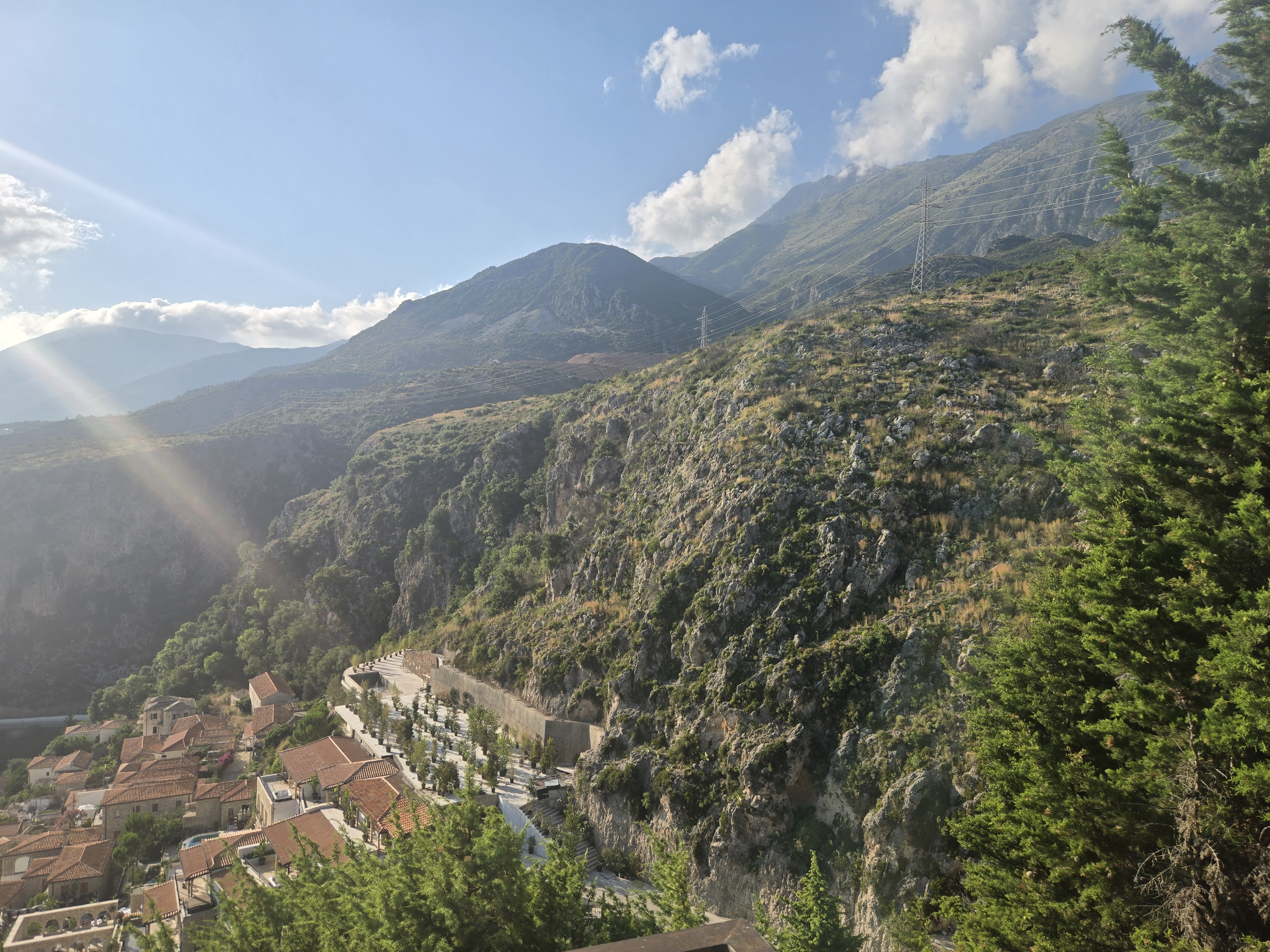
Unfortunately for us, we started our walk from the Drymades Springs (where we managed to find a parking spot easily), then wandered through the old town. We found it quite difficult to navigate through the streets. Also, Google Maps was not much help. Despite the various detours, we really enjoyed the atmosphere of the town and its narrow streets. Plus, the view from the monastery is absolutely worth the effort!
However, with children and under the hot sun, we definitely recommend parking directly at the top.
Llogara National Park with Kids
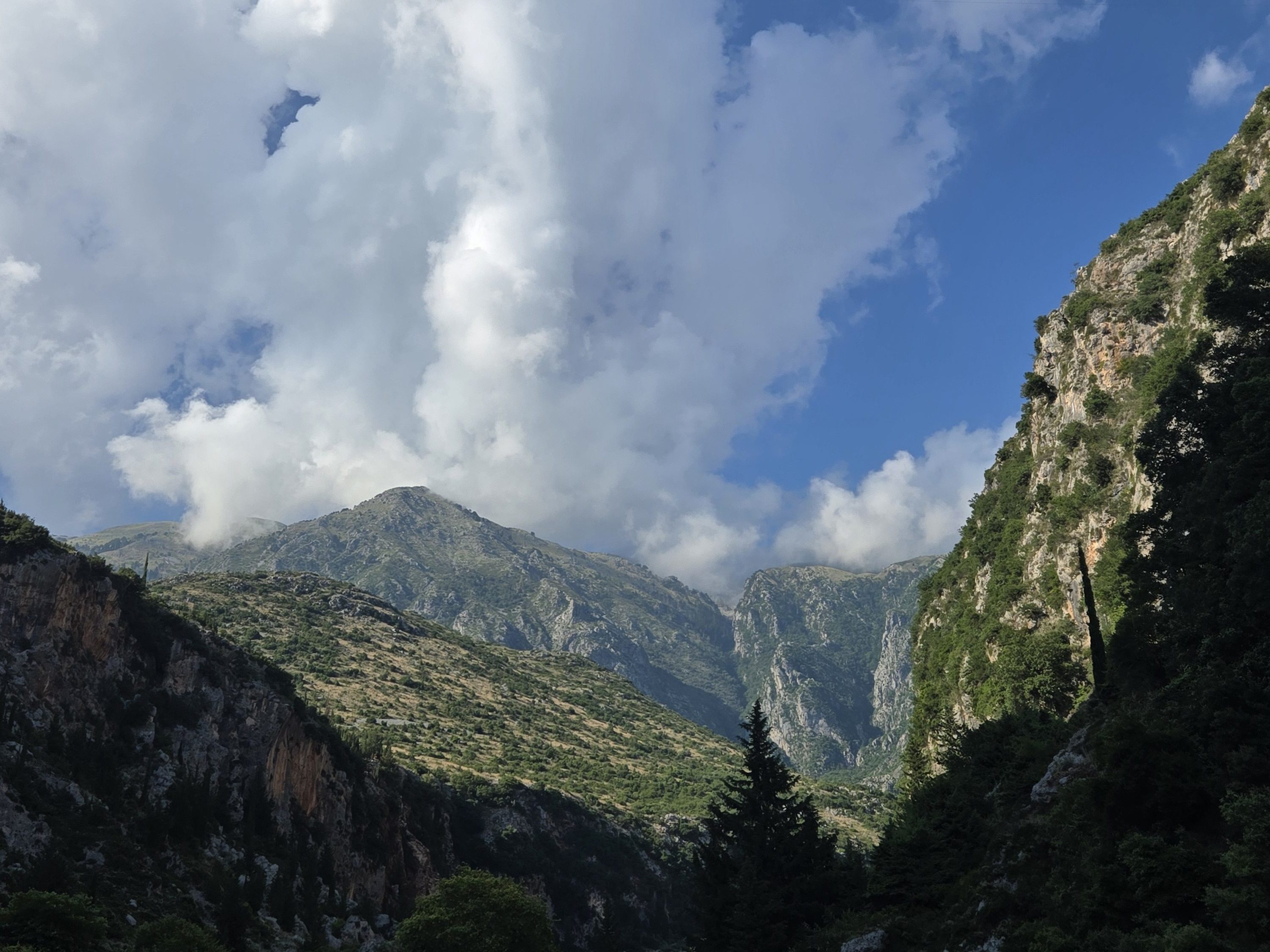
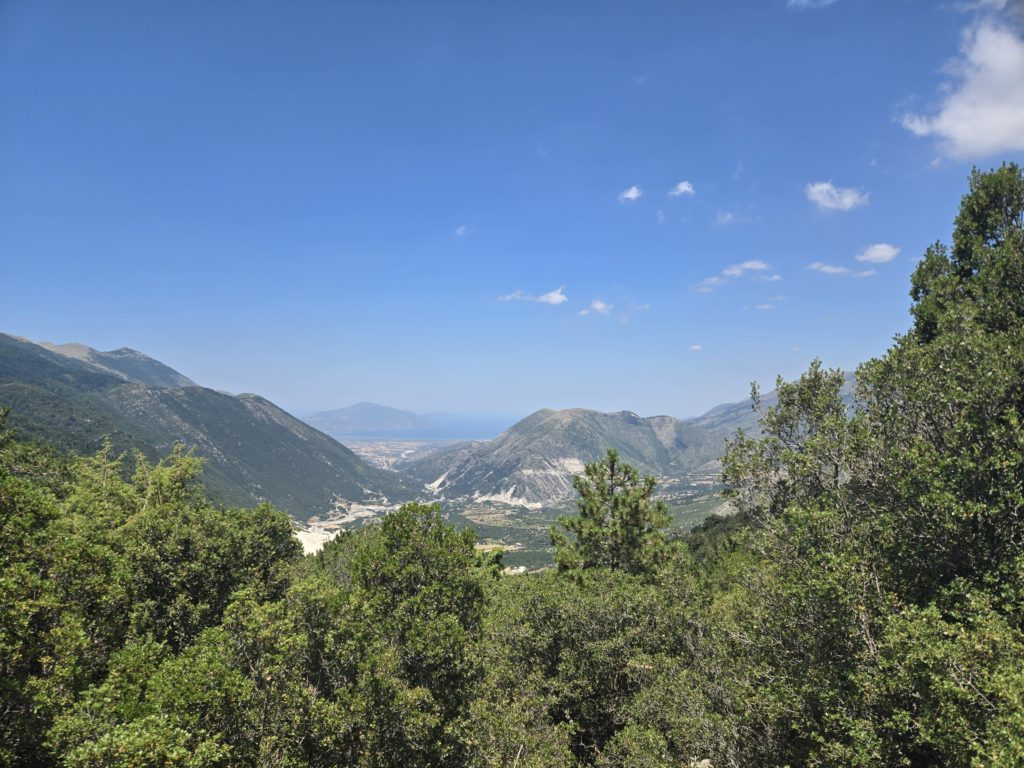
Very close to the Riviera, Llogara National Park was a stop we made for a few hours on our way to Golem. It was a highlight for the whole family!
First of all, it was pleasantly cool. Then, we did a nice hike that was suitable for children. We regretted not staying for a few days, as the hotels there looked really lovely. We would even say that for those who prefer to avoid too much heat, staying in the park and spending a half-day exploring the Riviera is a great option.
There is a visitor centre. Unfortunately, nobody seemed to be working there, so the information available was limited. However, there are toilets and some lovely displays of the region’s wildlife that the kids enjoyed.
Nonetheless, we got some excellent advice at the Alpine Hotel restaurant opposite. And then, we enjoyed a delicious lunch on their scenic terrace after our short hike.
Narta Lagoon (Vjosa-Narta Delta Protected Area)
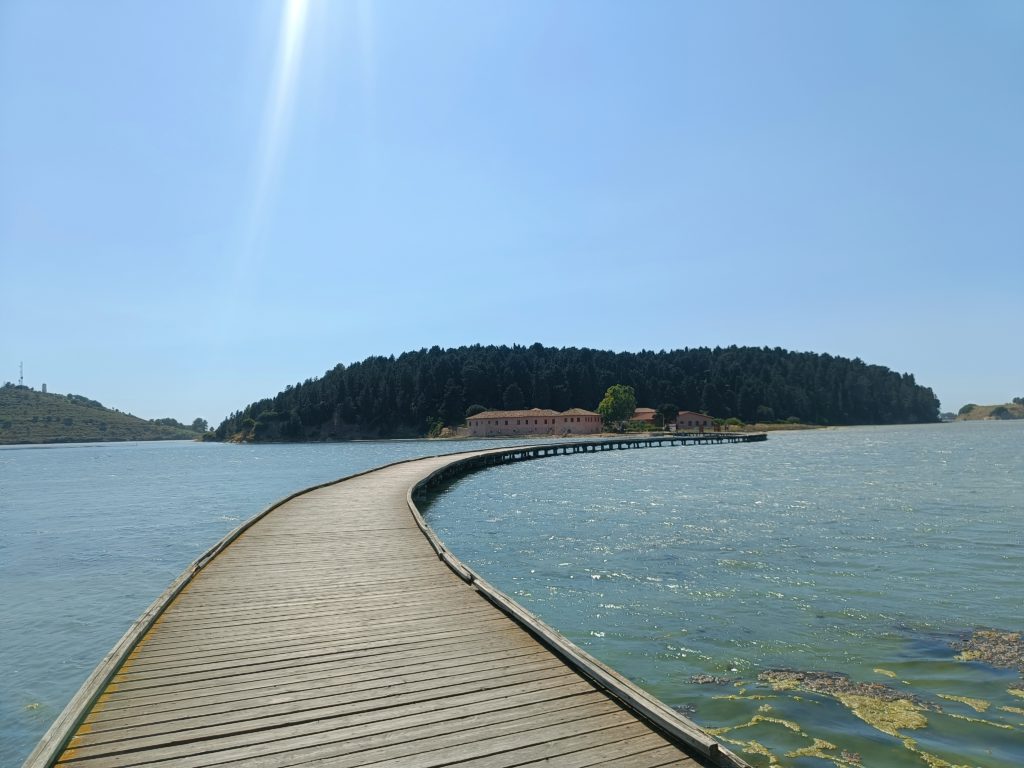
Our second stop on the way was the Saint Mary Monastery, located on a small island in the middle of the Narta Lagoon. We didn’t see any pink flamingos, as they tend to arrive in the morning or around sunset, but we did get to observe a huge pelican. The walk across the wooden bridge to reach the monastery was windy, but really enjoyable.
The seaside resort of Golem
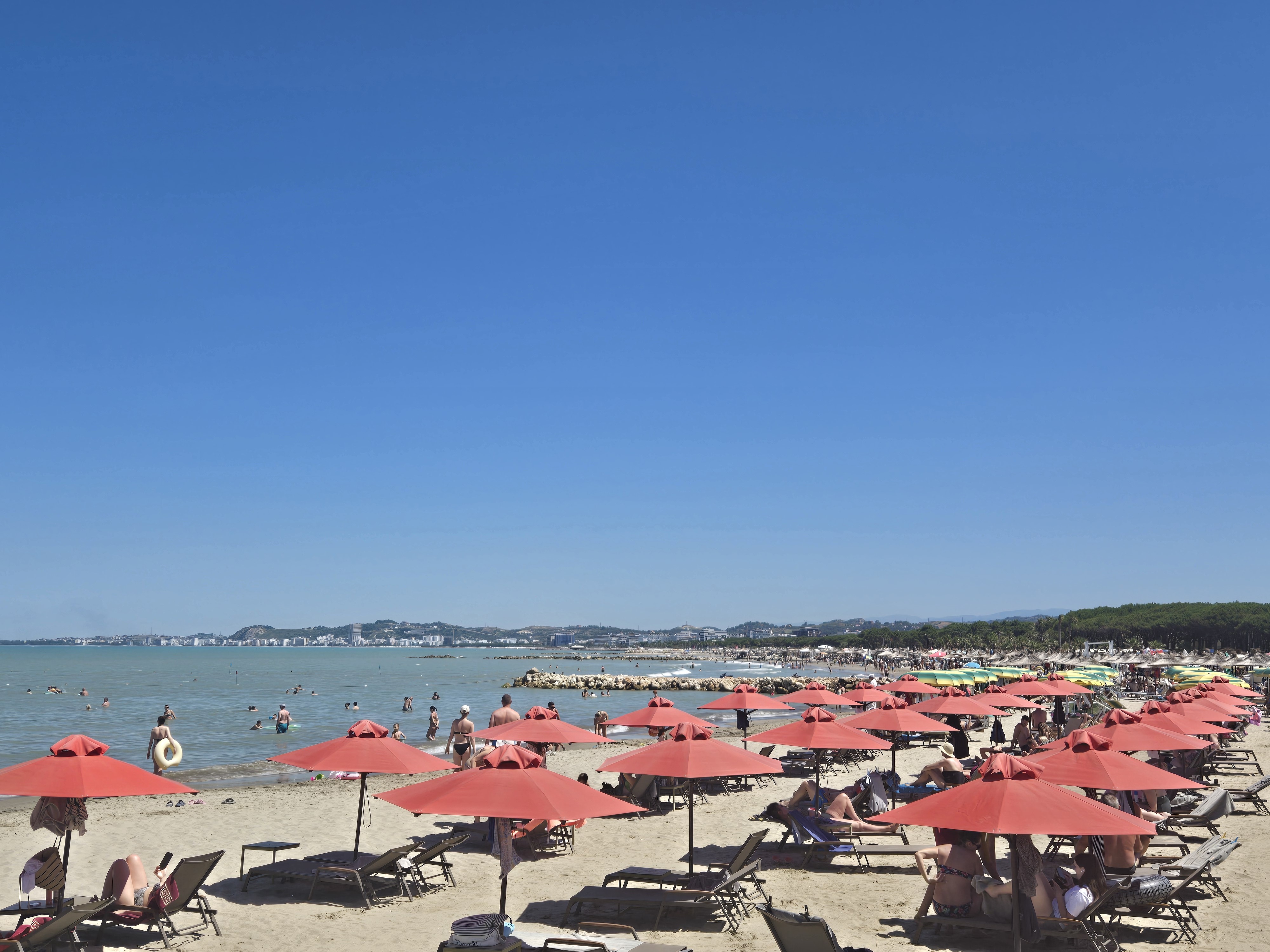
Golem was, for us, simply a stopover to break up our journey between the south and the north, and to do some laundry. In our opinion, it wasn’t the most beautiful beach we visited. The water is not as turquoise as along the Riviera, but it was still a very convenient place to stop and rest during our journey.
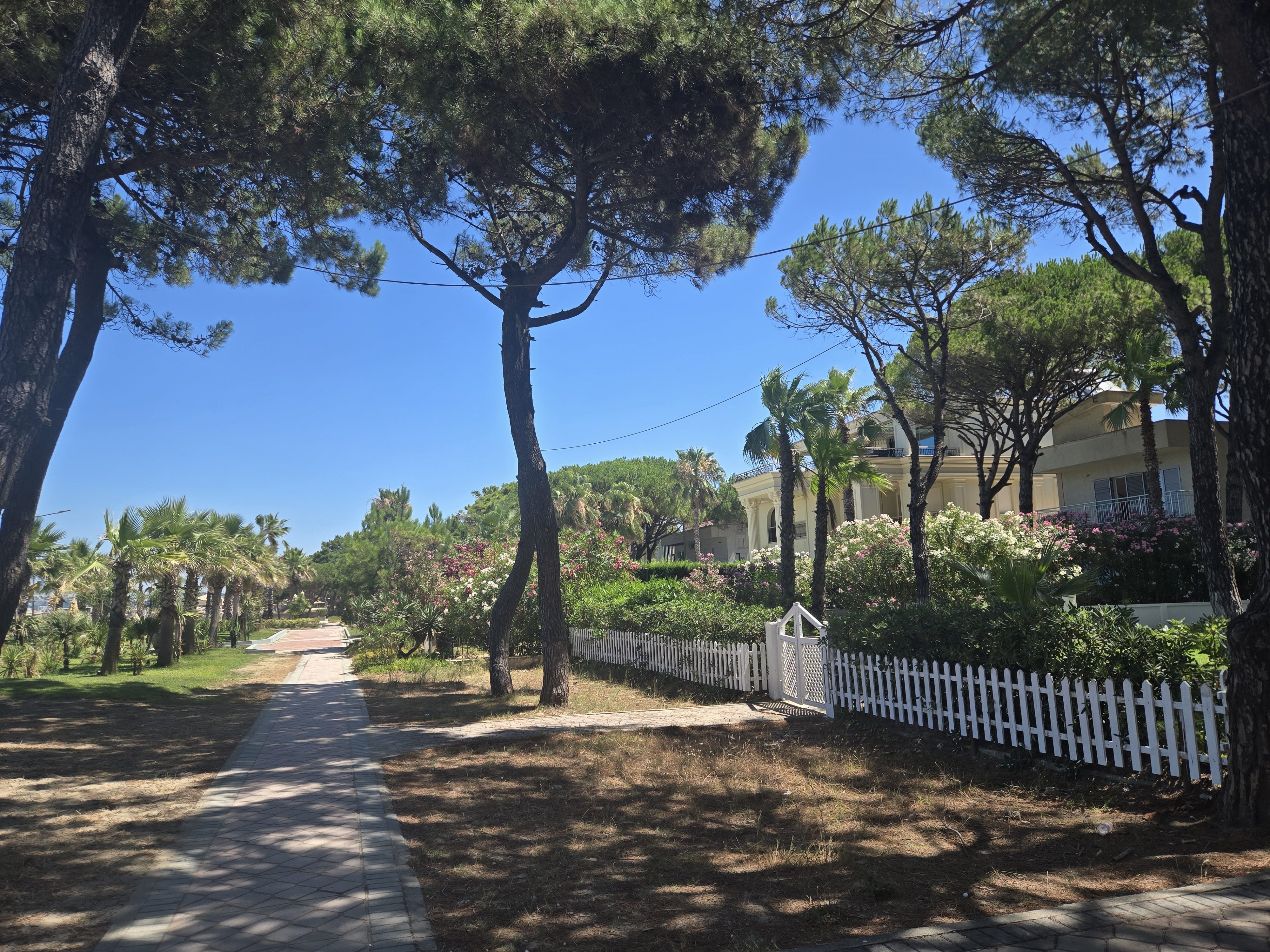
We were there over the weekend, and the area was lively. It is also the closest beach destination to the capital, Tiranë, so you should expect to find plenty of people. We enjoyed the pleasant promenade along the beach.
Lake Shkodra and Rozafa Castle
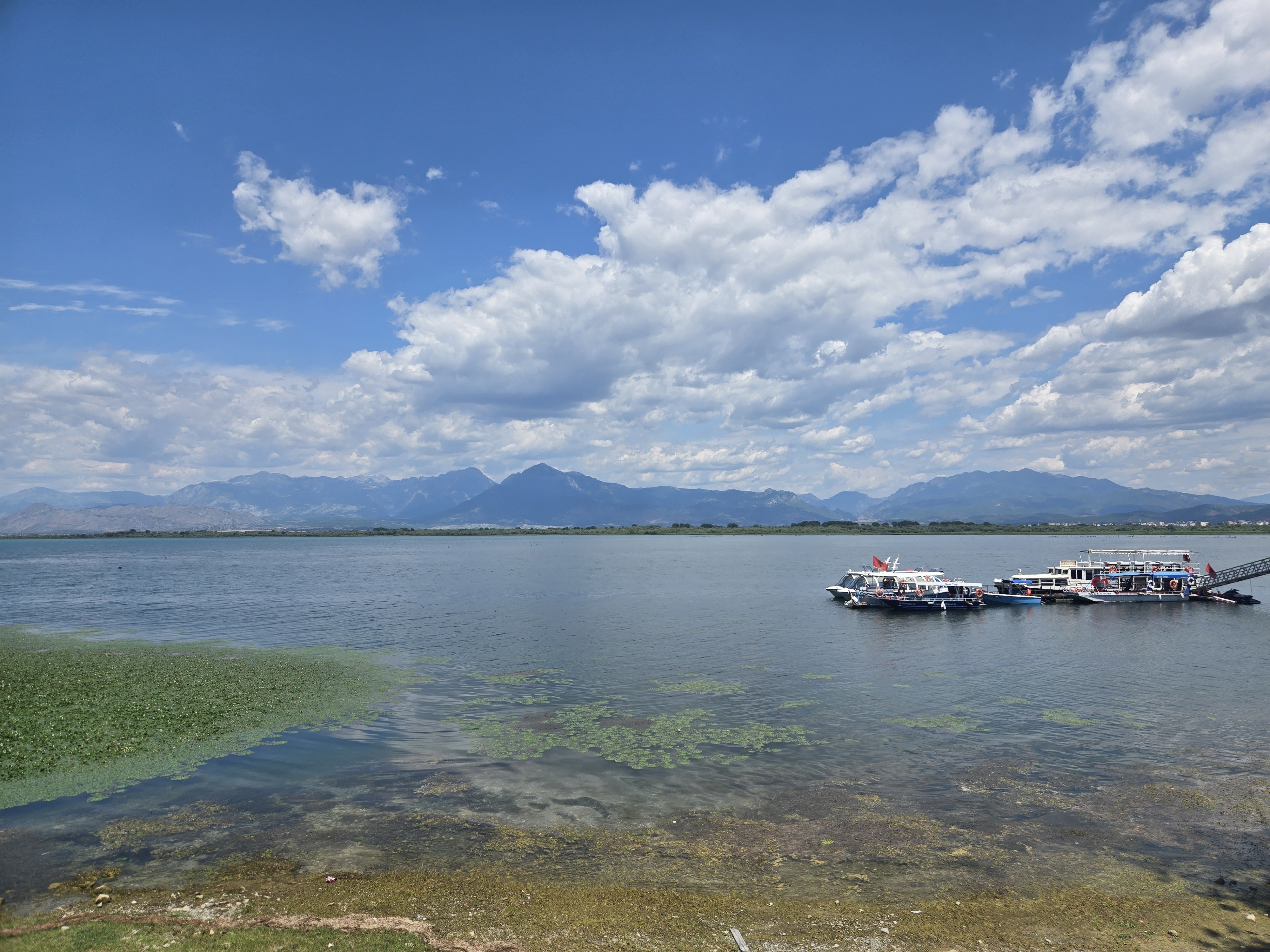
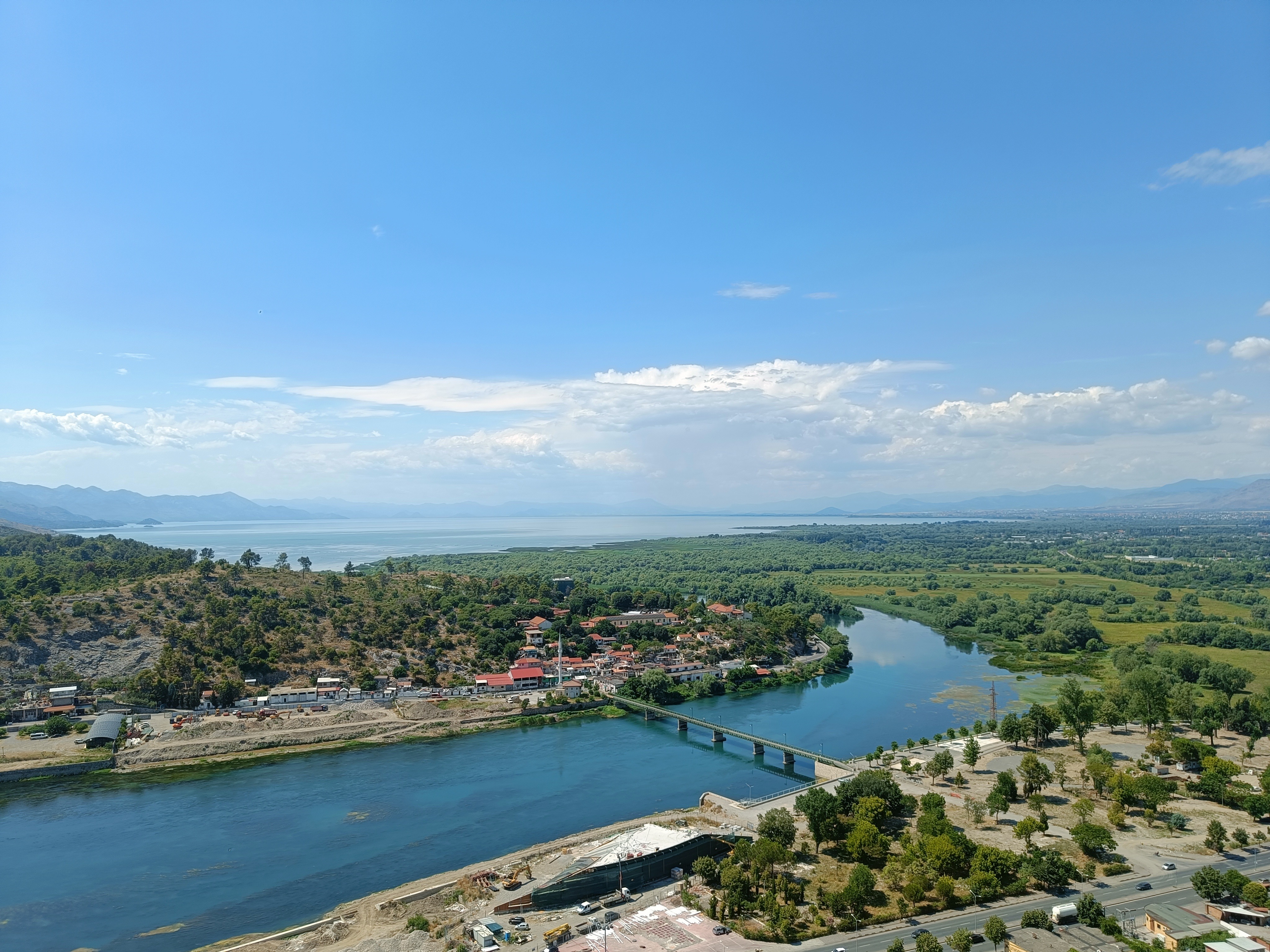
We made a short stop (on our way from Golem to Razëm) to enjoy the view over Lake Shkodra and have lunch. There are several restaurants to choose from, offering local lake fish dishes and terraces with scenic views.
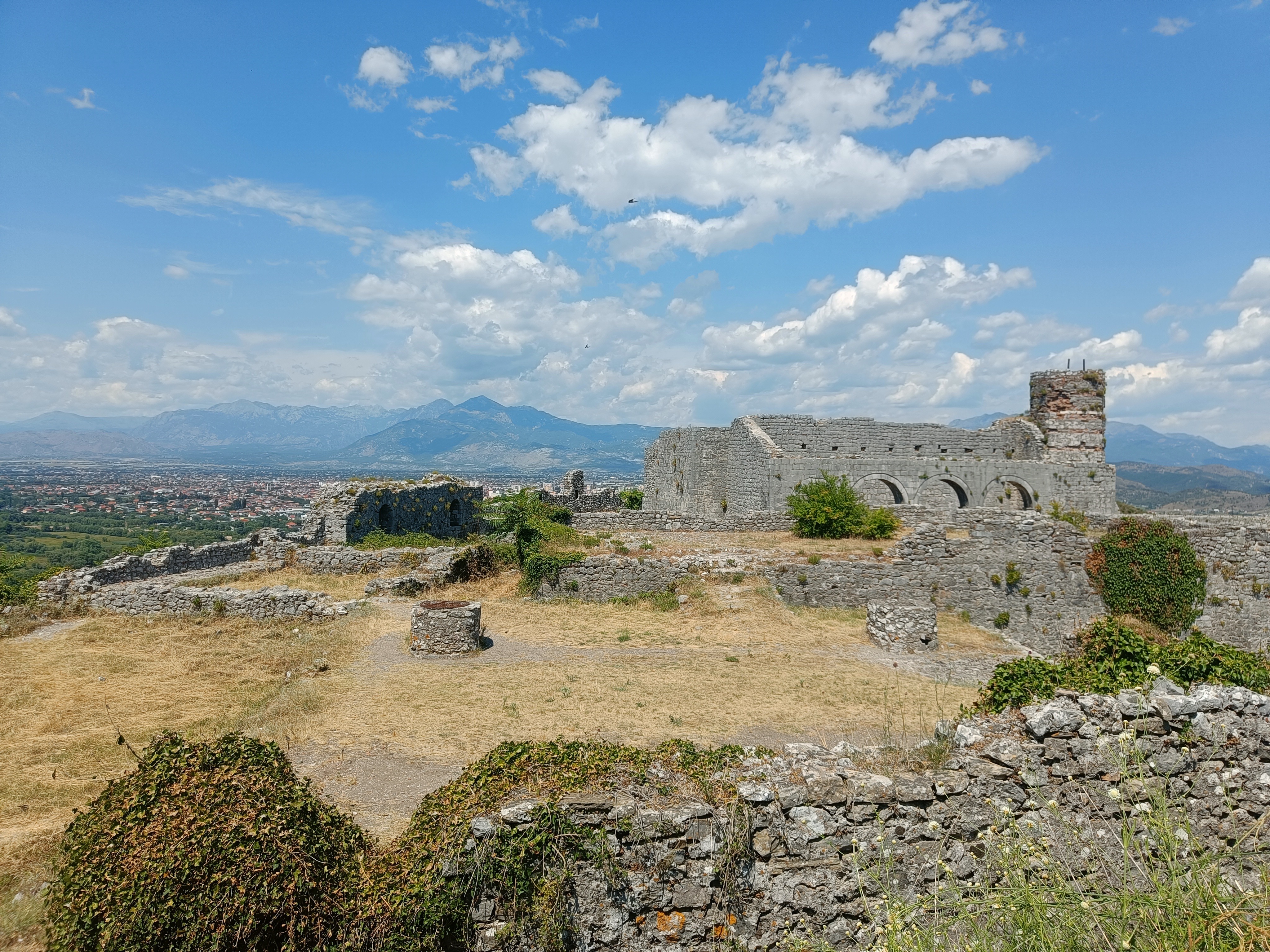
Afterwards, we headed to the Rozafa Castle. Make sure to wear good shoes, as the cobblestones inside this impressive ruin are very slippery. Be aware that there are many paid car parks at the bottom of the hill, while the car park at the very top of the paved road, right in front of the castle entrance, is actually completely free (it is not very large, but it is worth checking before paying somewhere).
The museum inside the castle requires an additional ticket on top of the entrance fee, and unfortunately it was closed on the day we visited (Monday). Therefore, we missed out on some historical context and explanations.
The secret Albanian Alps: discovering the Razëm region with kids
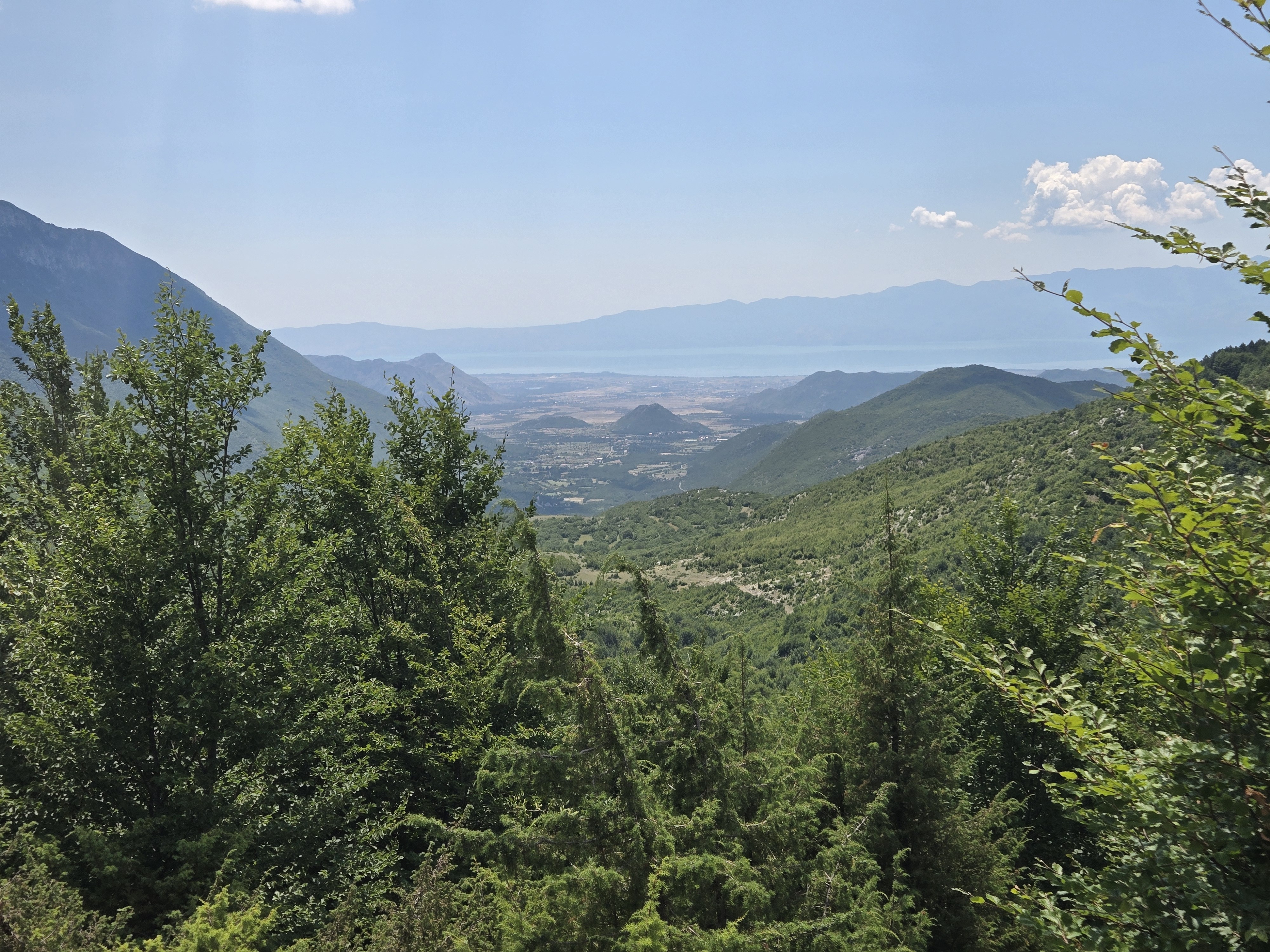
We are glad we visited the Razëm region in the Albanian Alps, a much quieter area than Theth. It is renowned for its pure mountain air, and is said to benefit people with asthma and respiratory issues.
It was a perfect way to end our trip. The village of Razëm is charming and offers many hiking trails starting nearby. We were delighted to enjoy the cooler temperatures after experiencing so much heat throughout the rest of our time in Albania.
There are hikes that are perfect for young children, but also plenty of options for more experienced hikers. Unfortunately, we also came across a lot of litter here, as we had in other parts of Albania.
Where to stay in Razëm, in the Albanian Alps, for a relaxing family getaway: our stay at Natyral Razma Resort
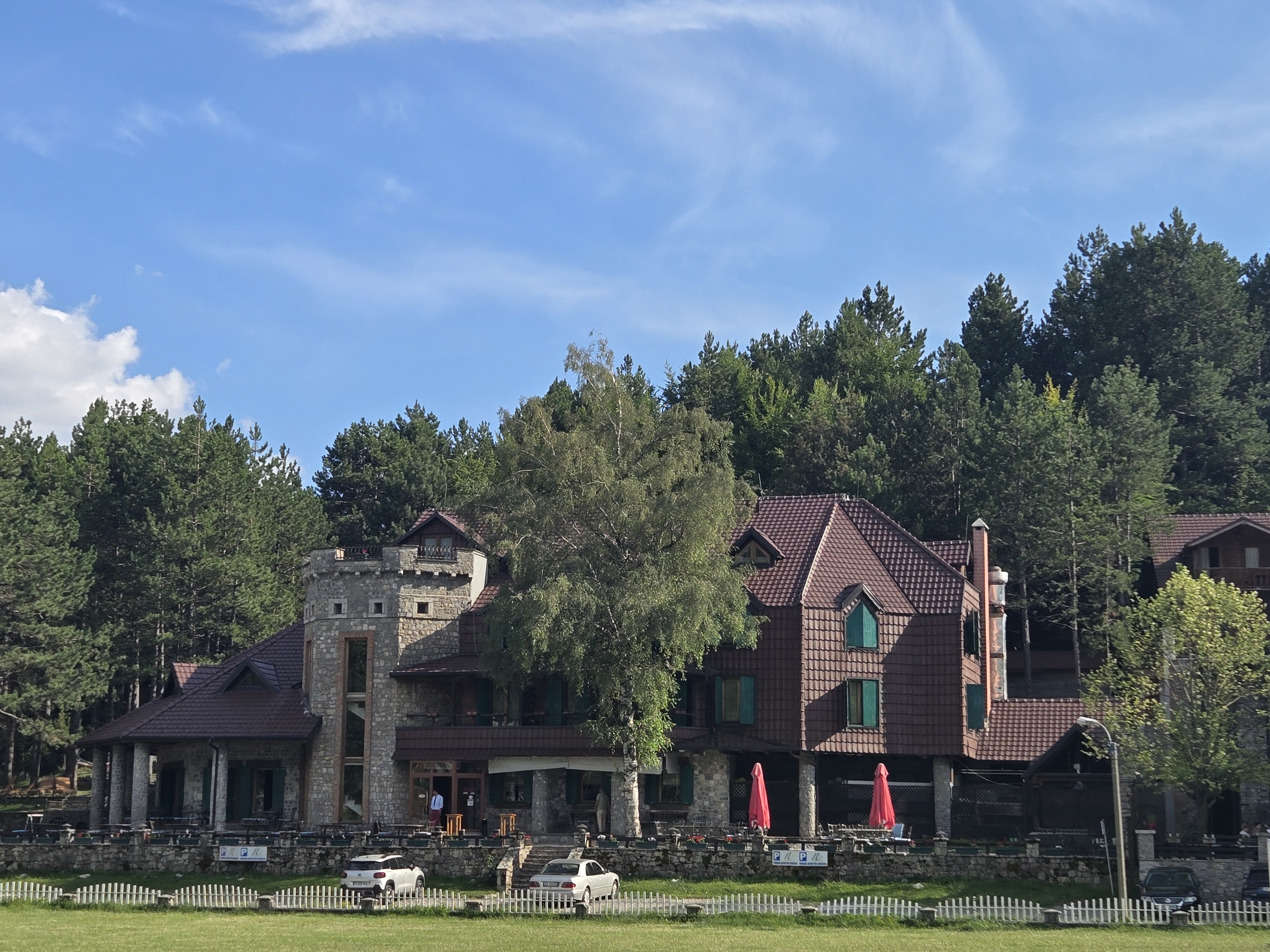
We stayed at a wonderfully peaceful place, the Natyral Razma Resort. Located in the heart of the small village, where the few local families happily gather in the evening, this hotel is a peaceful and idyllic retreat.
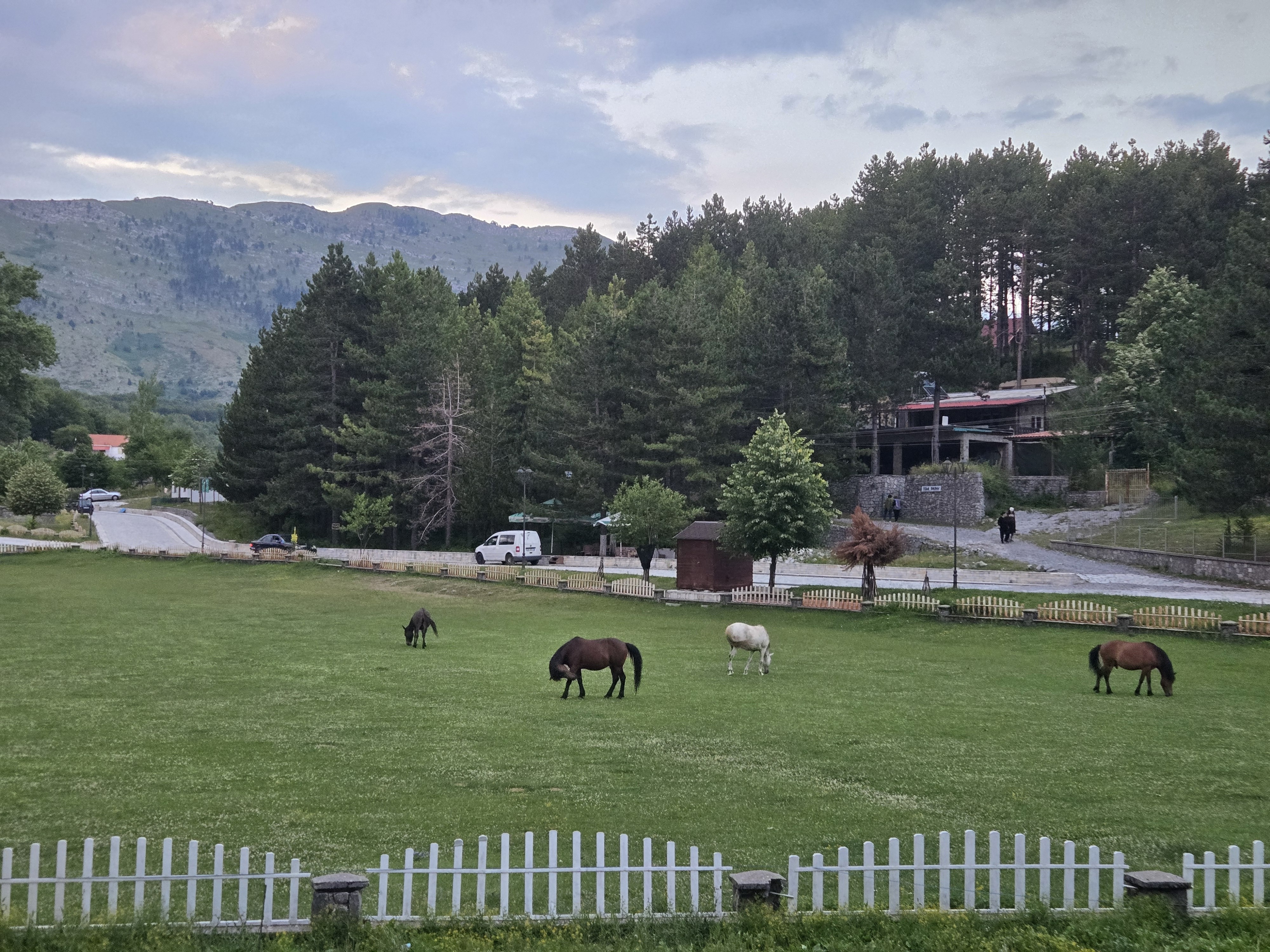
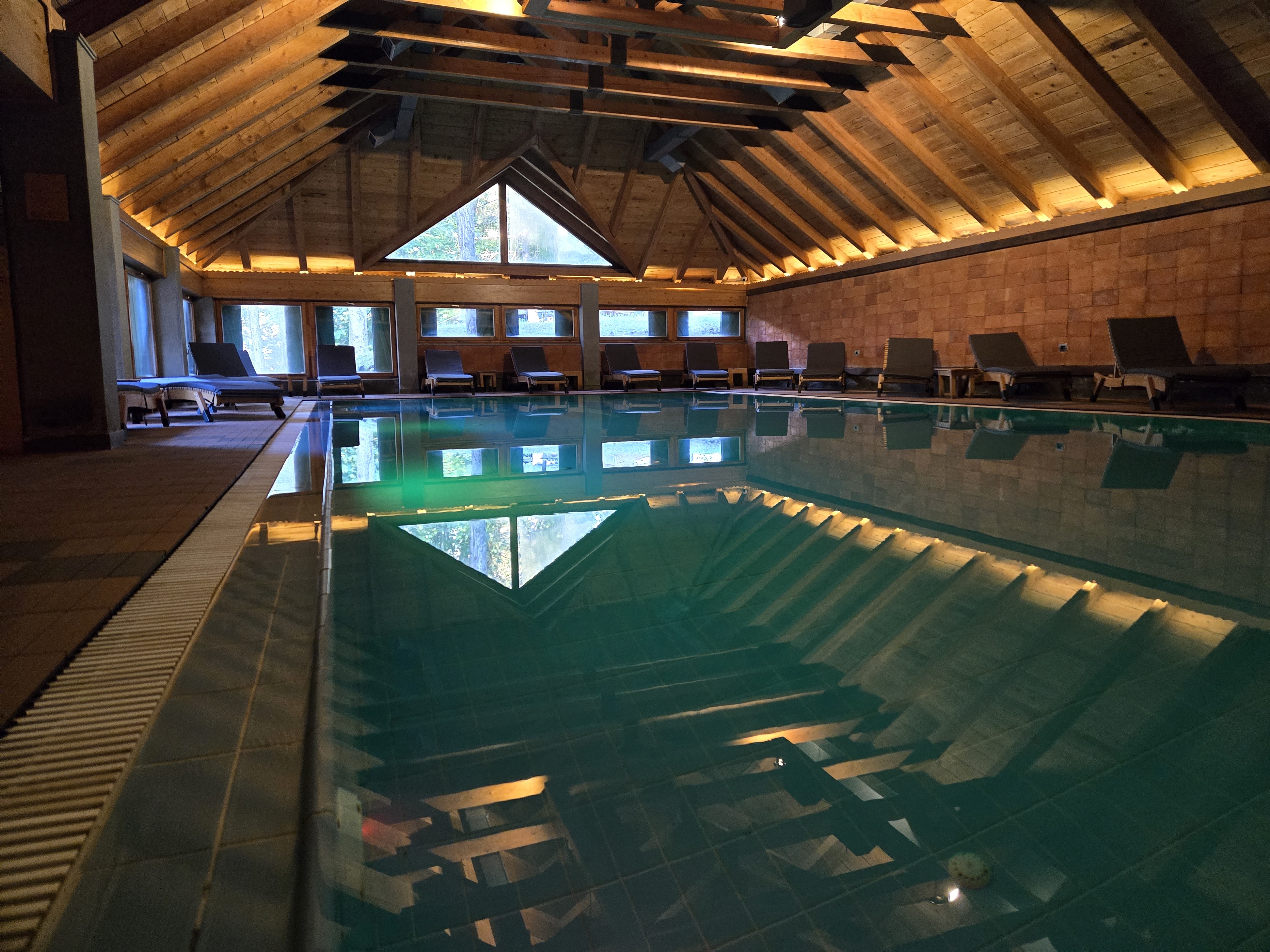
There is a playground for children, a huge swimming pool, a sauna, a picturesque terrace overlooking the mountains, and all of this right at the foot of hiking trails through the forest and mountains. Horses or cows sometimes wander freely through the central square in the evening, while children calmly play football nearby.
The owners, Aida and Shirazi, opened this family-run 27-room hotel in 2009 and happily share the history of Razëm and the surrounding region with their guests. Like many places in Albania, Razëm has a fascinating story. The village developed around a century ago, when merchants from Shkodër built the first houses there to spend their summers away from the heat of the city. Under Enver Hoxha’s communist regime, Razëm later became a holiday destination reserved for state workers.
We visited in summer, but it also looks like an incredible place in autumn, with its colourful foliage, in spring with blooming flowers, or in winter under the snow. There are even special Christmas packages, which must be magical next to the large fireplace. The decoration has been carefully designed, creating a cosy mountain chalet atmosphere within an elegant property overlooking the mountains.
The restaurant serves hearty and authentic dishes (breakfast includes traditional specialities). We particularly recommend the starters and small sharing plates. The waiters are incredibly friendly, and one of them even took us on a little walk around the area.
Practical questions for a road trip in Albania as a family
The Albanian language
We all (adults and children alike) enjoy learning a few words of politeness, how to introduce ourselves, or how to count to ten when we travel to a new country. We have to admit that Albanian was challenging for us and unlike anything we knew! However, communicating on site was not a problem at all: English was very well spoken by the majority of the people we met.
Here are the two words that we think are the bare minimum:
- Përshëndetje: the equivalent of “hello” or “good morning”
- Faleminderit: “Thank you”
Safety and health when travelling in Albania as a family
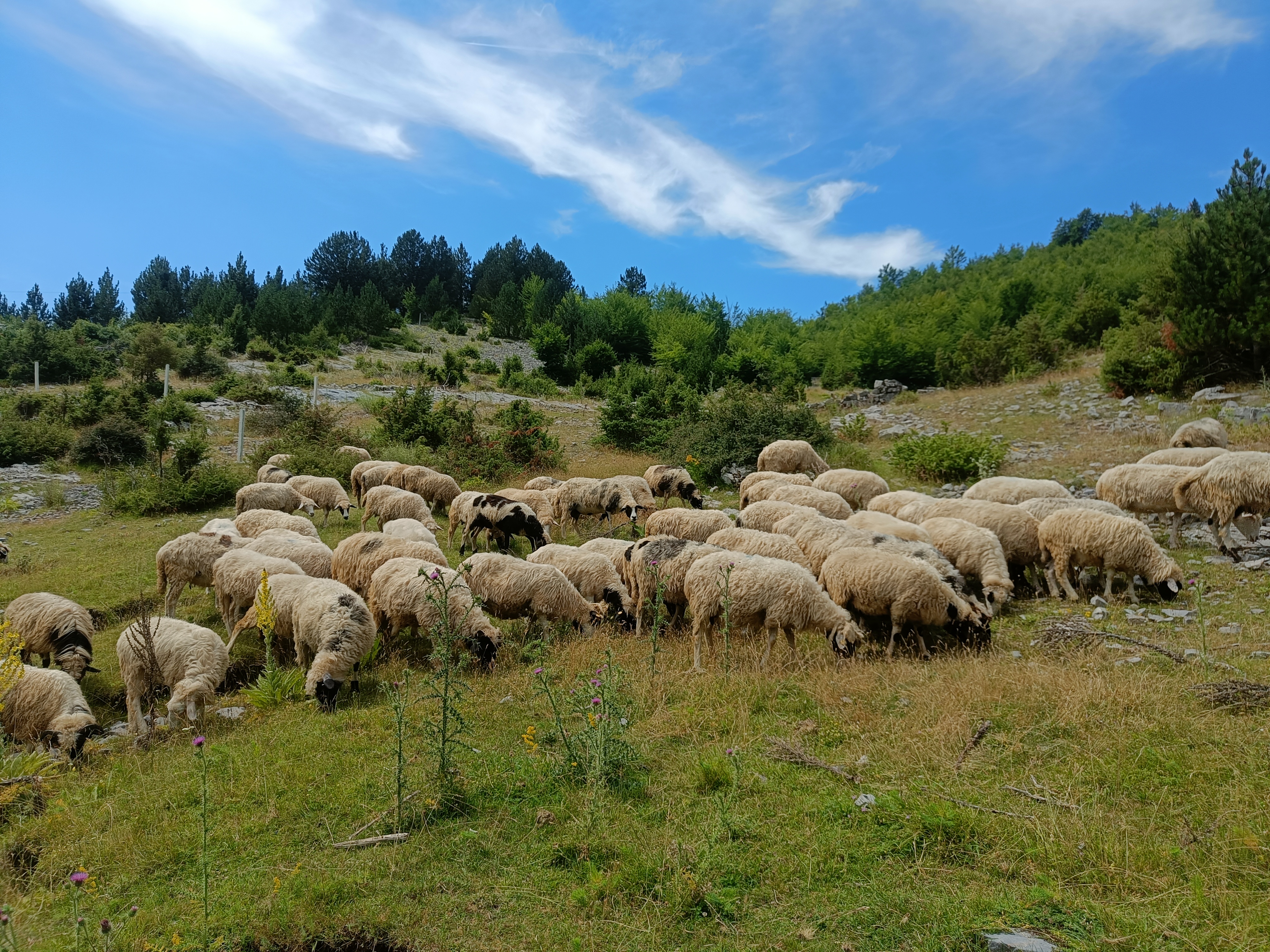
When it comes to driving in Albania, you need to hold on tight! First of all, the roads are incredibly winding, and we had to make quite a few stops because of motion sickness. Then, respect for traffic rules can be rather unpredictable. Finally, the roads are not always well maintained, with frequent gravel sections and potholes. As an extra challenge, we came across many animals wandering on the roads: cows, sheep, horses, dogs, goats and even donkeys!
Consequently, we stayed extremely alert, especially after reading some worrying statistics about road accidents in the country.
Be careful with tap water, which is not always safe to drink, depending on the region. This also means being cautious with ice cubes and raw vegetables. As a precaution, we also used our filters for brushing our teeth and washing our daughter’s baby bottle.
Another point to keep in mind is stray animals, which can carry rabies (although this is very rare). There are many animals roaming freely, but they are not aggressive and many seem to have owners. We had no issues at all, our children are strictly forbidden from petting or touching animals without the owner’s explicit permission.
Be aware that Albania is not part of the European Union, so having travel health insurance is absolutely essential! We travelled with Chapka insurance.
Payments and currency in Albania
Although the lek is the Albanian currency, euros were widely accepted everywhere we went.
However, card payments are not available everywhere, so make sure you always have cash with you. Another issue is that ATM fees are very high.
Reading list on Albania
- Free by Albanian author Lea Ypi. In this excellent and thought-provoking book, we experience the fall of communism through the eyes of a child. The entire system, and everything she believed to be true, suddenly collapses. A perfect read to discover Albania’s history while also reflecting on socialism and capitalism.
- The novel Sworn Virgin by another Albanian author, Elvira Dones. This fascinating book explores both a very particular tradition from northern Albania, where women can become men (out of necessity), and the topic of immigration.
- I tried, unsuccessfully, to find and watch the following Albanian films: Slogans, The Forgiveness of Blood and Bota. Let us know in the comments if you know how to watch them or have seen them!
The Conclusion of our road trip in Albania with young children
Albania is a small country with a lot to offer in terms of landscapes and experiences. Here are some places we did not have time to visit: the capital Tirana, the Benjë thermal springs at Përmet, the city and castle of Berat, the Butrint park and its archeological sites, the Theth National Park and its waterfalls, including the Blue Eye.
This country was very different from the other Balkan countries we visited. We have to admit that travelling as a family required us to be a little more cautious (regarding driving, infrastructure and drinking water), and that waste management issues slightly spoil some of its natural beauty. Nevertheless, we were amazed by its landscapes, especially the mountains along the Riviera coast. We were also shocked to discover the country’s history and the figure of Enver Hoxha, surprised by the farm animals freely roaming everywhere, and completely won over by the peaceful atmosphere of the mountains.

1 Comment
Ani
August 17, 2026 @ 12:59
The itinerary it’s just perfect!
We at Wonder Albania organise tours just like this if you ever thought about visiting ❤