During our 3-month family road trip through Southern Europe and the Balkans, we spent 5 days in the city of Mostar, in Bosnia and Herzegovina, and explored the surrounding area. This was in July 2026. We arrived from Montenegro, and then continued on to Croatia. Crossing the border between Montenegro and Bosnia and Herzegovina was fairly straightforward, as we used a small border crossing at Granični prijelaz Krstac. This contrasted with the crossing from Bosnia into Croatia which, marking the entry into the European Union and the Schengen Area, was more formal.
Here is the program: a little cultural background, the city of Mostar and its Old Town, the waterfalls of Kravica and Koćuša, the villages of Blagaj and Počitelj, and the pilgrimage site of Međugorje. Compared with the neighbouring countries we travelled through, Bosnia and Herzegovina was probably the country that moved us the most and felt the most different.
Understanding Bosnia and Herzegovina: some historical and cultural background
The first thing we noticed was how the many minarets of the mosques in Mostar’s Old Town stand alongside Christian crosses, Orthodox churches and Catholic pilgrims. This religious and cultural diversity, a particular source of pride in Sarajevo, has also created divisions since the wars of the 1990s. The country’s population has different socio-cultural identities: Bosniaks, who have predominantly followed the Muslim tradition since the Ottoman occupation; Bosnian Serbs, who are predominantly Orthodox; and Bosnian Croats, who are predominantly Catholic, as well as people who still identify as Yugoslav and families from mixed backgrounds.
When travelling through Bosnia and Herzegovina, it is impossible not to notice the traces of the atrocities that took place during the 1992-1995 war. Following the breakup of Yugoslavia, of which Bosnia and Herzegovina had been a part, the war pitted the government forces of the Republic of Bosnia and Herzegovina against Bosnian Serb and Bosnian Croat forces. In addition to the fact that parts of the country are still affected by landmines, many buildings still bear the scars of the conflict. This part of the world had already experienced a turbulent and violent history.
Today, the country brings together two historical regions: Bosnia and Herzegovina, Mostar is located in Herzegovina. The country is governed by a three-member presidency, representing the Bosniak, Serb and Croat communities respectively. In some areas, the communities have separate schools and, even in integrated schools, history lessons are taught separately.
Mostar with Kids
Visiting Mostar’s Old Town with Children
Mostar’s Old Bridge: Stari Most
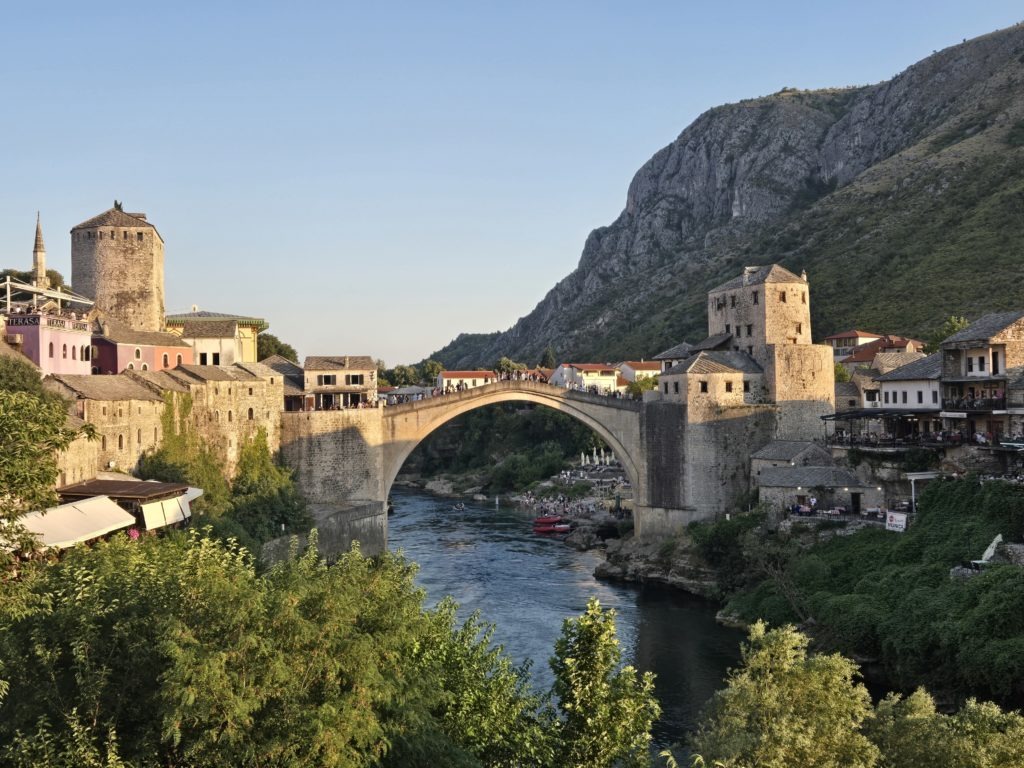
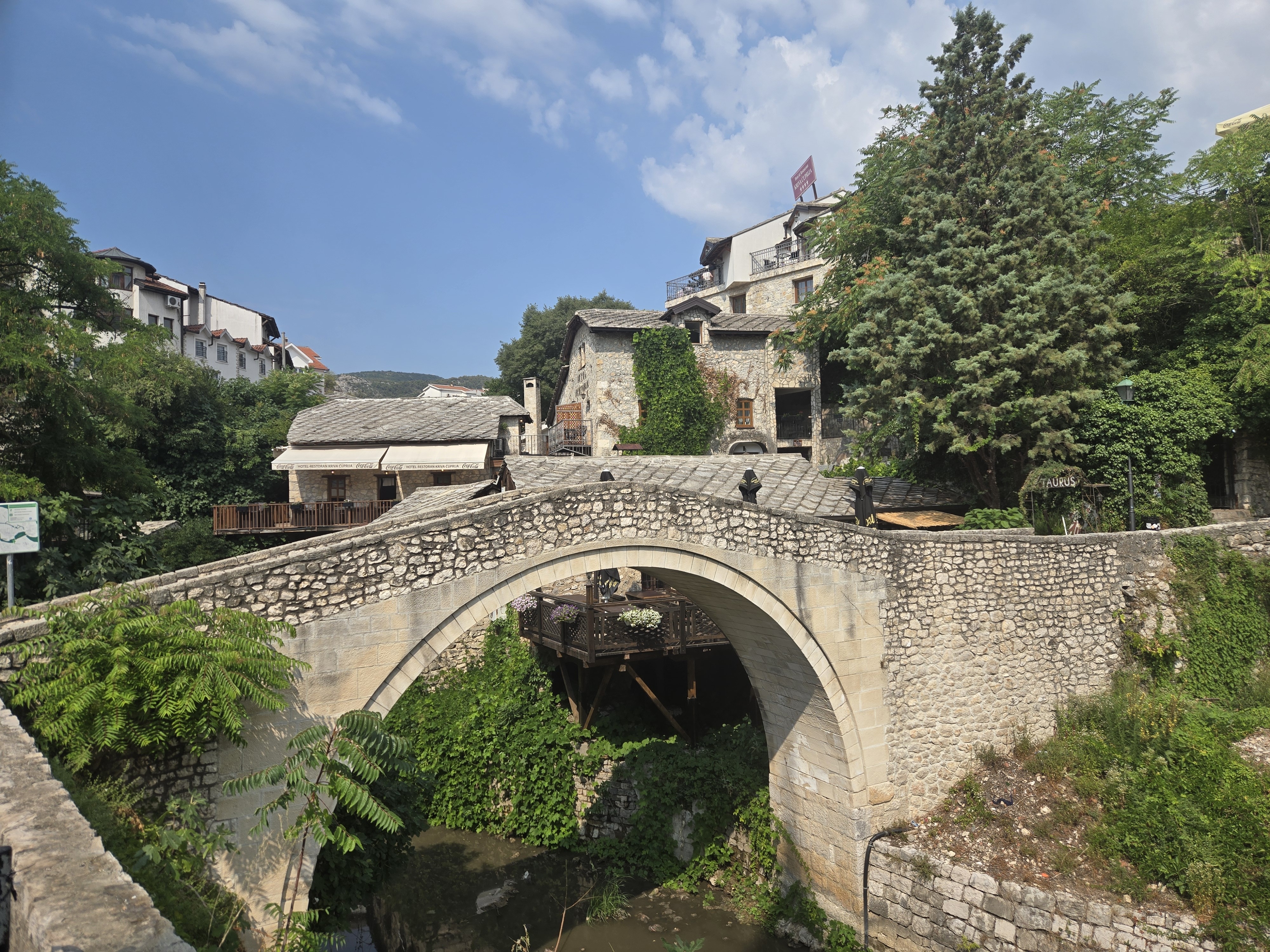
The star of Mostar (and one of the country’s symbols) is the Old Bridge, known as Stari Most. It connects the two parts of the city over the Neretva River. This remarkable bridge has a distinctive hump-backed shape, which makes it particularly strong. It was built in 1565 by an Ottoman architect and stood for centuries, surviving numerous conflicts. Sadly, it was destroyed in 1993. Its destruction, a war crime, shocked the world. It was rebuilt to its original design in 2004 and is now a UNESCO World Heritage Site.
The bridge is also famous for international competitions featuring dangerous cliff diving. We missed the annual Red Bull Cliff Diving competition by just a few days; it takes place at the end of July.
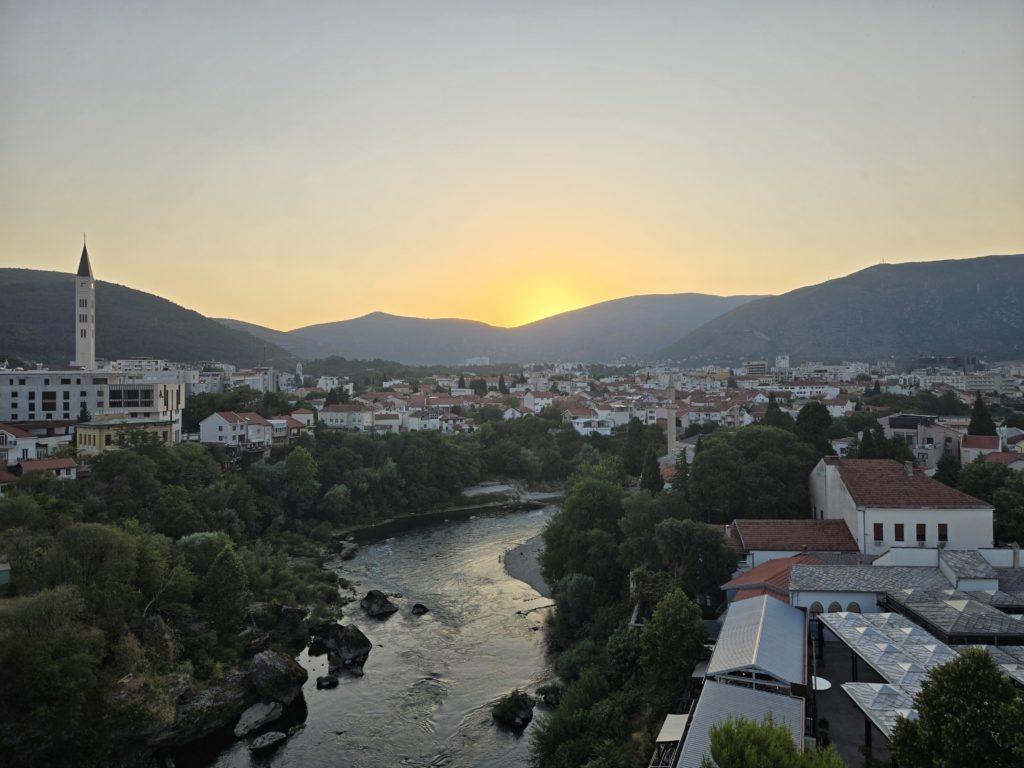
Honestly, before coming, I wondered why we kept seeing pictures of this bridge everywhere. Once there, it completely charmed us, and every day we found ourselves going back to see it. Staying in an apartment right next to Mostar’s Old Town meant we could see it in different light throughout the day, and we loved walking around there in the evening. A real luxury!
Be careful, the cobblestones can be slippery, so make sure to wear good shoes.
Mostar’s Bazaar for Souvenirs
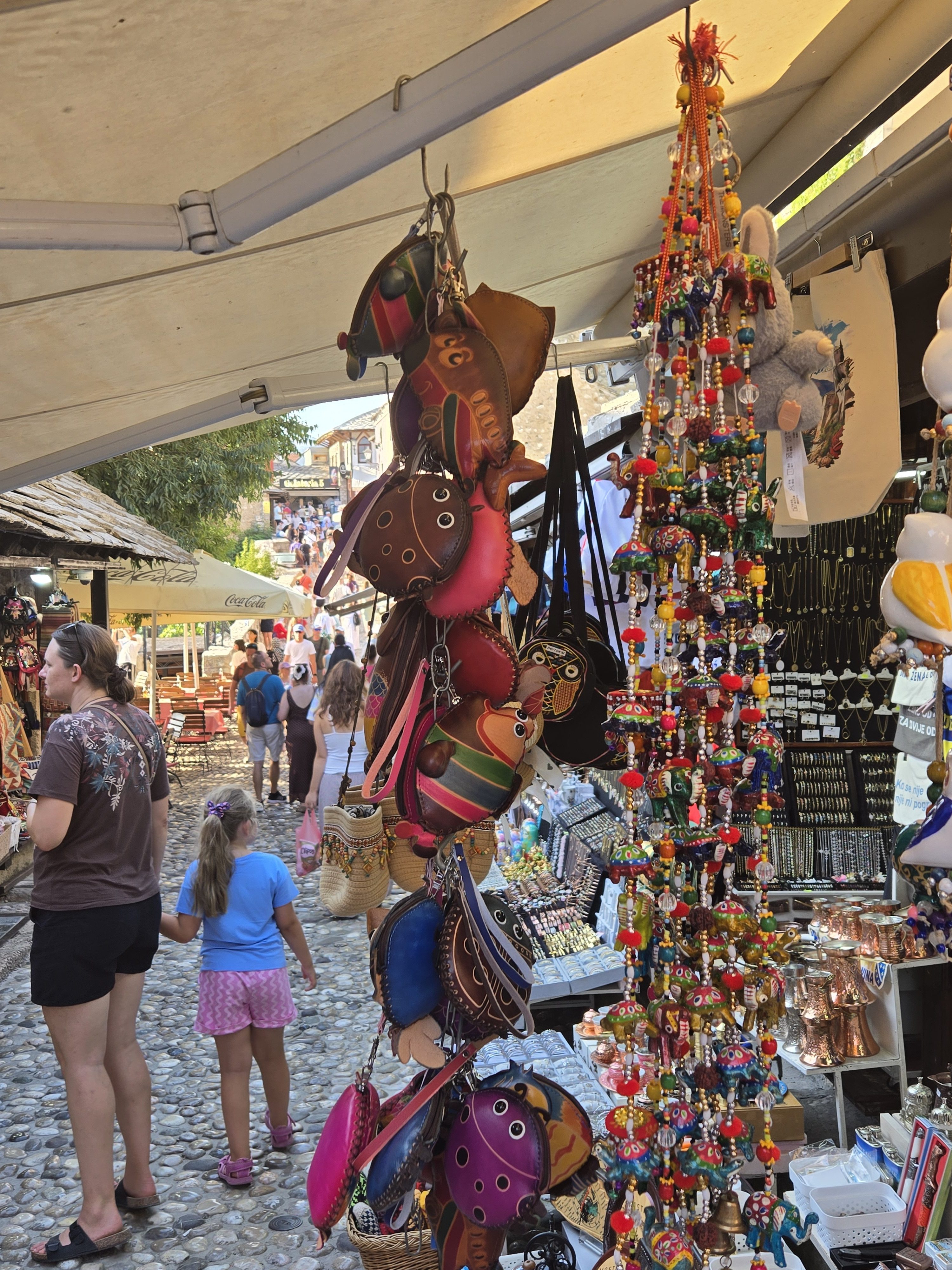
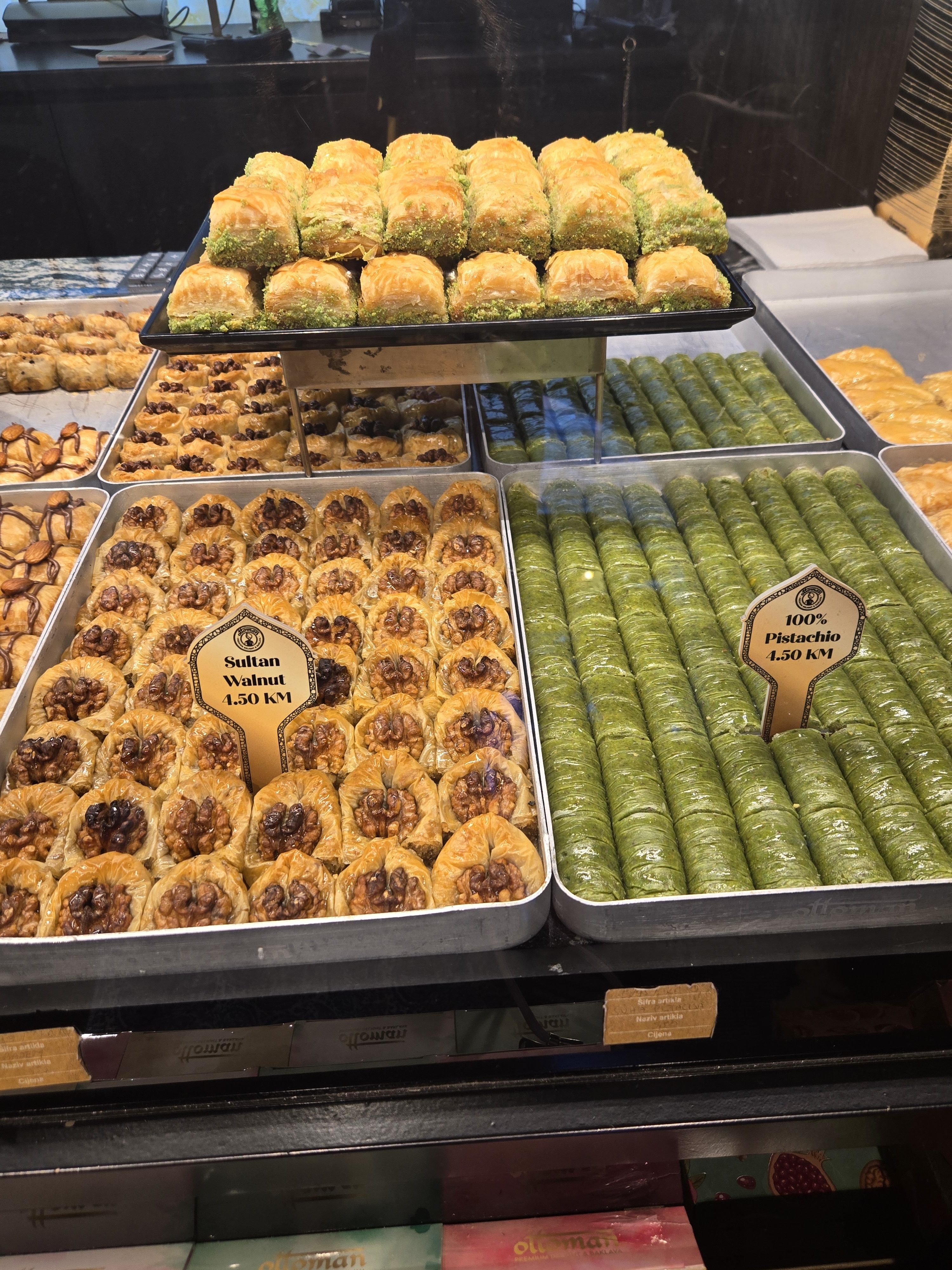
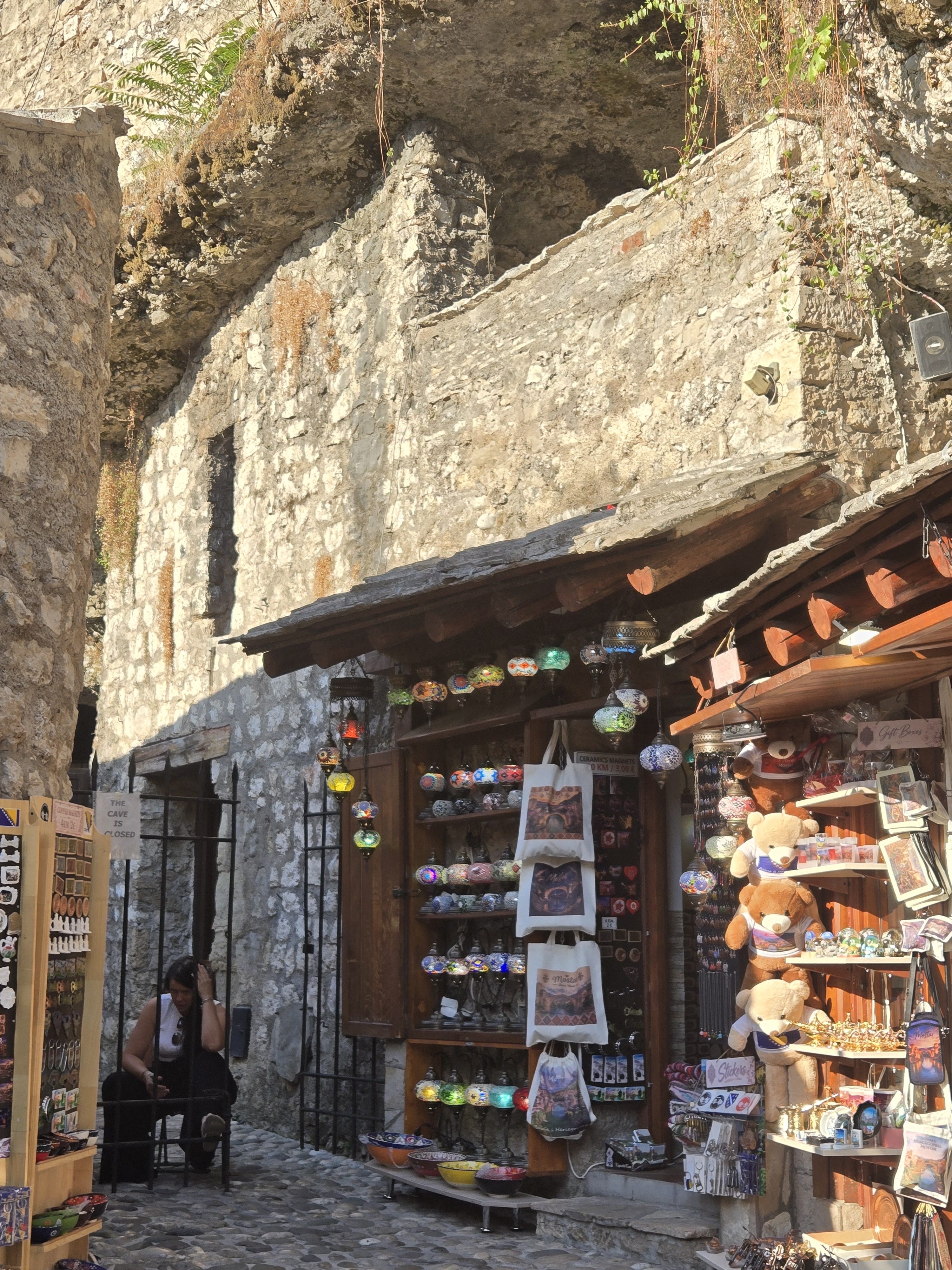
On either side of the Old Bridge, you will find many shops selling souvenirs inspired by the city’s Ottoman heritage. As you stroll through the old Kujundžiluk bazaar, you may be lucky enough to see copper artisans working in their workshops, often located at the back of the shops. You will also enjoy beautiful views of the bridge and can soak up the unique atmosphere of the neighbourhood while enjoying an ice cream or an oriental pastry.
Among the most popular souvenirs are Bosnian coffee sets, hammered copper trays and objects, handmade jewellery, rugs, scarves, decorated ceramics, as well as local products such as honey, jams, sweets, spices and spirits (rakija).
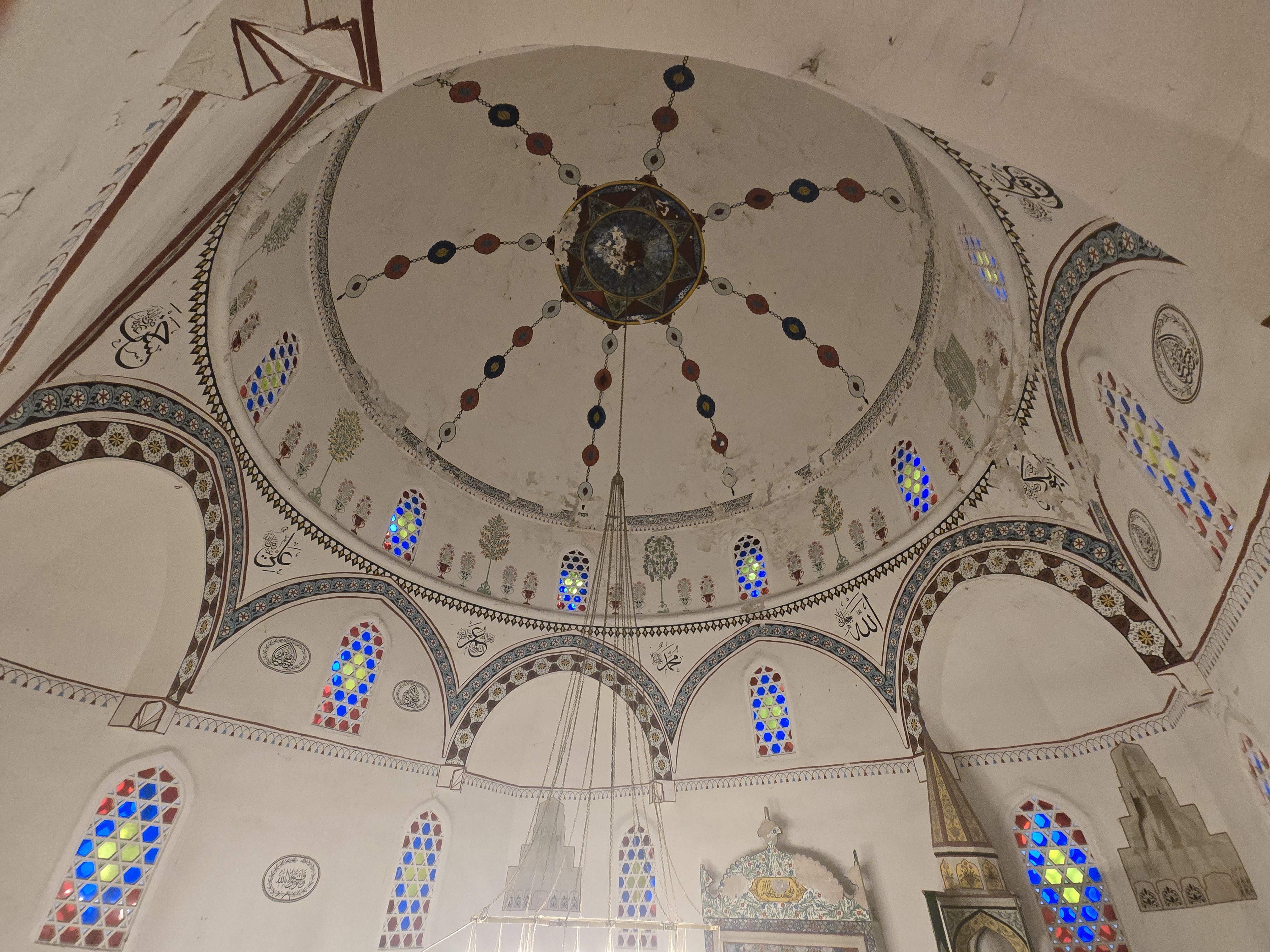
Visiting the Koski Mehmed Pasha Mosque and climbing to the top of the minaret
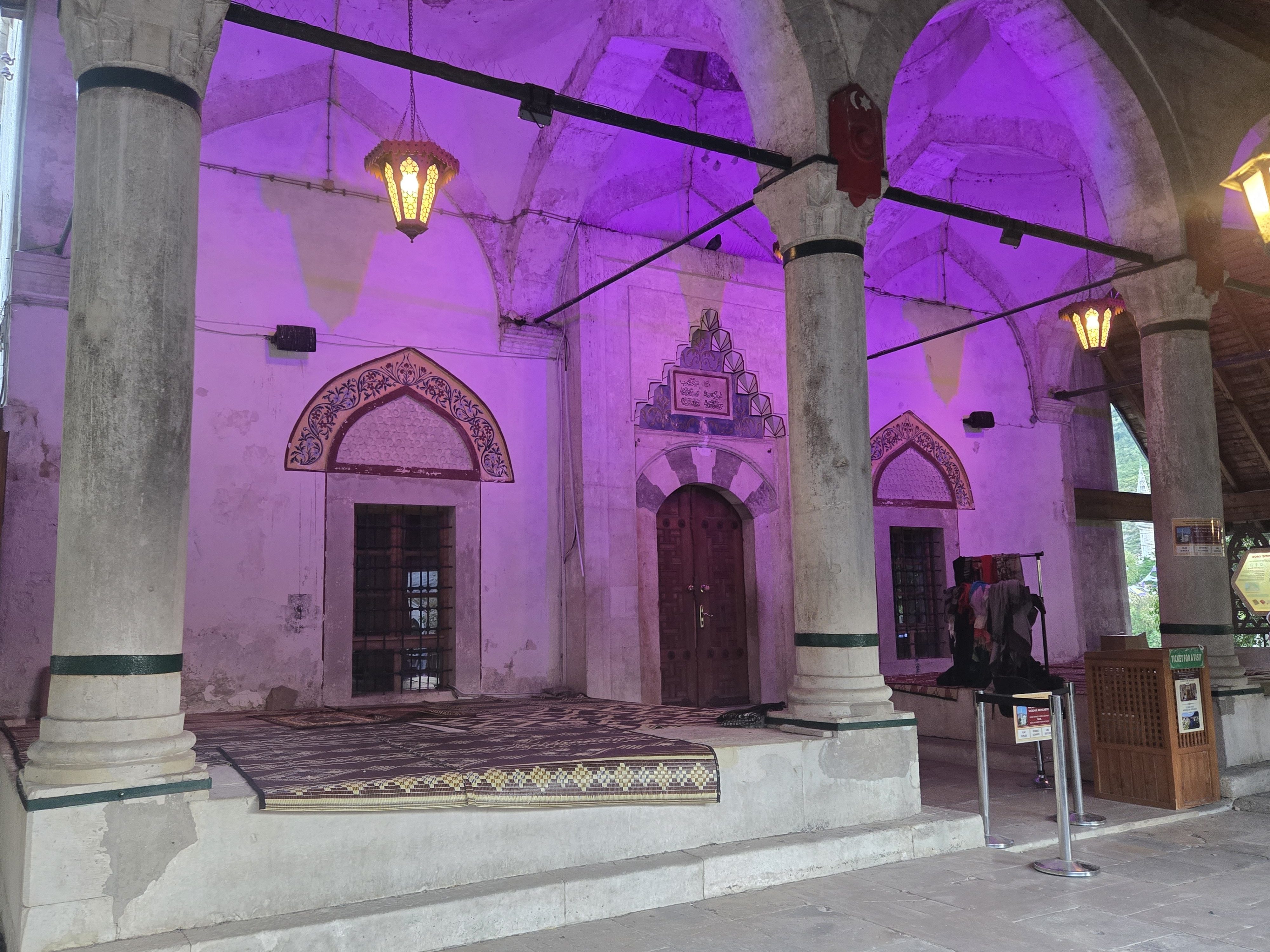
We had a hard time finding the entrance to the beautiful courtyard where the Koski Mehmed Pasha Mosque is located. The visit is definitely worth it: the interior is beautiful, and there is a small exhibition about the history of the mosque and Islam. Most importantly, you can climb to the top of the minaret for an incredible view over the city and the Old Bridge.
Not recommended for anyone with claustrophobia: the staircase is extremely narrow, the climb seems endless, and it is very difficult to pass other people on the way.
Where to have family dinner in Mostar’s Old Town?
We really enjoyed Food House Mostar for its vegan options and very pleasant atmosphere. If you have a higher budget and are looking for an unbeatable view, we recommend URBAN taste of orient. Be aware that we went very early (6:15 pm) and had no trouble getting a table, but there was already a queue when we left.
Tour of Mostar’s Old Town, the village of Blagaj and vineyards with Villa Fortuna
We took a private guided tour, with a driver, with the agency Villa Fortuna (which also has a hotel with a swimming pool in the heart of the Old Town). It was very interesting to learn about the history of the region and to be able to discuss the war and the country’s reconstruction with our guide, Alen.
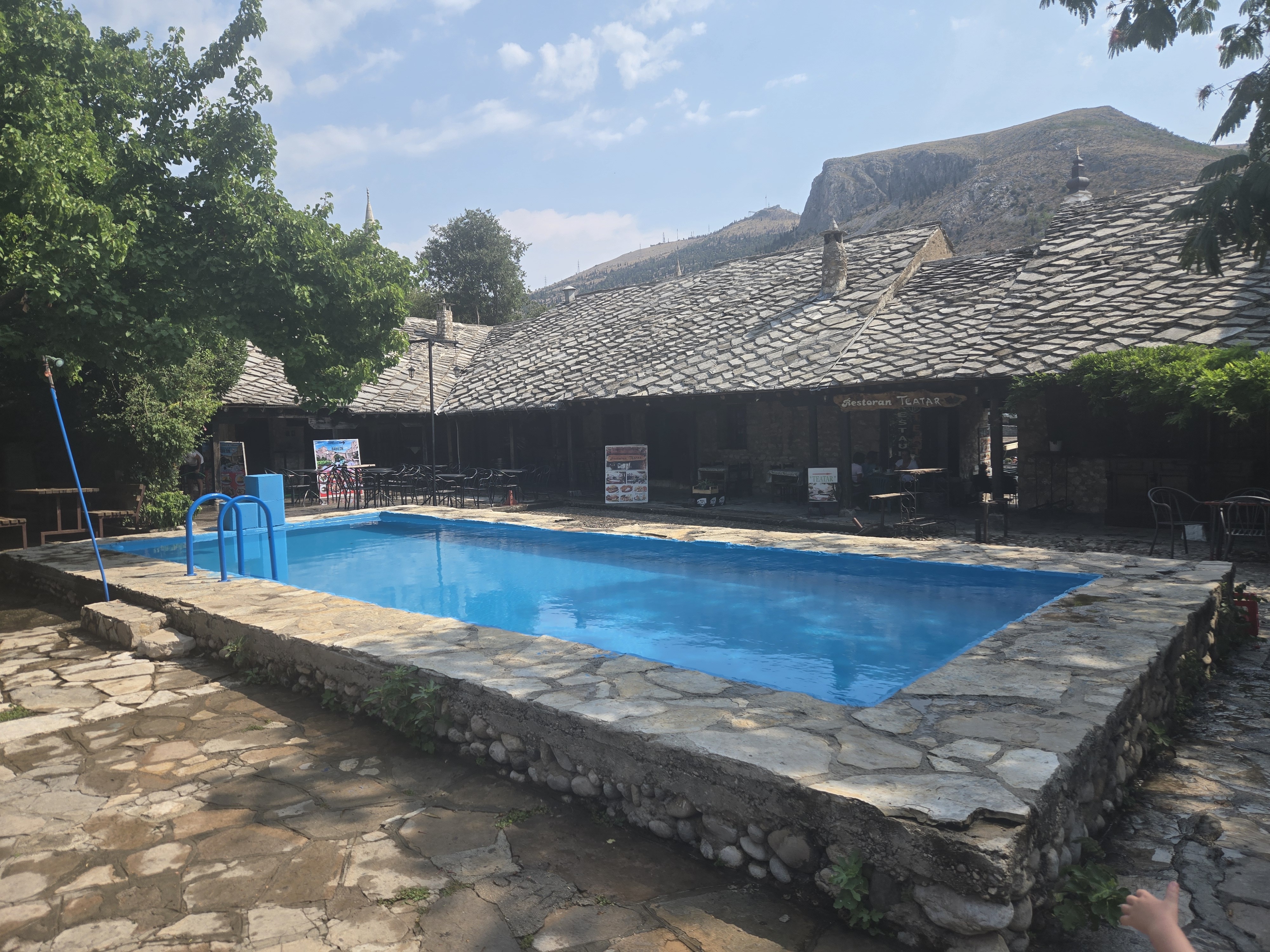
He showed us places in the Old Town that we had not managed to find on our own. For example, Tabhana, a former leather-processing site that has been converted into a free outdoor swimming pool. He showed us photographs of the bridge throughout the ages, including images of its destruction. It was also very pleasant to be driven to Blagaj and to taste wine both in a shop in the Old Town and at a beautiful vineyard in the Herzegovinian countryside.
The village of Blagaj and its Tekke
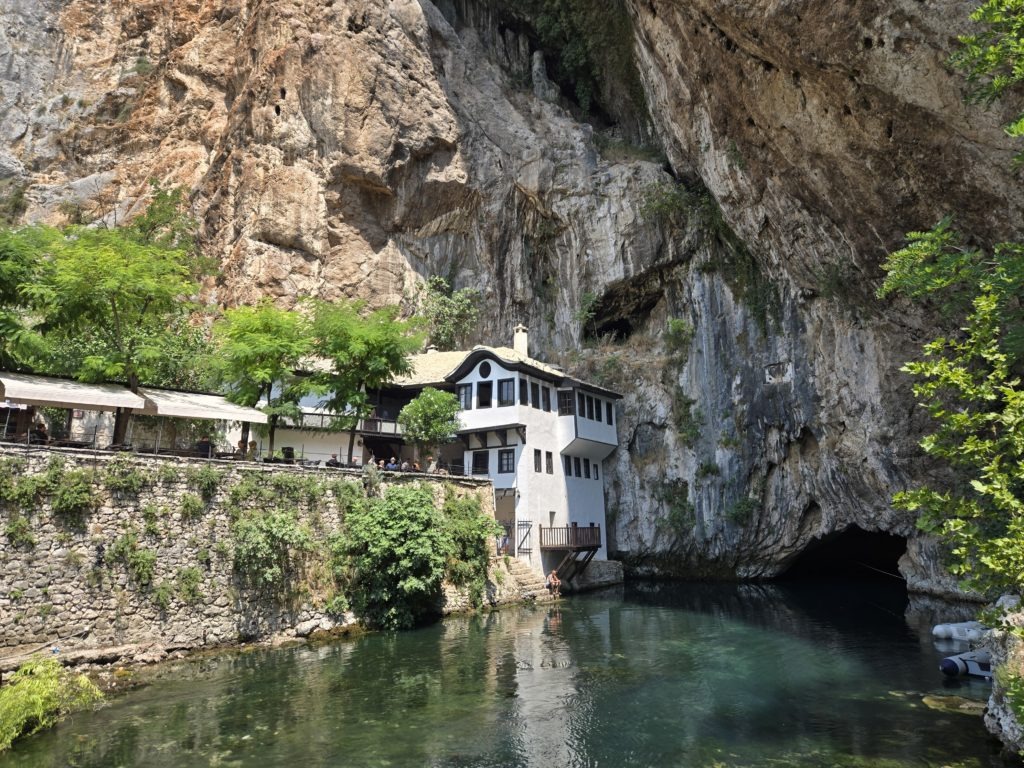
Located about ten kilometres from Mostar, the village of Blagaj is known for the source of the Buna River. Right next to it stands the Blagaj Tekke, a monument seemingly suspended from a cliff. It is a very old Sufi monastery dating back to the 16th century, which has been rebuilt and restored over the centuries. It was an important place of spiritual retreat for dervishes (members of Sufi brotherhoods) practising a mystical form of Islam. Today, it is one of the most iconic monuments in Bosnia and Herzegovina.
It is a breathtaking place to visit, both for its history, for its geology and for its extraordinary natural setting. Having a guide made a big difference for us.
Vineyards and wine tasting in Bosnia and Herzegovina
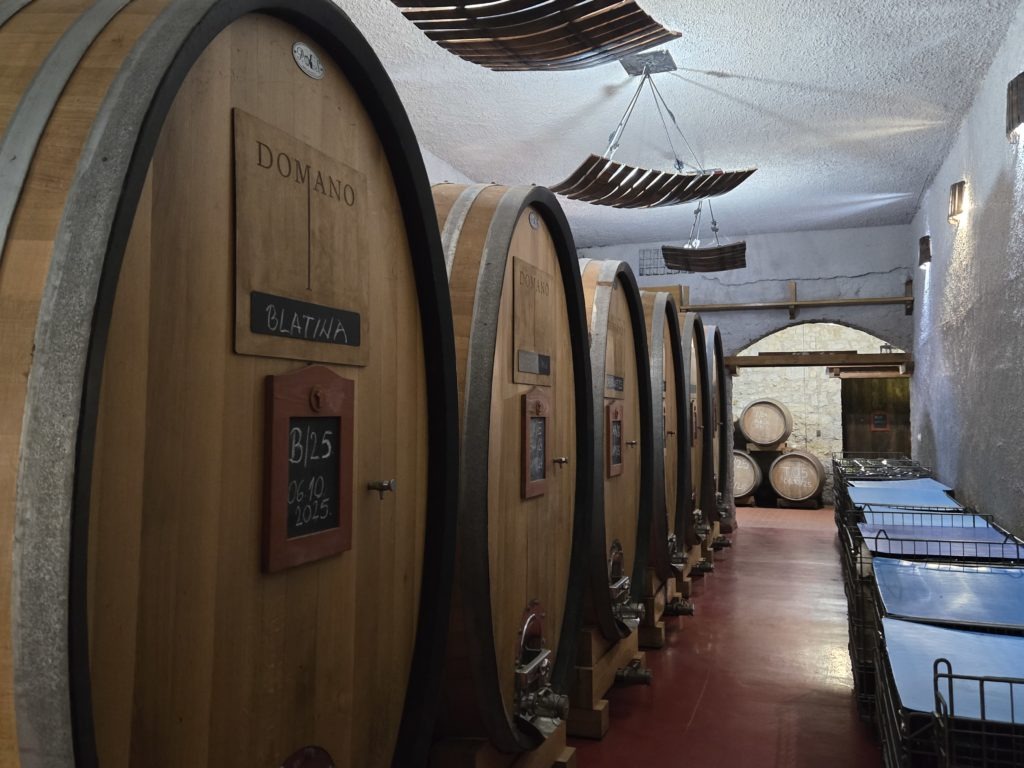
After visiting the Via Vino wine shop in the Old Town of Mostar, where we enjoyed the explanations, we took a very informative tour of the small Vinarija Domano vineyard. After visiting the cellars, we were able to taste different wines with a platter of cured meats, bread and cheese on the beautiful terrace of the vineyard’s restaurant.
A place we would never have discovered without the tour organised by Villa Fortuna.
War Photo Museum and Museum of War and Genocide Victims
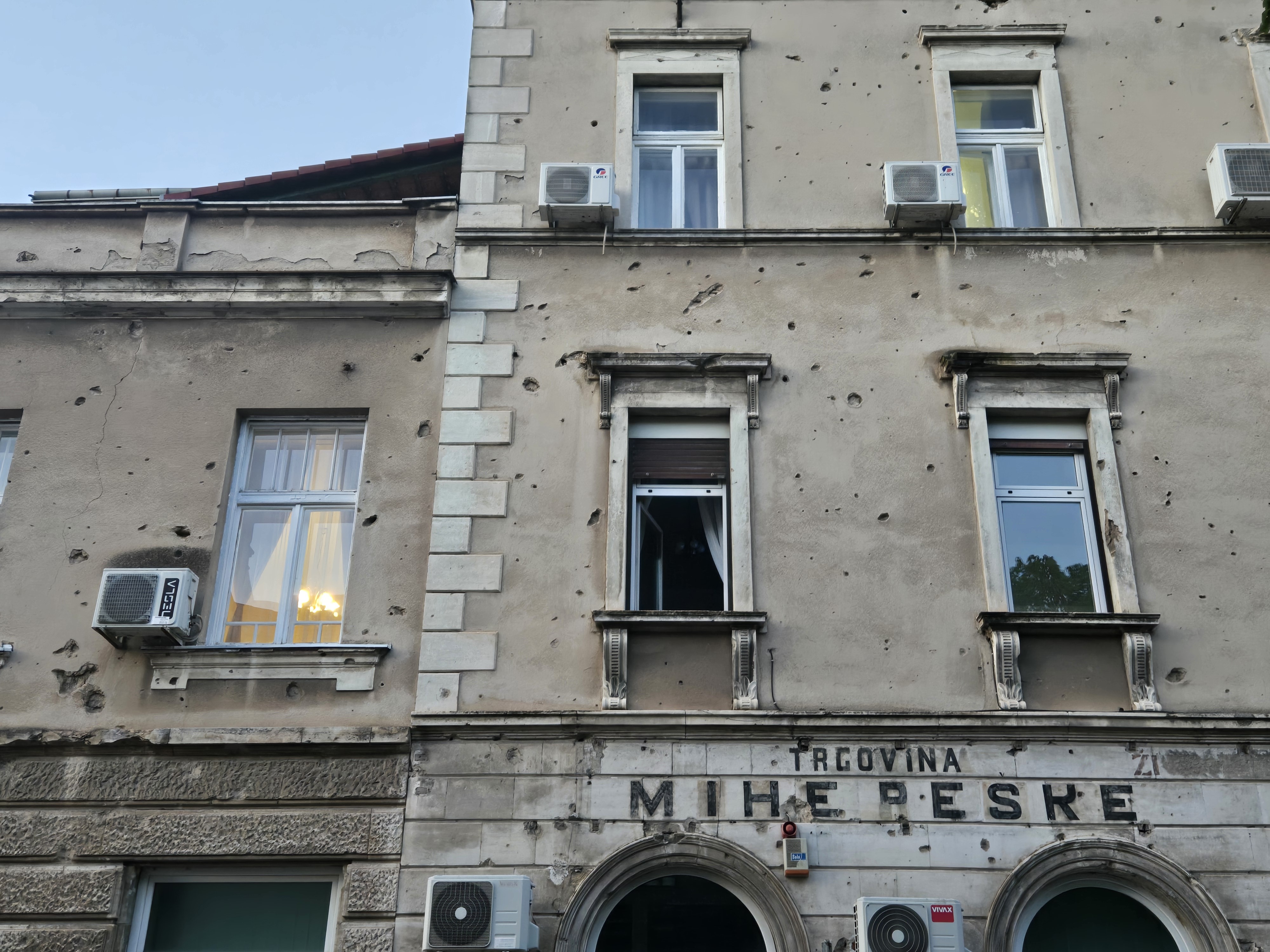
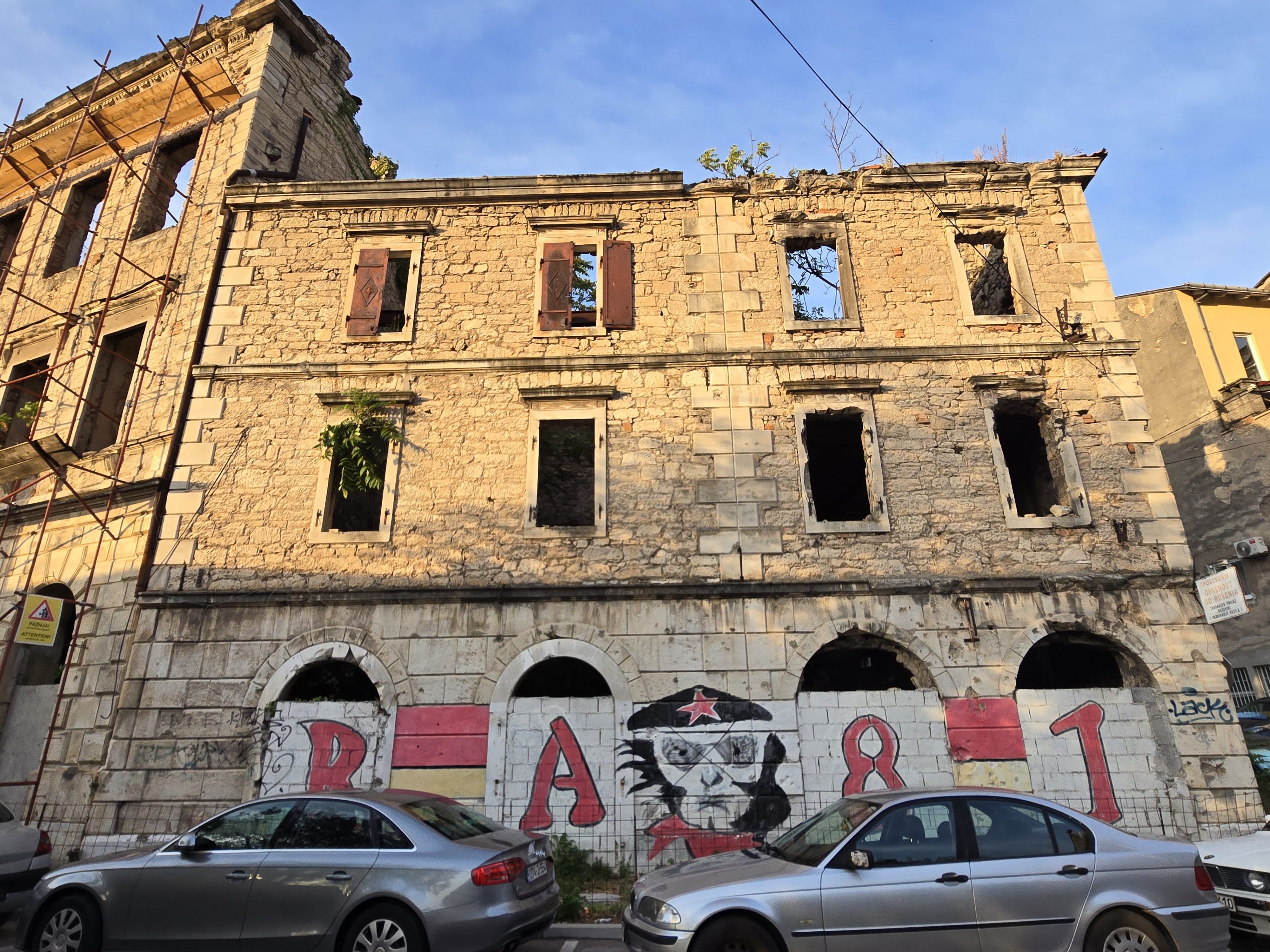
Throughout Mostar, many building facades are still riddled with bullet holes. It is deeply moving and, when talking to the people of Mostar, you will inevitably hear stories from those who were under siege or forced to flee.
Indeed, Mostar was one of the hardest-hit cities in Herzegovina during the Bosnian War (1992-1995), having been besieged, bombed and divided. Capturing the city, with its strategic position at the heart of the Neretva Valley and on an important route connecting inland Bosnia to the Adriatic coast, was a major objective. What makes this particularly tragic is that, after fighting together against the Yugoslav army in 1992, Croatian and Bosniak forces subsequently turned against each other. The city was divided in two, leading to the destruction of the Old Bridge in 1993.
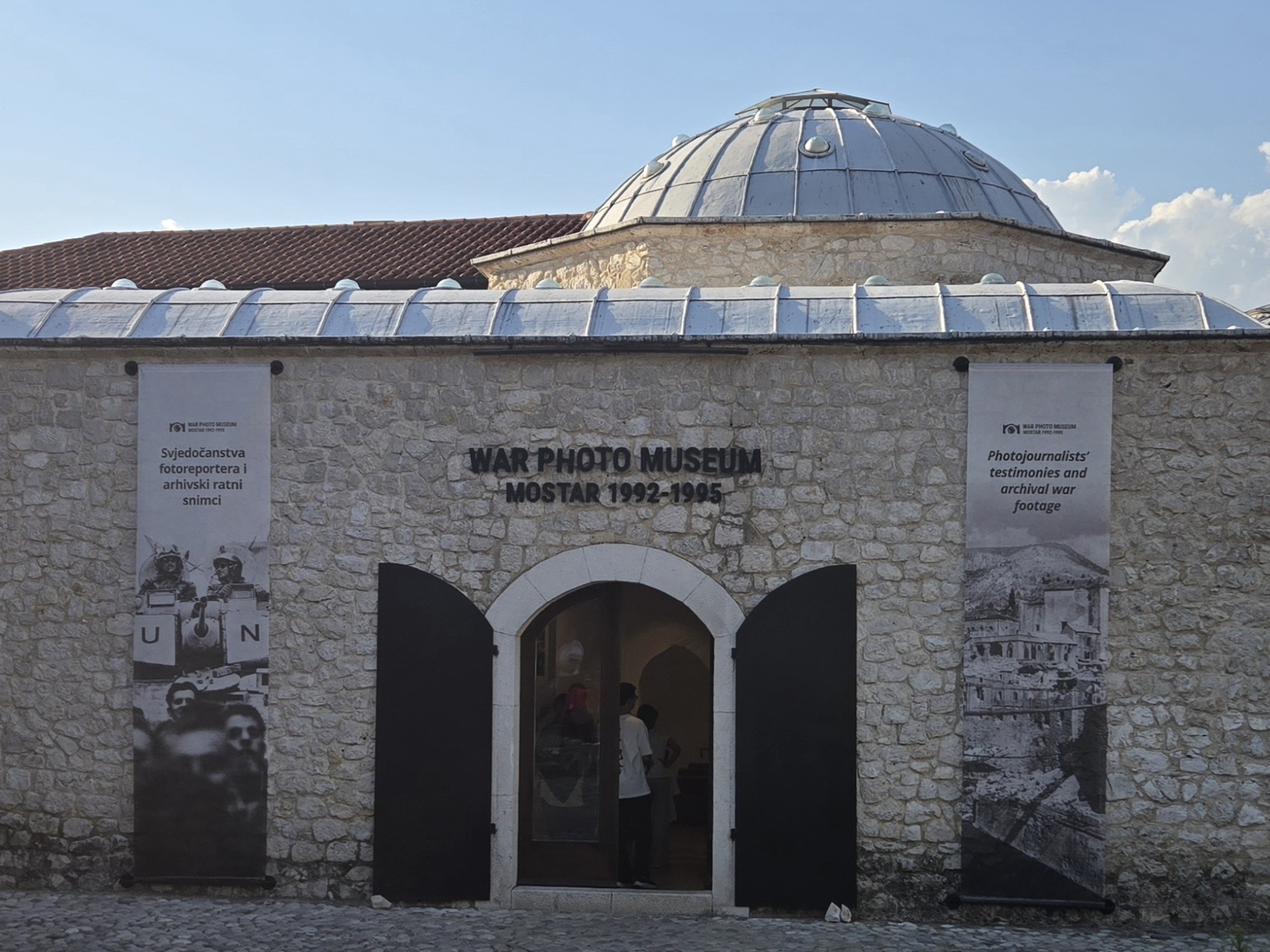
Thanks to our accommodation next to the Old Town, we were able to take some time on our own, without the children, to explore this subject in greater depth. Clémentine visited the photographic exhibition at the War Photo Museum Mostar, housed in a former Ottoman hammam. The photographs are deeply moving, as is the documentary made by the first journalists to enter the besieged city in 1993. The museum’s website states that children are welcome, but I would not have been able to visit it with mine.
Nicolas visited the Museum of War and Genocide Victims. This museum covers the war in Bosnia as a whole rather than focusing solely on Mostar, as the photographic exhibition does. It combines testimonies, documents, models and objects connected to the victims of the conflict. It is also a longer visit, with a great deal to read.
Mepas Mall: baby products, affordable sunscreen and cinema
To escape the heatwave, and because we had a few clothes that needed replacing, we decided to spend a morning at the Mepas Mall. It turned out to be a very good idea, despite the expensive and rather chaotic parking. There are two children’s play areas in the shopping centre, including one where children can even stay on their own while their parents go for dinner or see a movie (and for a very small fee). A brilliant concept, but we didn’t feel comfortable leaving ours there alone as they don’t speak the language. Nevertheless, they loved burning off some energy, under our supervision, in this huge indoor air-conditioned playground (note that socks are mandatory).
We found everything we were looking for in the shopping centre, where we also had lunch. A special mention goes to the dm drugstore chain (also found in Germany, Austria and Central Europe), which sells organic and very affordable beauty products. We were able to stock up on sunscreen, which was three times cheaper than elsewhere. There are also plenty of baby products, as well as lactose-free and vegan food options.
Finally, for anyone looking for a cinema, most films for adults are shown in English with subtitles. Unfortunately for us, children’s films were dubbed.
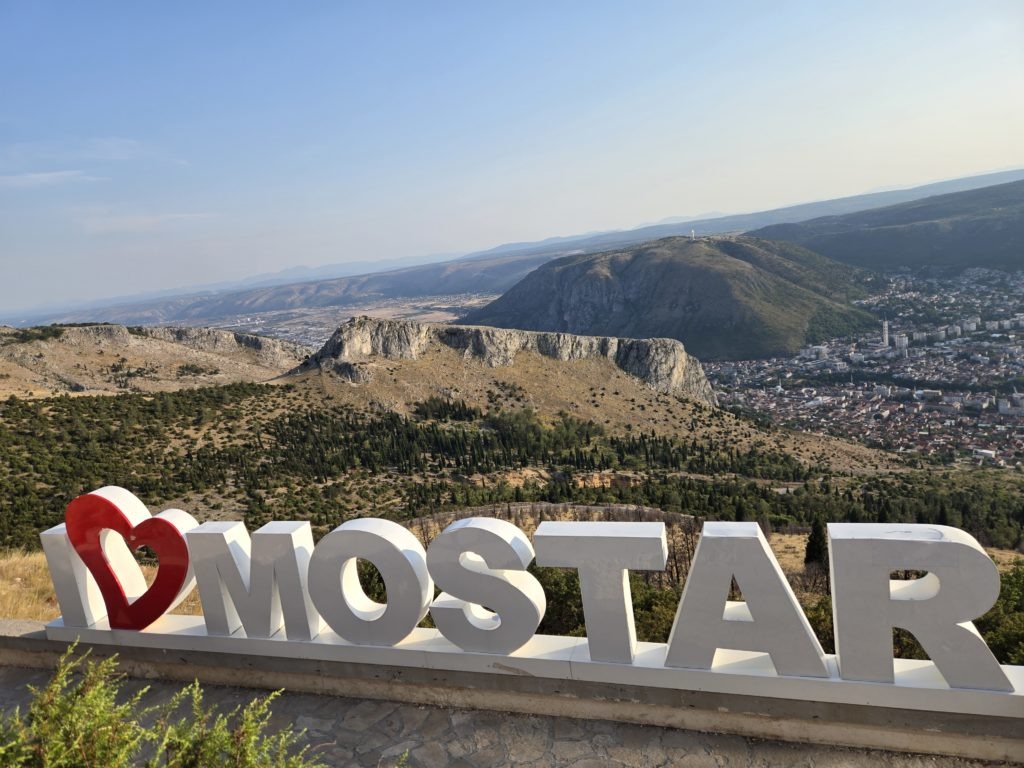
Fortica Hill: a viewpoint over the city and a free glass platform
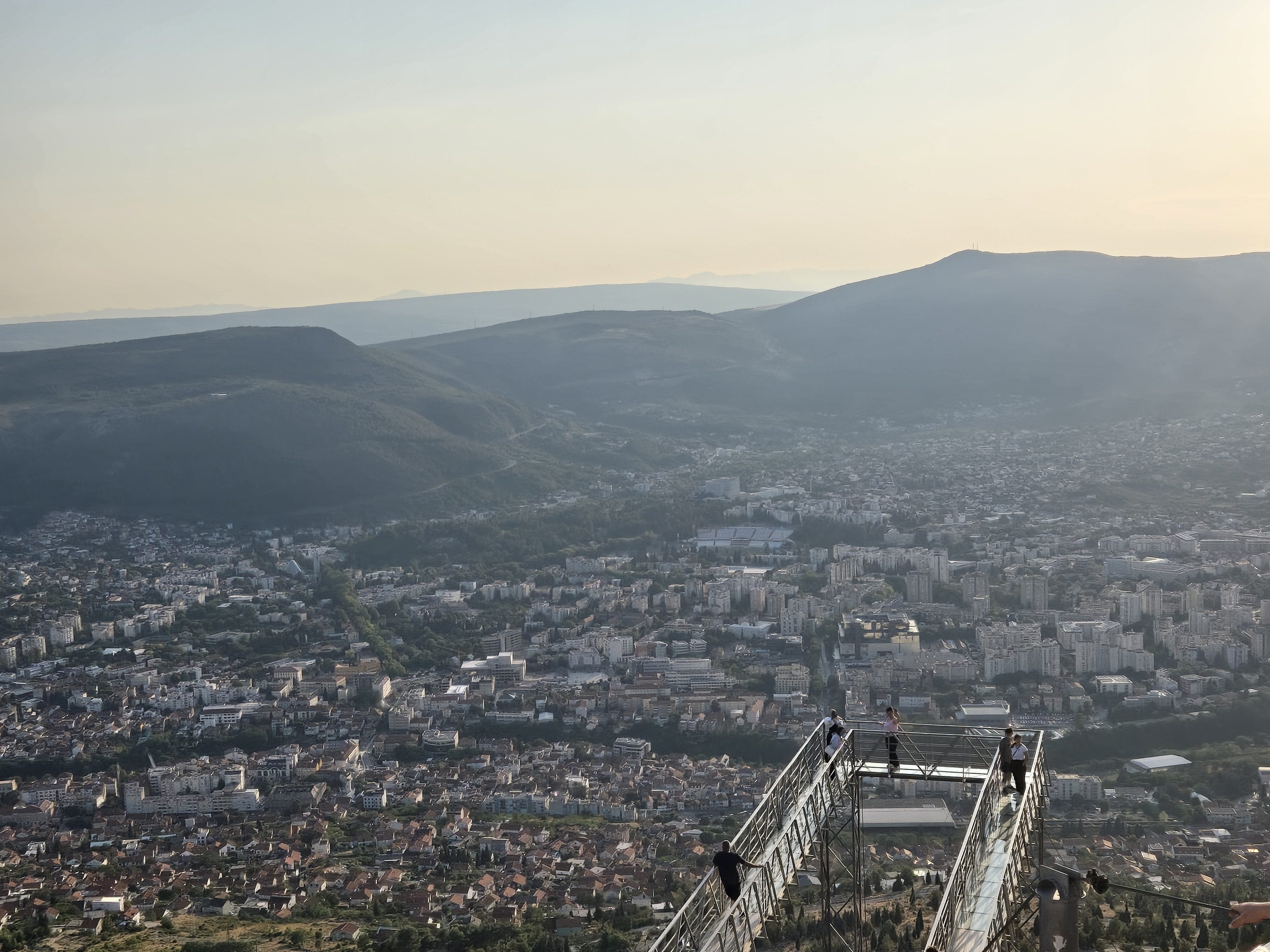
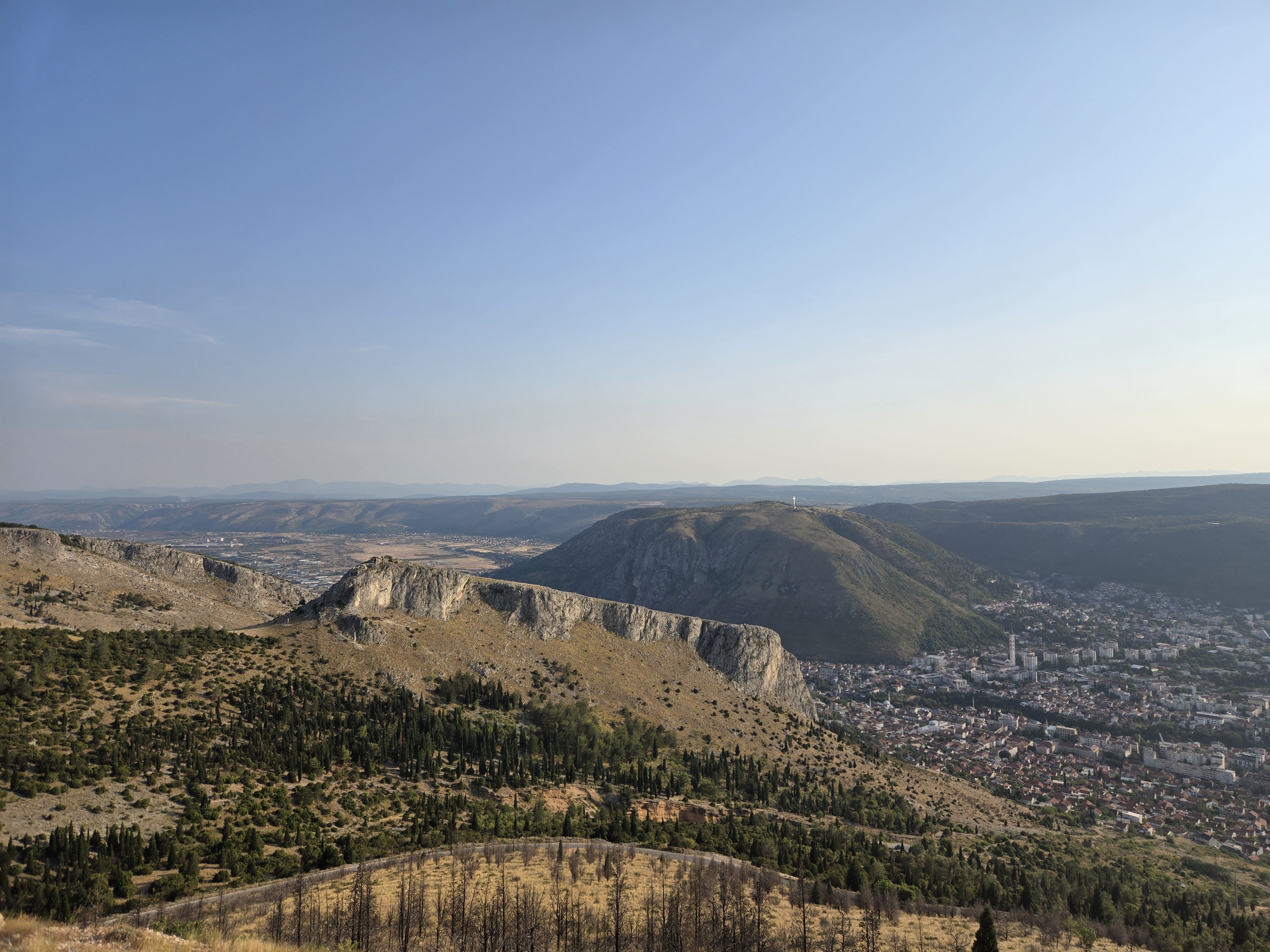
If our host hadn’t told us about it, we would have missed Fortica Hill. We had seen it mentioned but hadn’t realised that the glass platform, perched on a hill overlooking the entire city, is free! It’s a great experience for both children and adults who aren’t afraid of heights.
It’s also pleasantly cool up there, thanks to the strong wind. There was a café/restaurant with a view, which we didn’t try but it looked lovely, as well as a children’s playground. There are also hiking trails starting from here, although we couldn’t figure out where they began.
The Kravica Waterfalls
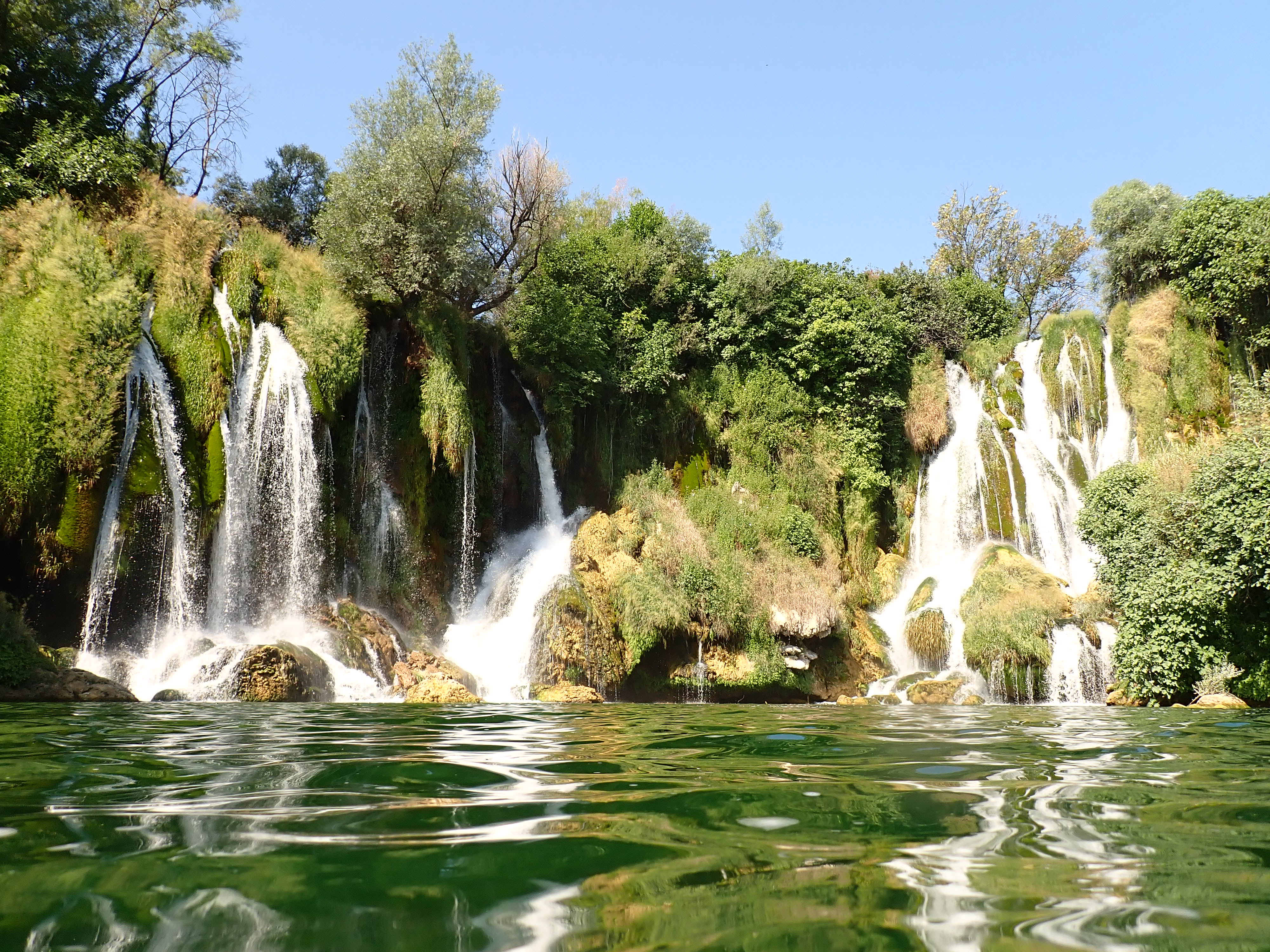
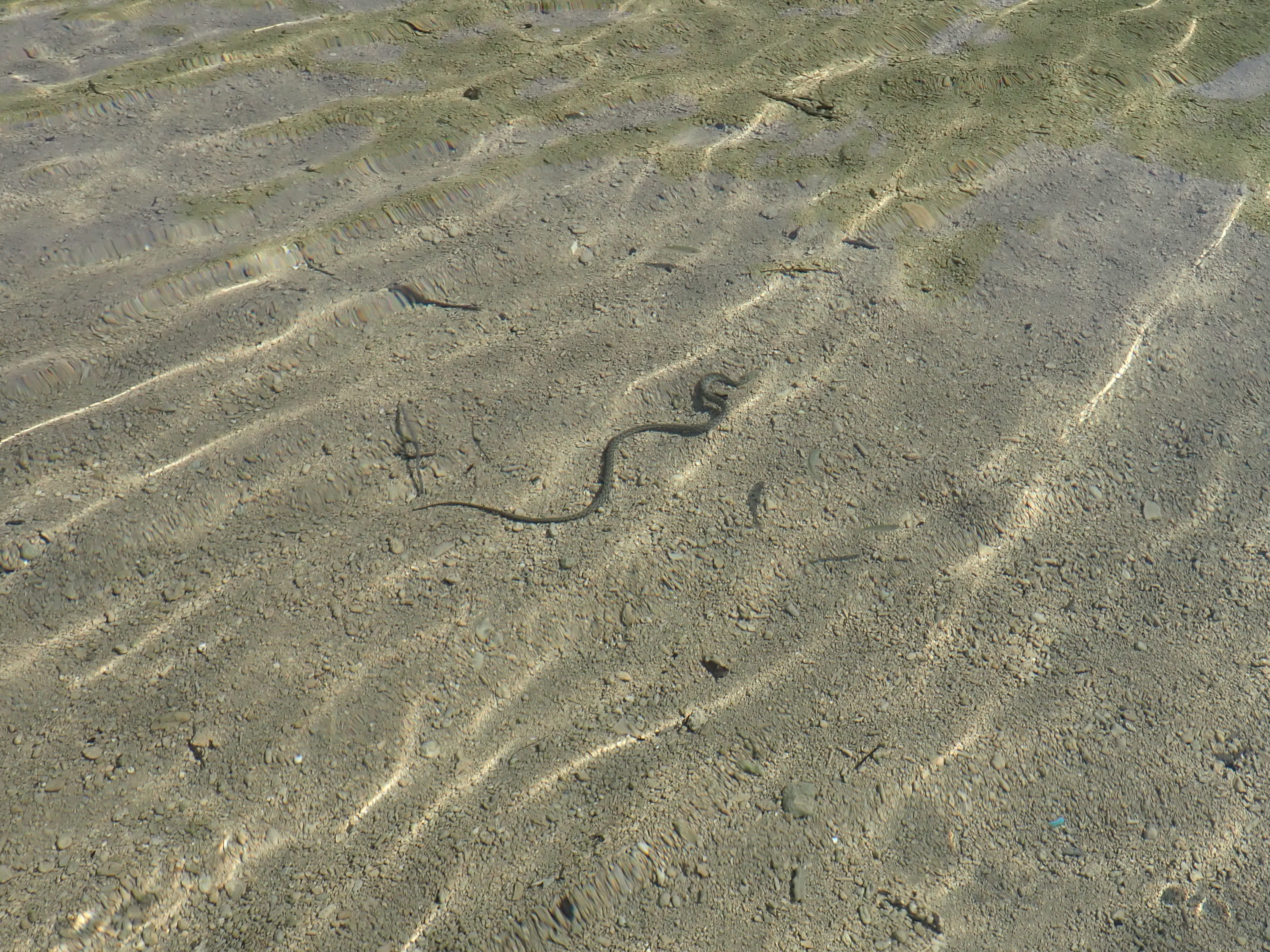
On a very hot day, we arrived at the Kravica Waterfalls at 8:30 am. It was fantastic to get there before the crowds and the heat, especially as there are quite a lot of steps between the parking area and the waterfalls. The climb back up in the late morning, under the blazing sun, was particularly tough. In July 2026, admission was 20 BAM per adult, with parking costing 3 BAM per hour. Swimming is allowed, and the water is lovely, with plenty of fish, dragonflies and a few water snakes (apparently non-venomous, but we decided to leave them alone just in case).
There are some rather oddly placed coffee places and bars built right by the waterfalls, and very little space to put down your towel between the paid parasols and sun loungers, which is another reason why arriving early is a good idea. We also spotted other swimming spots with far fewer people and more space while walking along the river.
The Village of Počitelj
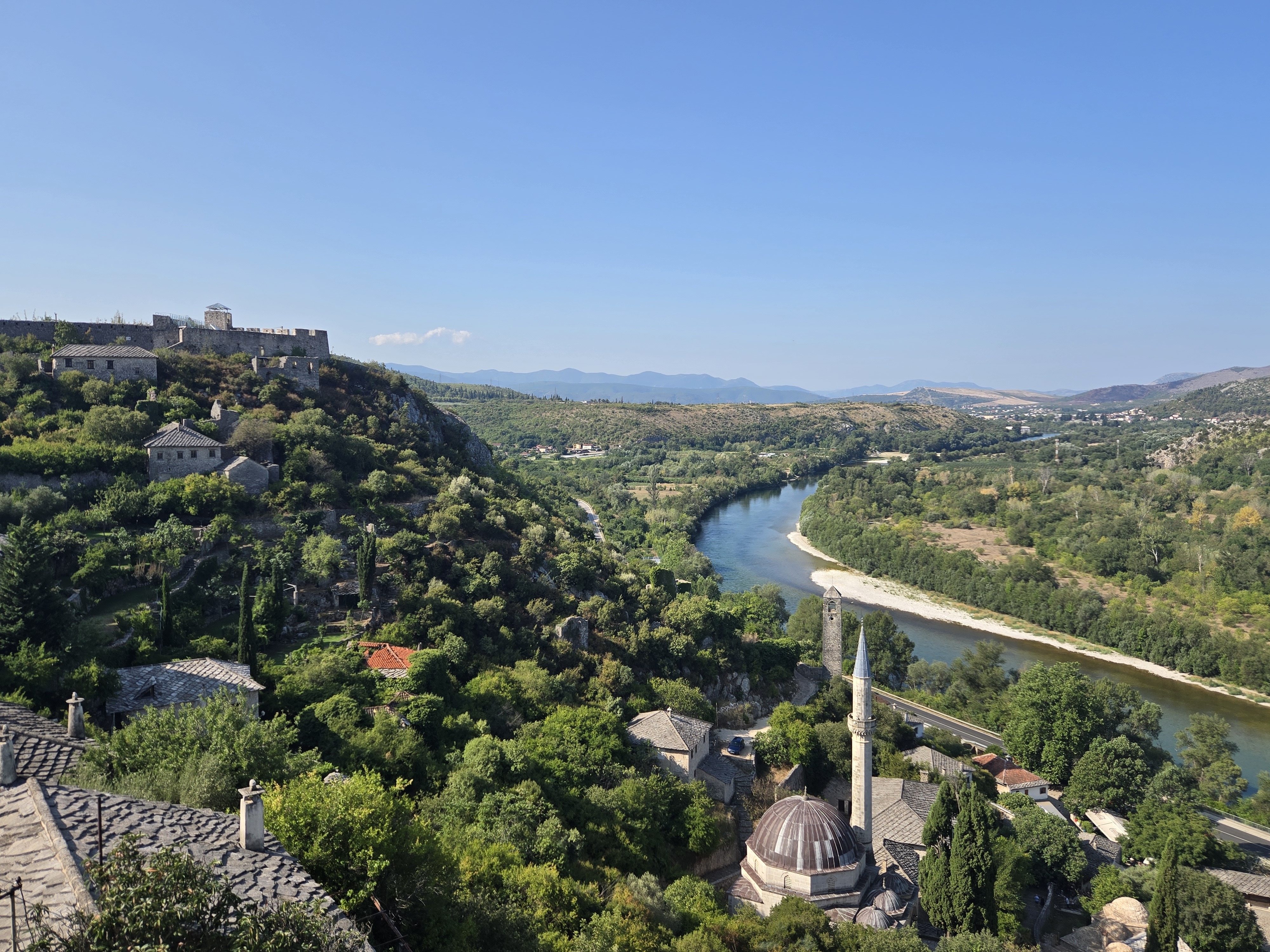
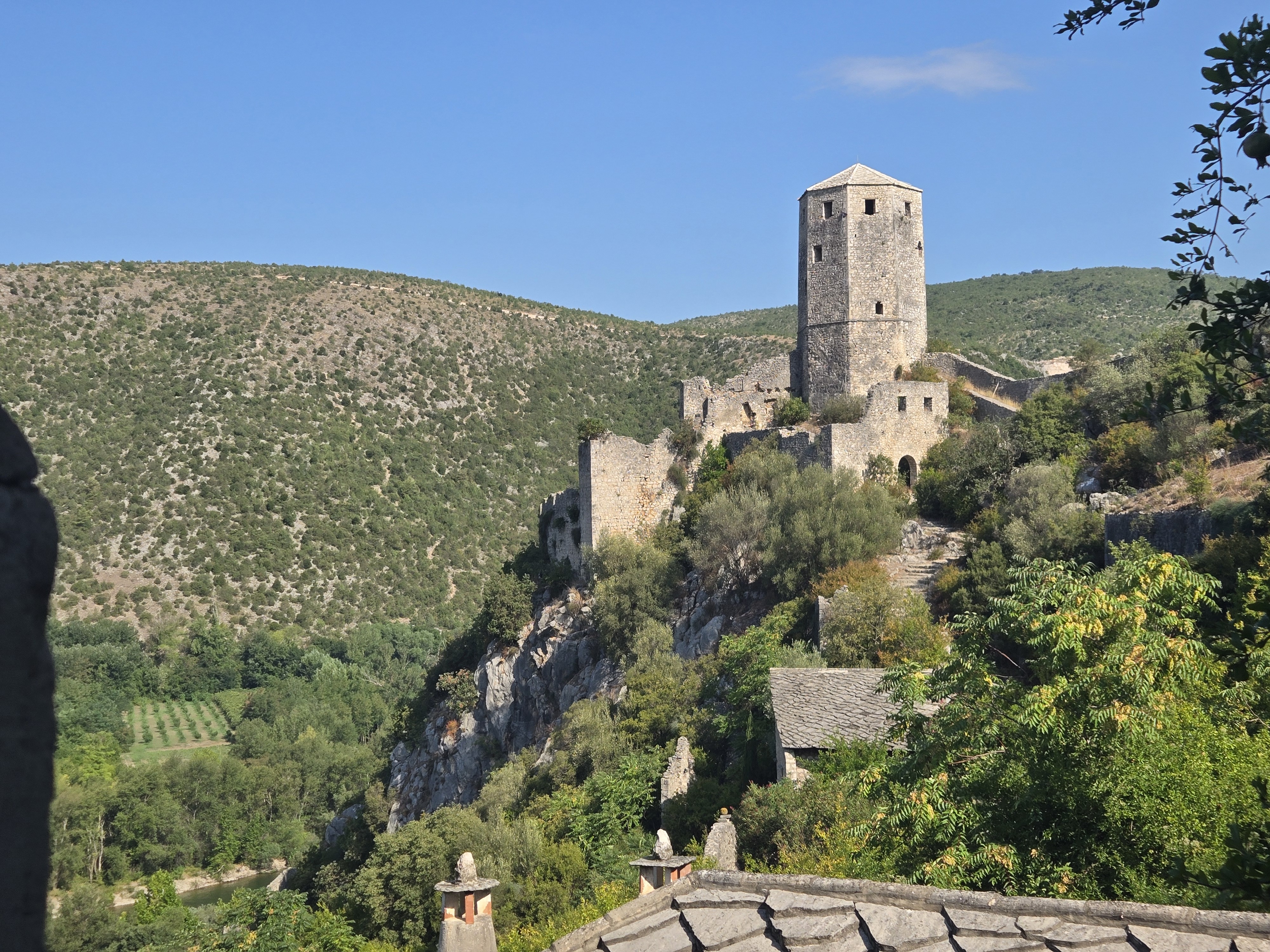
Počitelj is a very charming little historic fortified village of medieval origin, nestled between a fortress perched high above and the Neretva River below. It is very easy to access, with parking available along the road at the entrance to the village (we went early in the morning). The mosque and the charming stone houses, built in Ottoman architectural style, are beautiful. We climbed all the way to the top to admire the views and explore the fortress with the children.
The Koćuša Waterfalls
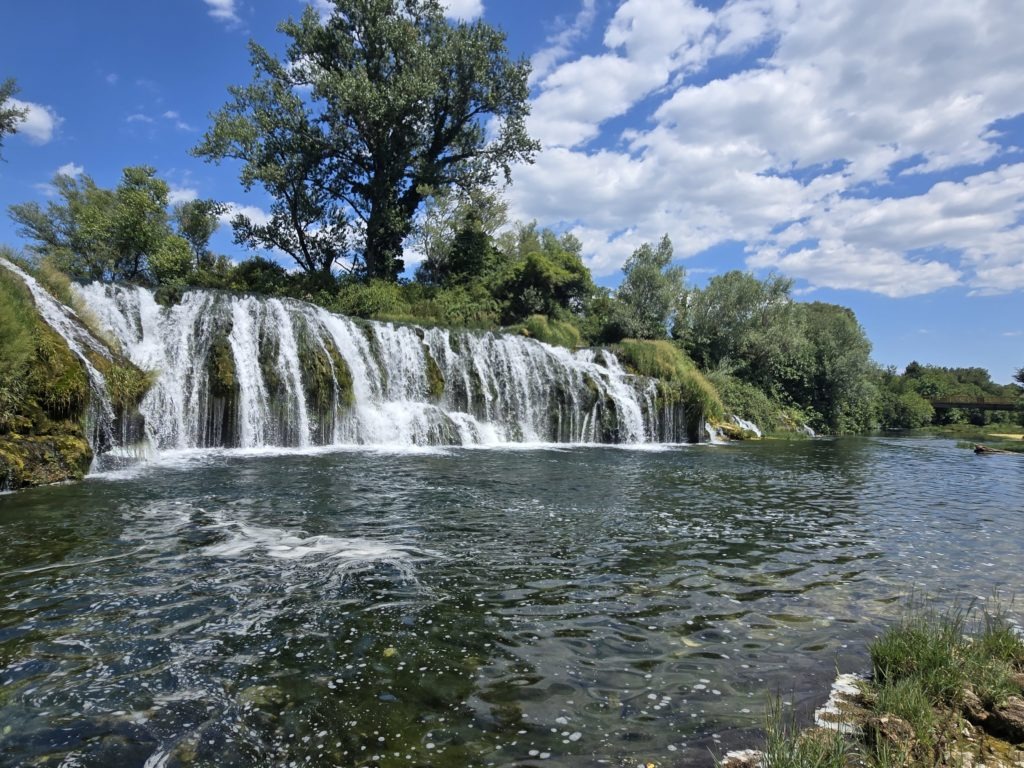
These small waterfalls have free parking. We were disappointed that we couldn’t really swim there, as the water was very cold and access was tricky. It was pretty, but not an essential stop.
The Religious Pilgrimage to Međugorje
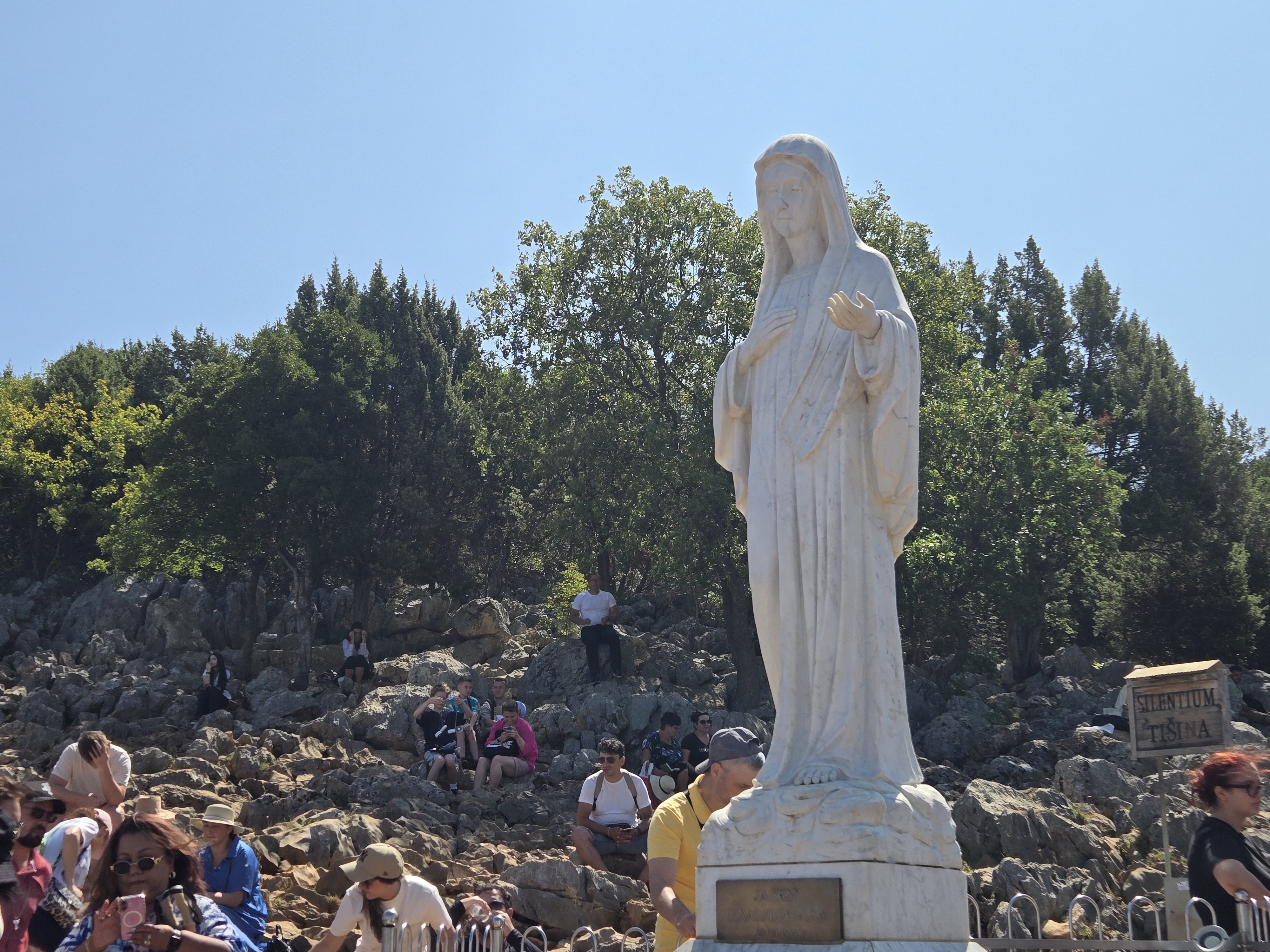
Herzegovina is also a major Catholic pilgrimage destination. In the early 1980s, a group of teenagers claimed that the Virgin Mary appeared to them and gave them messages on Podbrdo Hill, now known as Apparition Hill. The Vatican allows pilgrimages to the site, without taking a position on the supernatural nature of the apparitions, which to this day have not been officially recognised by the Catholic Church.
We weren’t there on a religious pilgrimage, but it was a personal pilgrimage for me. This place was very important to my mother, who had visited several times during my childhood. I really enjoyed showing my children a place that was dear to their grandmother and experiencing the same memories she had shared with me.
The climb up Apparition Hill was difficult with the children. It is almost like climbing over rocks, but it isn’t very long. It was a moving experience to be up there, surrounded by people praying.
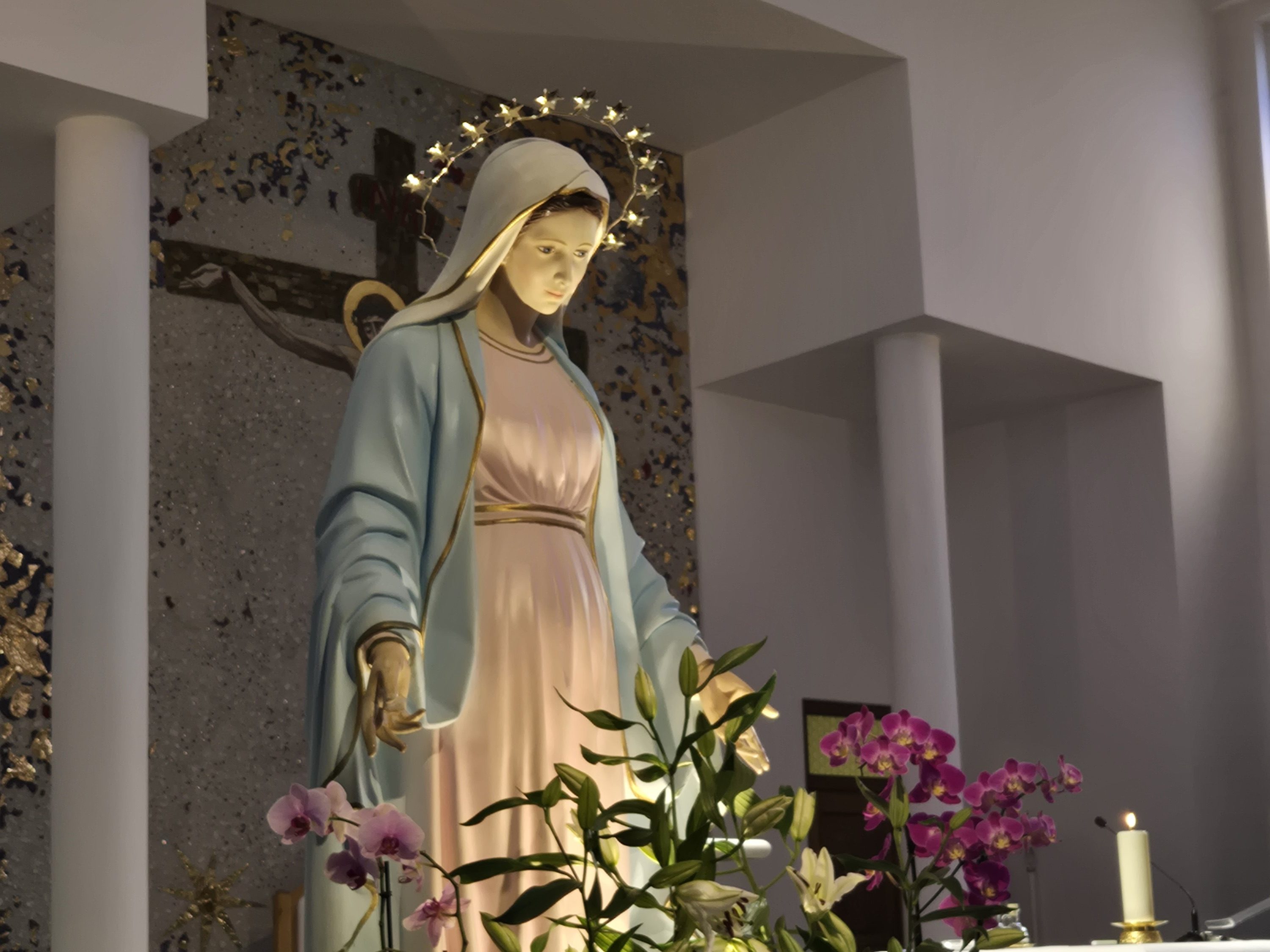
We also visited the church in Međugorje, with its impressive number of benches for outdoor Masses. Since I was a little frustrated not to find the statue of the Virgin Mary wearing her blue robes that used to stand on my mother’s bedside table, I did some research and we went to see it at the Church of Tihaljina (which is not nearby, but a dozen kilometres away).
For lunch, we stopped at the large restaurant in the hotel complex Herceg Etno Selo Medugorje. It was quite strange as we were the only ones there, but it was ideal with the children, as there were fish to watch, a playground and donkeys. We combined this day with a visit to the village of Počitelj beforehand and the Koćuša waterfalls afterwards.
Our Review of 5 Days in Mostar with the Family
Our discovery of Bosnia through the area around Mostar made us want to explore more of the country, especially the capital, Sarajevo. Fortunately, we had several days there. Indeed, because of the heatwave we only managed to do sightseeing in the mornings (and spend our evenings in the old town). One visit we had planned but decided to postpone because of the heat was the Hutovo Blato nature reserve, which seems to be teeming with birds.
I would describe this part of our trip as the most “intense”, both because of the heat and because of all the emotions stirred up by the traces of the war (and discovering the scale of the horrors experienced by the country’s inhabitants). There is no doubt that the Old Bridge has taken a special place in our hearts.
Travelling to Mostar, Bosnia, with children: our practical tips
A candidate for the European Union, but still outside the EU: SIM Card and Travel Insurance
This means you should plan to get an international SIM card or buy a local SIM card to avoid unexpected data charges on your phone. We bought an Europe eSIM to visit Albania, Montenegro and Bosnia (one for the two of us).
It also means that you cannot rely on the European Health Insurance Card. Travel insurance is therefore important, we always use Chapka Assurance.
The Currency in Bosnia: the BAM
It is worth noting that the Bosnia and Herzegovina convertible mark (BAM) is a local currency that is difficult to exchange outside the country.
Safety in Bosnia and Herzegovina
Bosnia is a safe country as long as you stick to marked paths. Sadly, there are still landmines in forests and away from marked trails. It’s ok in the touristic areas we have visited.
The Language in Bosnia and Herzegovina
In Bosnia, two alphabets are used (Latin and Cyrillic), and three languages coexist (Bosnian, Serbian and Croatian). The three are very closely related and largely mutually intelligible.
English is widely spoken in the Mostar area. Here’s how to say thank you: “Hvala”.
Reading List on Bosnia and Herzegovina
- The heartbreaking and shocking film directed by Angelina Jolie, In the Land of Blood and Honey, 2011.
Books I haven’t read yet but which are on my reading list:
- The historical novel by Nobel Prize-winning author Ivo Andrić: The Bridge on the Drina.
- Sarajevo Marlboro, a collection of stories, by Miljenko Jergović, about the daily lives of the city’s inhabitants during the war.
- The novel Logavina Street by journalist Barbara Demick, which tells the story of a street through history and during the siege of Sarajevo.
- Books by Croatian journalist Slavenka Drakulić, who has written about feminism and communism (and the end of communism) in the former Yugoslavia. For this Bosnia reading list in particular, I would mention her books about war crimes against women and rape during the Bosnian War. The novel S. and the essay, not translated into French, They Would Never Hurt a Fly: War Criminals on Trial in The Hague. In this latter book, she tries to understand how ordinary people become war criminals.
Here are some recommendations that explore the recent history of the Balkans:
- The novel about exile and nostalgia for a vanished country, The Ministry of Pain by Dubravka Ugrešić.
- The 2011 film The Parade, a comedy-drama about homophobia and the nationalist divisions of the former Yugoslavia.

No Comments